
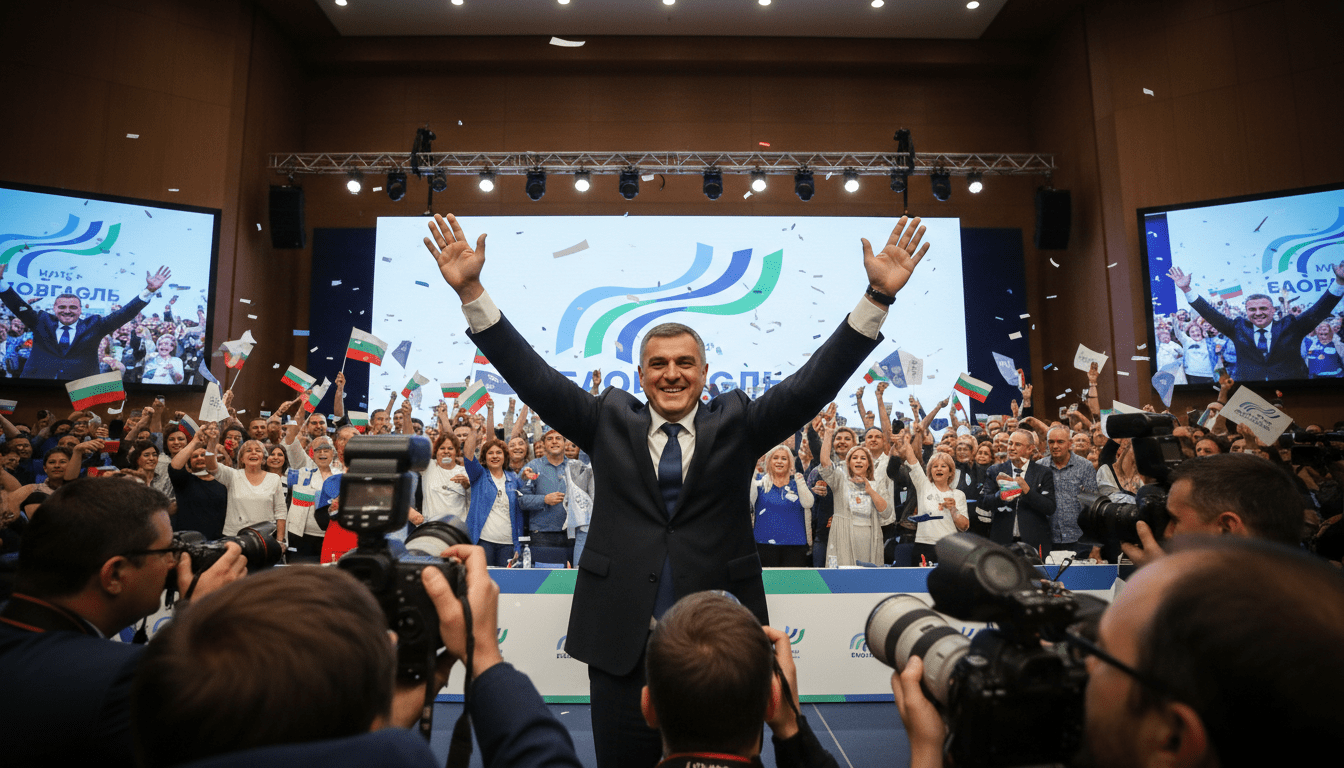
Radev Alliance Claims Decisive Lead in Bulgarian Parliamentary Election, Exit Polls Show
Exit polls put Rumen Radev’s coalition at roughly 38% in the Bulgarian parliamentary election, signaling a clear shift in voter sentiment amid persistent political instability.
Bulgaria’s parliamentary election saw a strong showing for the alliance formed around former president Rumen Radev, according to multiple exit polls that placed his Progressives Bulgaria coalition at about 38 percent of the vote. The center-right GERB-SDS bloc led by Boyko Borissov trailed at roughly 16 percent, while the liberal PP-DB grouping appeared set to finish third. The result comes after yet another campaign in a country that has held eight national votes in five years.
Exit Polls Indicate Strong Mandate for Radev Alliance
Exit surveys suggest Radev’s grouping outpaced rivals by a substantial margin, granting it the largest single share of seats in the new parliament if the figures hold up. Analysts say the lead, roughly double that of GERB-SDS in early returns, would give Radev considerable leverage in coalition talks. Voter turnout and final tallies will determine whether the alliance can translate that lead into a governing majority.
The apparent victory caps a campaign framed by appeals to fight corruption and address entrenched economic hardship in the EU’s poorest member state. Radev, a former air force pilot and two-term president who resigned to run for prime minister, ran on a platform of public-sector reform and closer ties with parts of civil society disillusioned with established parties.
Radev’s Russia-Friendly Stance and EU Voting Pledge
Rumen Radev has cultivated a more Russia-friendly posture than many Bulgarian political figures, and his rhetoric on reopening dialogue with Moscow featured prominently during the campaign. He has opposed sending weapons to Ukraine, arguing that such actions would not align with Bulgaria’s economic interests. At the same time, Radev publicly pledged not to veto European Union decisions regarding the war in Ukraine, a compromise aimed at reassuring Brussels and domestic pro-EU voters.
Political commentators note the balancing act Radev is attempting: courting voters who favor rapprochement with Russia while preserving Bulgaria’s formal commitments within the EU and NATO. How that balance will translate into concrete foreign policy once a new government forms remains a central question for Brussels and regional partners.
Fragmented Parliament After Years of Political Turmoil
This election represents the eighth parliamentary vote held in Bulgaria over five years, a sequence driven by repeated failures to build lasting governing coalitions and sustained public anger over corruption. Since Boyko Borissov’s long-serving administration collapsed amid anti-corruption protests in 2021, no government has lasted a full year. The cycle of short-lived cabinets has deepened voter frustration and incentivized parties to stake out clear, sometimes polarizing positions.
The four-percent threshold for parliamentary entry means smaller parties likely will be excluded, but the expected distribution of seats still points to a fragmented legislature. That fragmentation will force the leading bloc to enter complex negotiations with potential partners or tolerate a minority administration reliant on ad hoc support.
GERB-SDS Response and Economic Messaging
Boyko Borissov’s GERB-SDS coalition framed its campaign around continuity with pro-European policies and recent economic milestones, including Bulgaria’s adoption of the euro earlier this year. Borissov has argued his party delivered the reforms and stability needed for integration with the EU’s core institutions. Despite those claims, GERB’s reduced showing in exit polls reflects voter impatience and the appeal of anti-establishment messages.
Economists say the incoming parliament will face immediate pressure to address living costs, wage stagnation, and public services in a country still ranked among the EU’s poorest. How much fiscal room a new government will have for redistributive measures will depend on coalition choices and commitments made during negotiations.
Coalition Prospects and Next Steps for Government Formation
With no single party likely to hold an absolute majority, coalition-building will be the decisive next stage of Bulgaria’s political calendar. Radev’s coalition will need to identify partners with compatible domestic and foreign-policy priorities, balancing demands for anti-corruption reform with the practicalities of governing. Smaller pro-European or centrist groups could be kingmakers, though their conditions may shape policy outcomes on spending and external alignment.
Formal results and seat allocations are expected in the coming days as electoral commissions complete counts and verify tallies. The speed and clarity of that process will influence investor confidence and Bulgaria’s diplomatic standing, particularly with EU institutions monitoring commitments on rule-of-law and regional security.
The elections underscore persistent public demand for change in Bulgaria’s political system, but they also open a period of intense negotiation and uncertainty. How Rumen Radev and his coalition translate an exit-poll lead into stable governance will determine Bulgaria’s domestic reforms and its role within the European Union in the months ahead.
