
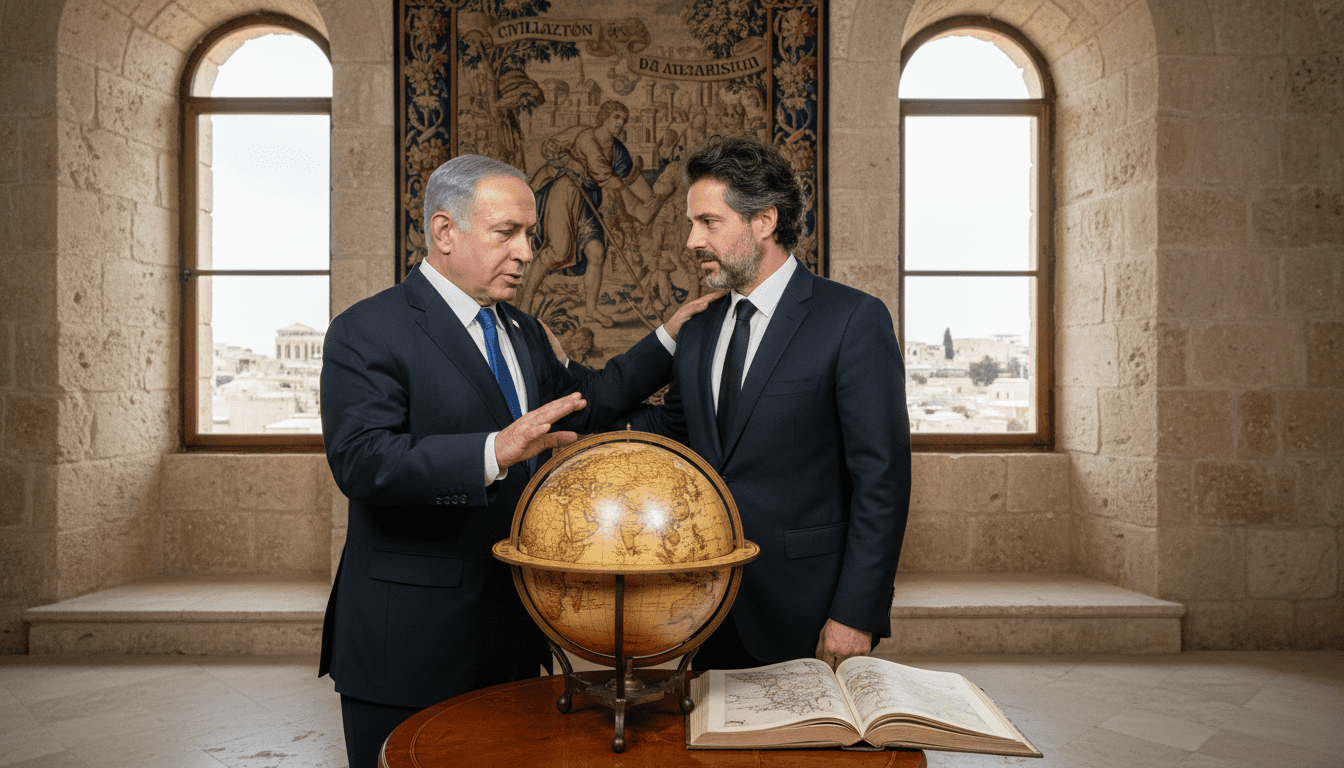
Netanyahu Iran: Israeli Leader Frames Confrontation as ‘Battle of Civilization’ During Milei Visit
Israeli Prime Minister Benjamin Netanyahu said the confrontation with Iran amounts to a larger ideological struggle, framing the Israel‑United States stance as a fight for Western values during Argentine President Javier Milei’s visit.
Remarks during Milei visit
Netanyahu delivered the comments while hosting Argentine President Javier Milei, portraying the dispute with Iran as more than a regional conflict. He described Iran as a force that seeks to undermine Israel and challenge the United States and Western civilization. The remarks came during a bilateral meeting that highlighted security and diplomatic themes between Jerusalem and Buenos Aires.
Netanyahu emphasized that Israel and the United States are aligned in confronting what he called a tyrannical Iranian posture. He said the campaign against Iran’s influence has produced significant results to date, but he warned the situation remains fluid. The prime minister’s language underscored escalating rhetoric that links national security to broader cultural and civilizational narratives.
Civilizational framing and rhetoric
By invoking a civilizational frame, Netanyahu moved beyond conventional security language to cast the dispute in existential and ideological terms. He suggested the confrontation is a contest between a rules‑based Western order and forces he labeled as barbaric. Such framing elevates the stakes and seeks to mobilize domestic and international support by appealing to shared values.
Political leaders have used similar language historically to rally allies and simplify complex geopolitical rivalries. Netanyahu’s choice of words aims to resonate with audiences that prioritize firm stances on terrorism and the defense of liberal institutions. The rhetorical shift also signals a desire to broaden the coalition opposed to Iran’s regional ambitions.
US‑Israel strategic alignment
Netanyahu explicitly tied Israel’s campaign to an allied effort with the United States, presenting the two countries as partners confronting a common adversary. The prime minister said the joint effort has achieved “enormous things,” framing recent actions as part of a coordinated strategy. This public articulation reinforces messaging that Washington and Jerusalem maintain synchronized objectives regarding Iran.
The emphasis on U.S. alignment may be intended to reassure international partners and domestic constituencies that Israel is not acting alone. It also underscores the diplomatic importance Netanyahu places on securing American backing in a high‑stakes regional contest. The comments did not spell out specific future measures, but they reaffirmed a shared commitment to countering Tehran’s influence.
Signals of volatility and preparedness
Netanyahu warned that the campaign “is not over yet” and that developments could occur at any time, signaling ongoing volatility in the region. That admonition reflects an expectation of further diplomatic, covert, or military moves that could alter the security landscape. Officials often use such language to prepare publics for potential escalations without providing operational details.
The prime minister’s statement intended to convey readiness and vigilance while avoiding specifics that might compromise tactics. It also served as a reminder that strategic environments can change rapidly and that policymakers are monitoring multiple contingencies. Observers reading the remarks may interpret them as both a caution and a rallying call to allies.
Diplomatic backdrop of the Milei trip
The visit by Argentina’s president provided a high‑profile backdrop for Netanyahu’s remarks, enabling him to broadcast his message to an international audience. Milei’s presence offered an opportunity to highlight bilateral ties and to frame shared concerns about regional stability and security. The timing allowed Netanyahu to link domestic, regional, and global dimensions of Israel’s approach to Iran.
State visits typically combine economic, cultural, and security discussions, and in this case security dominated the public narrative. Leveraging a foreign leader’s visit to underscore strategic positions is a common diplomatic practice aimed at amplifying messages. The public exchange reinforced Israel’s intent to keep the spotlight on Iran’s activities in international fora.
Netanyahu’s choice to present the confrontation with Iran as a civilizational struggle signals a deliberate rhetorical shift designed to broaden support and justify sustained pressure. The prime minister acknowledged achievements to date while cautioning that new developments remain possible, framing the situation as ongoing and unpredictable.
