
UK government appeals High Court ruling on Palestine Action proscription
UK government appeals High Court ruling that blocked proscription of Palestine Action, saying judges ignored parliamentary safeguards and constrained authorities. (160 characters)
Palestine Action was at the centre of a fresh legal fight on April 28, 2026, after the Home Office lodged an appeal at the Court of Appeal seeking to overturn a February 2026 High Court judgment that found the group’s proscription unlawful. The government told the appellate judges that the earlier ruling misapplied the law and weakened the statutory framework that governs proscription decisions. The appeal follows a politically charged debate over where militant protest ends and terrorism begins.
Government appeals High Court ruling
The Home Office argued in court papers that the High Court judgment failed to give proper effect to democratic processes that approved the proscription. Counsel for the government said the decision by then-Home Secretary Yvette Cooper and its subsequent parliamentary affirmative resolution carried weight that the divisional court did not sufficiently respect. The government’s legal team urged the Court of Appeal to restore what it described as the correct balance between national security powers and judicial oversight.
Legal arguments over terrorism threshold
James Eady, appearing for the Home Office, told judges that Palestine Action meets the statutory test of being “concerned in terrorism” because certain actions attributed to the group fall within the Terrorism Act 2000. He pointed to episodes of criminal damage and confrontations during protests as evidence that the organisation’s activities crossed the legal threshold. Eady acknowledged the case was legally complex, distinguishing it from proscribed groups such as Hamas or the IRA while maintaining that the material facts nonetheless satisfy the statutory definition.
Rights and proportionality at centre
Opposing counsel for Huda Ammori, a co-founder of Palestine Action, argued that the High Court was correct to find the proscription disproportionate and in breach of Home Office policy. Raza Husain KC told the court that the core aim of terrorism—causing deaths and serious harm—was not the characteristic purpose of Palestine Action. He said that the legislation is broad and that applying proscription in this context risked an undue interference with freedoms of expression and assembly.
Allegations of property damage and confrontations
Judges heard contested evidence about incidents involving property damage and confrontations at direct actions, with the High Court previously treating some of those events as criminal rather than constituting terrorism. Defence lawyers accepted that a minority of actions involved unlawful damage but said those incidents were outliers rather than indicative of an overarching violent strategy. The government countered that the pattern of behaviour and tactics employed by some activists justified invoking counterterrorism measures.
Public response and celebrity letter
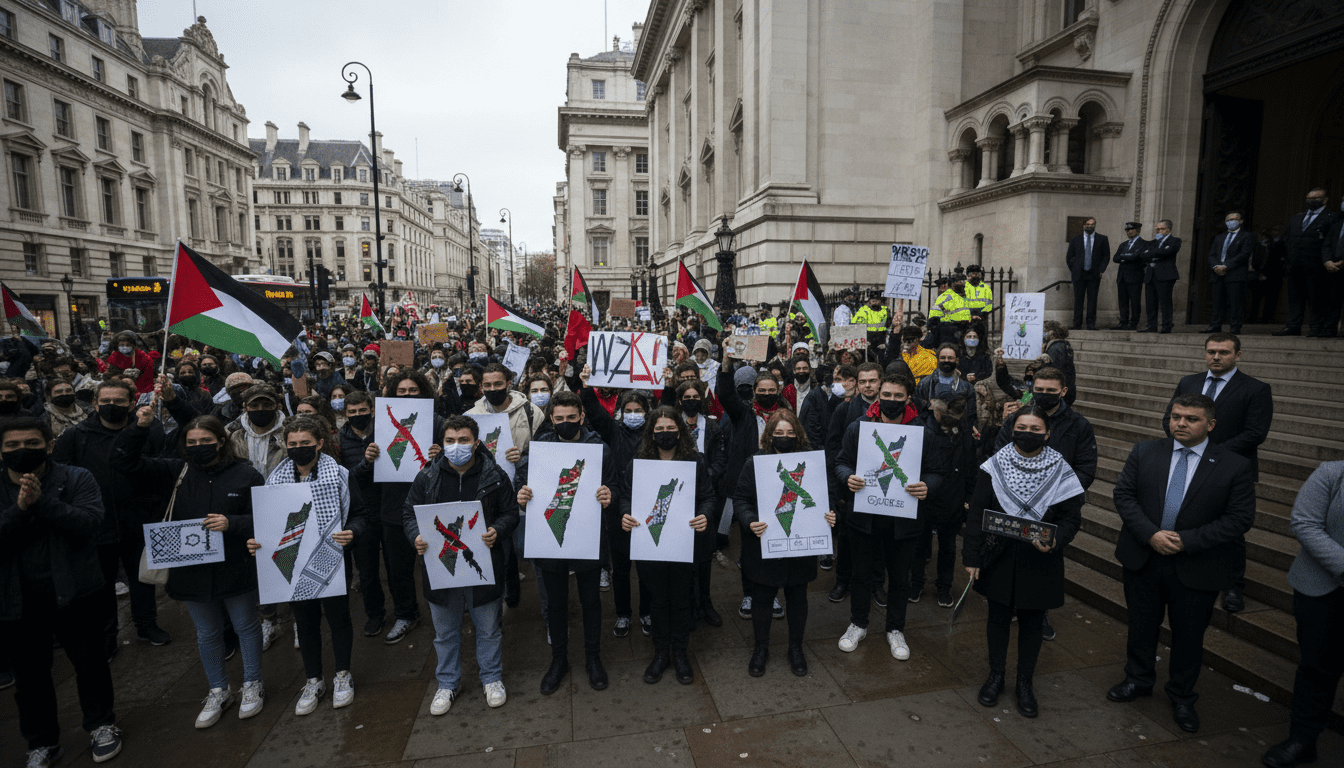
Outside court, supporters delivered a letter of defiance signed by about 1,700 people, including public figures such as Sally Rooney, Brian Eno and Greta Thunberg, which Lady Chief Justice Sue Carr read into the record after lunch. The signatories stated their opposition to genocide and their support for Palestine Action, underscoring the public and cultural dimensions of the dispute. The demonstration of public backing added a high-profile element to proceedings and highlighted the divisive public reaction to the proscription.
The defence team also emphasised the wider effects of proscription on protesters who did not participate in direct action. Counsel told judges that a mass campaign of civil disobedience after the ban led to more than 2,000 arrests by October 2025, many for carrying placards that read “I oppose genocide, I support Palestine Action.” Those detained included elderly demonstrators, a former government adviser, a retired army officer and an 81-year-old former magistrate, the court was told.
Distinction between civil disobedience and criminality
Lawyers for Ammori pressed a historical comparison, arguing that much protest activity sits within traditions of civil disobedience that accept arrest and legal consequence. Raza Husain urged the court to preserve the line between public, peaceful dissent—invoking examples he described as akin to Rosa Parks—and criminal damage addressed through ordinary criminal law. He warned that treating a small proportion of actions as terrorism risks collapsing long-standing legal distinctions and expanding counterterrorism powers into the realm of protest.
Judges probed those distinctions in questioning, considering whether the character of Palestine Action’s tactics should determine the legal response or whether proscription was a proportionate remedy to the alleged harms. The submissions revealed disagreement over whether the organisation’s conduct, in aggregate, met the statutory definition or whether criminal prosecutions, rather than proscription, remained the appropriate route.
Court proceedings will move into a partly closed phase as the appeal continues on April 29 and April 30, 2026, when judges will consider material that cannot be heard in public. The closed sessions reflect the sensitive evidential and national security issues at stake and signal the likelihood of detailed factual examination over the next stages of the appeal. Observers expect the Court of Appeal to issue a substantive ruling in due course once all material has been considered.
The outcome of this appeal will determine whether the government retains the ability to use proscription powers in similar contexts or whether courts will impose tighter limits on the executive’s use of counterterrorism designations. That judgment will carry implications for how direct-action protest groups are policed and how the legal system balances public order, property rights and fundamental civil liberties.
