
Ukraine accuses Israel of accepting stolen Ukrainian grain after Panormitis docked in Haifa
Ukraine accuses Israel of accepting stolen Ukrainian grain after the Panormitis docked in Haifa; Kyiv summons ambassador, warns of sanctions and legal steps.
Ukraine’s president accused Israeli authorities on Tuesday of knowingly receiving stolen Ukrainian grain after the Panormitis, a Panama-flagged freighter, arrived off Haifa, and Kyiv said it will prepare sanctions against those involved. President Volodymyr Zelenskyy and other Ukrainian officials said the cargo originated in Russian-occupied Ukrainian territory and described the unloading as part of a wider pattern of illicit exports. Kyiv formally summoned Israel’s ambassador and delivered a protest, while warning of diplomatic and legal measures if the matter is not resolved.
Zelenskyy’s public accusations and sanctions threat
President Volodymyr Zelenskyy wrote on the social platform X that Israeli authorities could not claim ignorance because a ship carrying stolen Ukrainian grain had reached an Israeli port. He stated that Russia systematically seizes grain from occupied Ukrainian territories and exports it through intermediaries, and that Israel’s acceptance of such cargo would violate its own laws, according to Ukrainian officials. Kyiv announced it is preparing a sanctions package targeting anyone who participates in or profits from this trade.
Ukrainian officials framed the response as part of a broader strategy to protect national resources and to pursue accountability in states where the ships call. The public accusations and the announced sanctions signal Kyiv’s intention to escalate diplomatically if Israel permits unloading.
Panormitis arrived in Haifa amid renewed tensions
The Panormitis sailed into the Bay of Haifa earlier in the week, according to Ukrainian statements, prompting immediate concern in Kyiv that the vessel carried grain taken from occupied Ukrainian ports. Ukrainian investigators and advocacy projects said the cargo included wheat and barley they believe originated from the port of Berdyansk and was subsequently routed through Russian harbors to conceal its provenance. The arrival rekindled tensions after a similar incident earlier in April involving the vessel Abinsk.
Kiev has pointed to a pattern of transfers and rewrites of shipping paperwork that obscure origin, a practice critics call part of a “shadow fleet” operation used to move seized commodities onto global markets. Those practices, Kyiv says, facilitate the sale of material taken from Ukrainian producers and communities.
Diplomatic moves: ambassador summoned and protest lodged
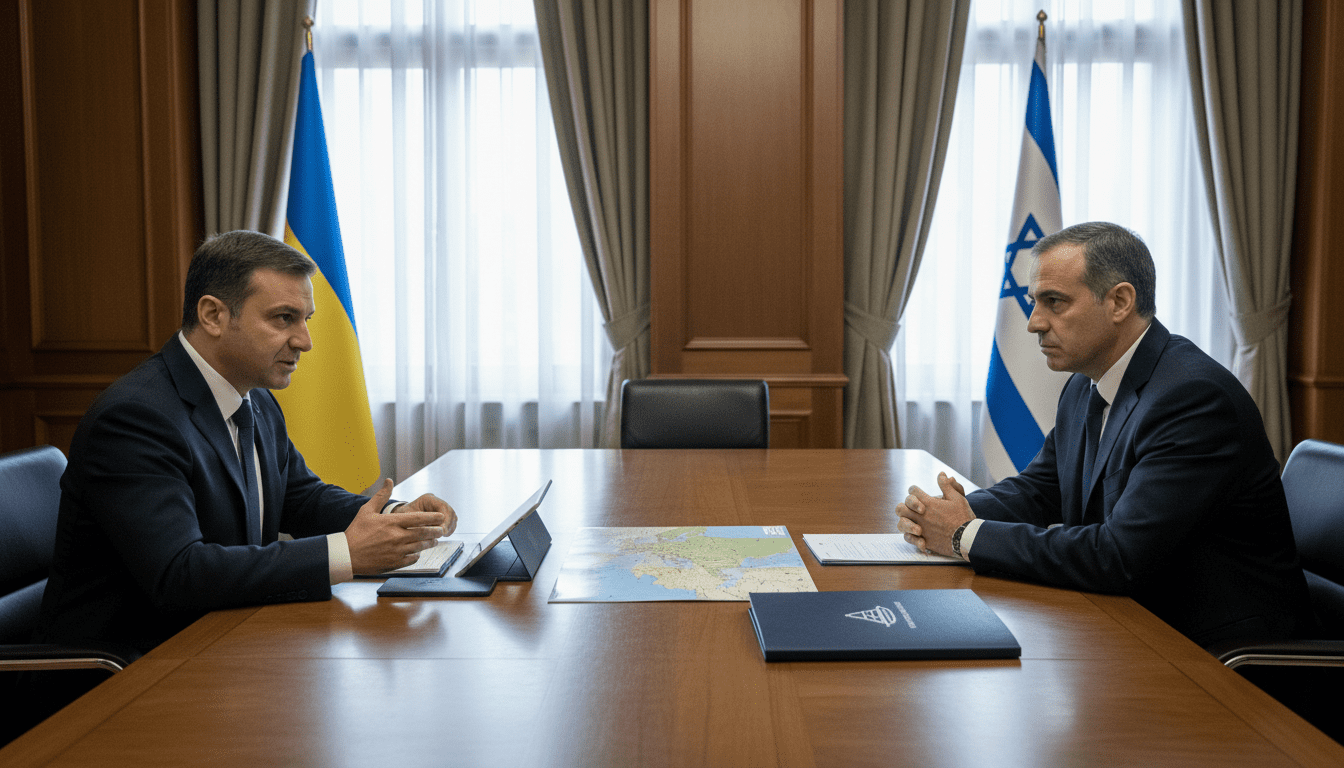
Ukraine summoned Israel’s ambassador, Michael Brodsky, handed him an official protest letter and demanded that Israeli authorities act “appropriately,” officials said. Foreign Ministry statements emphasized that Kyiv prefers partnership and mutual respect but will not tolerate actions that undermine bilateral ties. Earlier diplomatic warnings reportedly urged Israel not to permit the ship to unload; Ukrainian sources say such warnings went unheeded.
The formal summoning reflects the seriousness with which Kyiv treats the incident and signals preparedness to pursue further diplomatic and legal avenues depending on Israel’s response. Kyiv has also said it is collecting evidence in countries where these ships call to support criminal proceedings.
Israel contests claims and promises review
Israel’s foreign minister, Gideon Saar, responded sharply in public remarks, rejecting that diplomatic disputes should be played out on social media and saying that allegations are not the same as proof. Saar said Israel would examine the matter, and that claims presented thus far did not constitute sufficient evidence for immediate action. His comments underscored a demand for documentation before taking punitive steps.
Israeli officials have faced pressure to explain how ships with contested cargo enter ports and whether due diligence was applied to verify export documentation. The government’s pledge to investigate buys time while both sides weigh diplomatic consequences.
Scale of alleged seizures and methods of concealment
Kiev and independent investigators estimate that Russian forces have seized as much as 15 million tonnes of Ukrainian grain since the start of the occupation of parts of the country, and that much of it has been exported to avoid sanctions. Investigative groups tracking maritime transfers say the practice involves moving cargo from occupied Ukrainian ports to Russian harbors and then transferring it to different vessels whose paperwork lists false loading ports. Journalists working with the Seacrime project reported that the Panormitis had loaded Ukrainian wheat and barley before reaching Haifa.
Ukraine contends that revenue from those exports helps fund the Russian war effort, and has characterized the sales as plunder and a war crime. To counter the practice, Kyiv says it is building cases in jurisdictions where ships unload and seeking international cooperation to freeze proceeds or detain vessels.
Prior incidents and implications for bilateral relations
Earlier in April, the Russian freighter Abinsk arrived in Haifa with an estimated 44,000 tonnes of Ukrainian wheat, prompting a formal Ukrainian rebuke at the time. Media reports and Ukrainian statements suggest several deliveries this year and since 2023 of grain allegedly taken from Ukrainian territory have reached Israel, a pattern that Kyiv says undermines trust between the two countries. Israeli officials say they require proof before taking action, while Ukraine views inaction as tacit acceptance.
The dispute poses a test for otherwise friendly relations and could force Israel to balance legal standards, trade procedures and political considerations. Kyiv has warned that failure to act could lead to a widening diplomatic rift and additional countermeasures.
Ukraine says it will press on with evidence gathering and legal steps while continuing to export grain itself via remaining Black Sea routes, which it has partially restored since the worst months of the conflict. The coming days will show whether Israeli authorities conclude their review with measures to block unloading, return cargo, or pursue other remedies to address Kyiv’s claims.
