
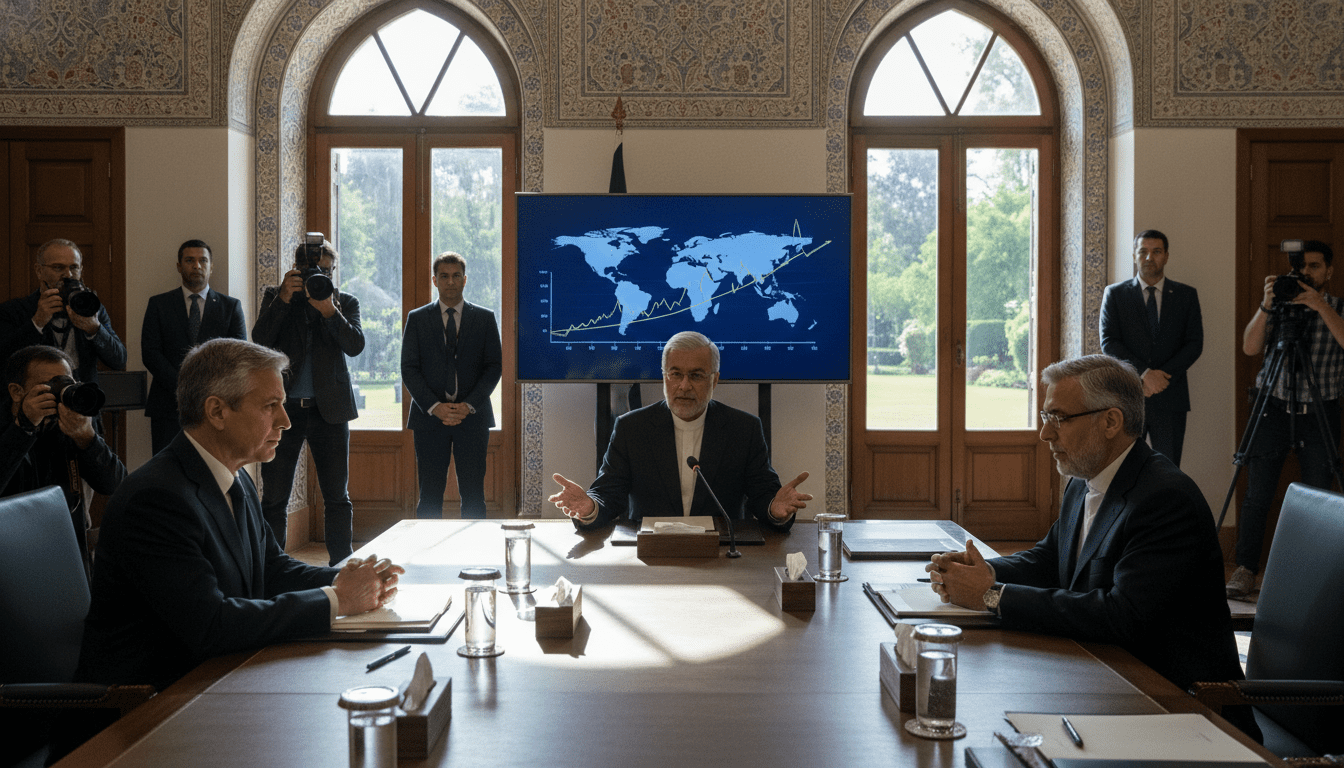
U.S.-Iran talks in Islamabad end without deal, two-week truce remains fragile
Pakistan-hosted U.S.-Iran talks in Islamabad ended after more than 12 hours of negotiations without an agreement, leaving a fragile two-week ceasefire as the only immediate barrier to renewed hostilities.
The Islamabad talks brought U.S. and Iranian delegations face to face for the highest-level direct engagement since 1979, but negotiators failed to bridge core differences over Iran’s nuclear programme and regional security demands. Pakistani officials said they would continue to facilitate further engagement, while both Washington and Tehran framed the outcome as partial progress amid unresolved red lines. The failure to conclude a deal has focused attention on the limited diplomatic window available to avert renewed escalation.
Talks conclude after more than 12 hours
The U.S.-Iran talks in Islamabad ran for over half a day and ended on Sunday without a signed memorandum, officials from both capitals confirmed. Delegations from Washington and Tehran left the table with competing public summaries: U.S. leaders stressing a need for ironclad nuclear commitments, and Iranian officials accusing the American side of shifting demands. Pakistani ministers who brokered the meetings described the round as an opening step in a continuing process rather than a final settlement.
Washington insists on nuclear commitments
U.S. negotiators, led by Vice President JD Vance with senior envoys alongside him, framed the nuclear question as non-negotiable and said a clear, affirmative commitment from Tehran not to pursue a nuclear weapon was required. According to American statements, the U.S. delegation presented what it called a final method of understanding and left the offer on the table while insisting that broader regional security demands must accompany any concession. U.S. officials also signalled that steps taken to limit Iran’s maritime leverage, including a naval blockade announced by President Trump, formed part of a strategy to reset bargaining dynamics.
Tehran says demands shifted and trust eroded
Iranian leaders pushed back, saying they negotiated in good faith but encountered what they described as maximalist positions and changing goalposts. Tehran’s delegation, led by Parliament Speaker Mohammad Bagher Ghalibaf, said its team proposed forward-looking initiatives but could not secure sufficient guarantees or relief on issues ranging from frozen assets to regional hostilities. Iran’s foreign ministry acknowledged partial understandings on some points yet stressed gaps remained on several decisive items, including guarantees over its nuclear programme and the right to charge for transit through the Strait of Hormuz.
Pakistan retains mediator role despite setback
Pakistan, which hosted the talks and maintained contact with both delegations, emerged with its diplomatic position intact even as the negotiation faltered. Islamabad’s foreign minister said Pakistan would continue to facilitate dialogue, and analysts noted that keeping open the only channel acceptable to both sides is a meaningful diplomatic achievement. Observers cautioned that Pakistan’s leverage is positional rather than coercive: its utility lies in convening and structuring talks rather than imposing outcomes, and sustaining trust will be essential if it is to guide a longer process.
Strait of Hormuz and Lebanon escalate stakes
The wider security context sharpened pressure on negotiators, as Iran’s control measures in the Strait of Hormuz and continued Israeli strikes in Lebanon were cited by both sides as central bargaining issues. Iranian manoeuvres to require clearance codes and escorted transit have been portrayed by Tehran as security measures and by critics as a tolling mechanism that gives it leverage. U.S. and allied concerns that disruptions could push oil prices higher and produce a broader regional conflagration helped harden positions on both sides, narrowing the diplomatic margin for incremental compromise.
Diplomatic window narrows as truce clock ticks
Pakistani officials privately warned that the initial two-week truce offers a limited period for technical and political alignment and urged both capitals to use the interval constructively. Analysts suggested any sustainable breakthrough would require a staged sequencing of reciprocal steps — early nuclear assurances from Iran paired with phased relief and security guarantees — but acknowledged that mutual distrust will complicate a stepwise approach. With the ceasefire still in place, mediators insist the immediate focus must be on sustaining dialogue and preventing actions that would close the diplomatic window.
The Islamabad round underscored how entrenched differences over nuclear constraints, regional security frameworks and maritime access remain the principal obstacles to a lasting settlement, and diplomats say the coming days will test whether both sides can convert proximity into a process that steadily reduces risk rather than simply postponing it.
