
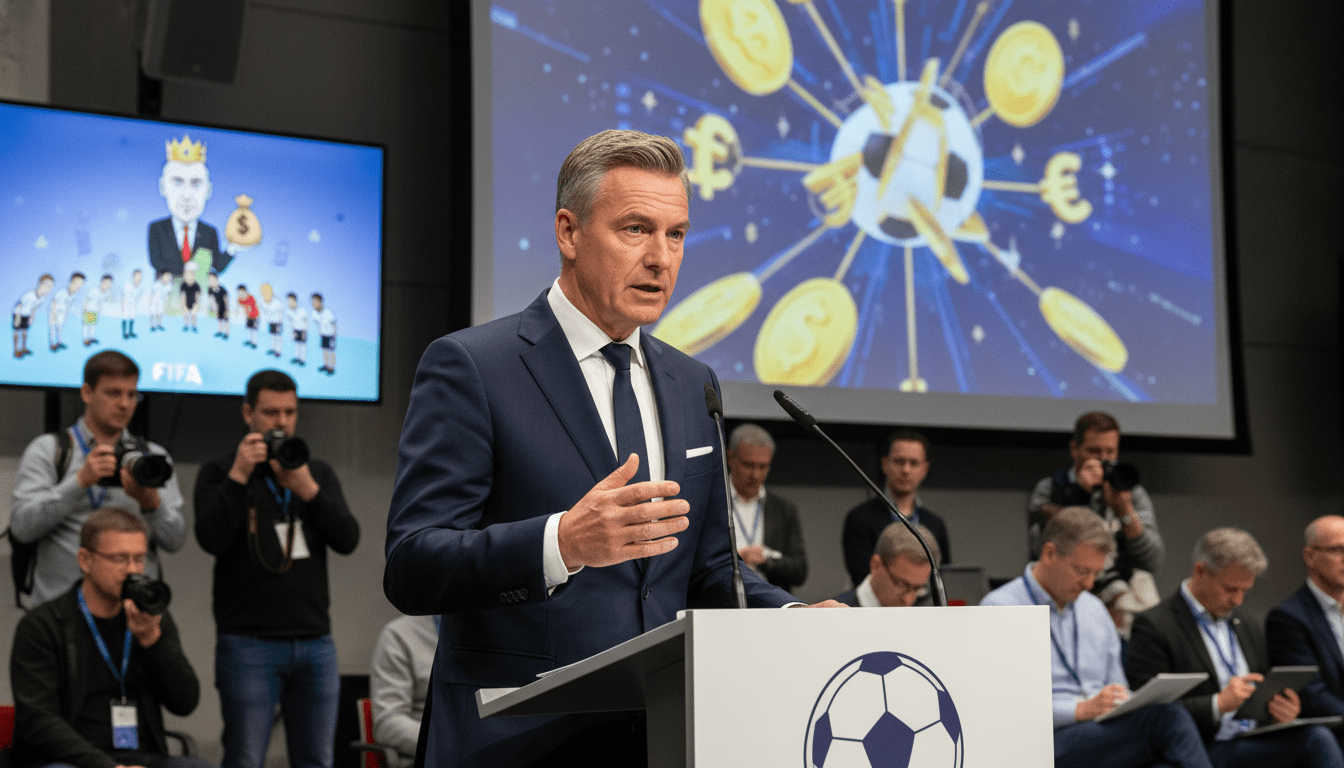
Bierhoff interview: Oliver Bierhoff on the USA, FIFA capitalism and Germany’s cautious stance
Meta description: Oliver Bierhoff interview on June 3, 2026 examines U.S. soccer growth, limits of FIFA’s commercial model, player welfare and why the German FA is restrained.
Oliver Bierhoff, in a Bierhoff interview published on June 3, 2026, laid out a wide-ranging appraisal of U.S. soccer, the limits of what he called FIFA’s commercial logic, and questions over player welfare and funding. He warned that the sport’s rapid commercialization faces structural and social limits and urged clearer thinking about who can afford proposed changes. Bierhoff’s remarks framed the debate around the 2026 World Cup and the interplay between national federations and global governing bodies.
Bierhoff on U.S. soccer’s momentum
Oliver Bierhoff praised the expansion and investment in the United States while noting important caveats. He said America’s market and infrastructure growth are reshaping global competition and creating new opportunities for players, sponsors and broadcasters. Bierhoff stressed that commercial success in the U.S. does not automatically translate to sustainable development elsewhere.
He emphasized that the U.S. model benefits from scale and public interest that many federations cannot replicate. That gap, he argued, should shape how European associations plan investment and talent development. Bierhoff suggested targeted partnerships and exchanges rather than wholesale adoption of the U.S. template.
Bierhoff critiques FIFA’s commercial model
Bierhoff used the term “FIFA capitalism” to describe an approach that places commercial expansion at the center of decision-making. He cautioned that limitless commercialization can create distortions in scheduling, competition formats and club-versus-country tensions. For Bierhoff, the question is where to set boundaries so the sport remains competitive and accessible.
He argued that commercial incentives can undermine sporting fairness when revenue drives calendar overload and favors wealthier teams. Bierhoff called for clearer governance and safeguards to prevent financial considerations from overriding sporting logic. His comments framed commercial excess as a governance challenge rather than a purely market one.
Concerns over player welfare and “camp fatigue”
Bierhoff raised concerns about player welfare in an era of dense fixtures and prolonged training camps, warning of what he termed a “camp fatigue” effect. He described the physical and psychological strain on players who move constantly between club and national duties. Bierhoff said federations and leagues must coordinate better to protect athletes’ long-term health.
He recommended limiting unnecessary travel and streamlining international windows to reduce burnout. Bierhoff linked welfare to performance, noting that protecting players is also essential for the national teams’ competitive prospects. His stance signals growing attention within football circles to mental health alongside physical load management.
German FA’s approach toward FIFA under Infantino
On the relationship between the German Football Association and FIFA, Bierhoff described a notably cautious posture. He said the German FA has often been restrained in its dealings with FIFA leadership, including under President Gianni Infantino, and questioned whether that reticence serves national interests. Bierhoff suggested that more forceful negotiation could better protect competition integrity and the domestic calendar.
He stopped short of prescribing confrontation but urged clarity on red lines and national priorities. Bierhoff’s comments reflect internal tensions in many federations that balance cooperation on global events with defending domestic structures. The remarks underscore the leverage questions that will loom as FIFA pursues further commercial initiatives.
Financial access and the question of affordability
Echoing a pointed German headline that asked who would pay, Bierhoff highlighted affordability as central to any major reforms. He warned that ambitious projects—expanded tournaments, new youth programs, or costly infrastructure—must be designed with equity in mind. Bierhoff argued that without careful planning, reforms risk privileging wealthy clubs and nations.
He called for funding models that protect grassroots football and ensure pathways remain open to talent regardless of background. Bierhoff also urged transparency in how revenues from events are distributed among clubs, federations and development programs. His comments aim to tether commercial ambition to social responsibility within the game.
Implications for the 2026 World Cup and beyond
Bierhoff framed his assessments in the context of the 2026 World Cup and a broader recalibration of global football. He said the tournament’s expanded footprint will test logistics, governance and the sport’s capacity to serve diverse fans and communities. Bierhoff urged stakeholders to treat the World Cup as an opportunity to set standards on welfare, scheduling and revenue sharing.
He emphasized that lessons from 2026 should guide future decision-making rather than justify unchecked expansion. Bierhoff’s prescription is cautionary: use major events to pilot reforms and protect the game’s competitive balance. His perspective adds a senior federation voice to debates that will shape policy in the coming years.
Oliver Bierhoff’s interview offered a measured blend of appreciation for commercial progress and concern about the unintended consequences of rapid expansion. He pushed for concrete steps to protect players, sustain grassroots access and ensure that governance keeps pace with market pressures. As federations and FIFA pursue new formats and revenues, Bierhoff’s call for clarity, balance and accountability is likely to influence discussions across European football.
