
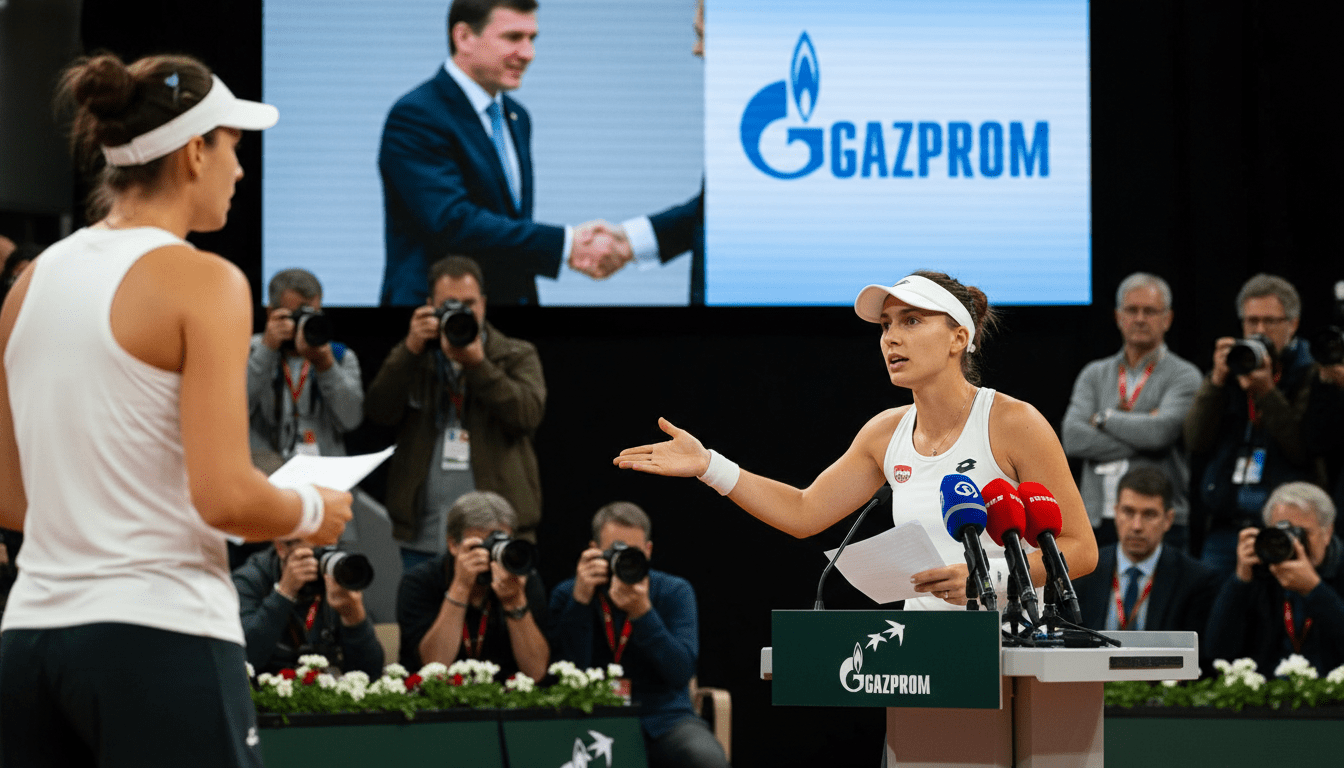
Oleksandra Olijnykowa exits French Open after tense, politicized third‑round clash
Oleksandra Olijnykowa used her French Open platform to denounce Russian war crimes after a third‑round loss, prompting heightened security and debate now.
Olijnykowa exits French Open after third‑round defeat
Oleksandra Olijnykowa’s run at Roland‑Garros ended in the third round with a 5‑7, 1‑6 loss to Diana Schnaider, but the match drew attention for reasons beyond the scoreline. The 25‑year‑old Ukrainian repeatedly used her press appearances in Paris to speak about the Russian invasion and alleged war crimes, making her presence at the event as political as it was athletic. Her statements and the increased security around Court 7 turned a routine Grand Slam match into a focal point for broader tensions between sport and geopolitics.
Heightened security and visible tension on Court 7
Tournament officials increased security for the match, with additional stewards and visible personnel near the players’ benches and spectator areas. Observers noted that the measures contrasted with Olijnykowa’s own portrayal of life back home, where she said she faces an ongoing threat from drones and missiles. The juxtaposition — heavy protection at the venue versus constant danger in Kyiv — underlined the personal stakes the athlete described during her media appearances.
Accusations linking opponents to Gazprom event
In press conferences before and after the match Olijnykowa criticized entities she ties to the Russian state, naming tournaments sponsored by Gazprom as examples of sport entangled with political money. She argued that participation in such events supports organisations she says finance or enable abuses, and she framed her own statements as a humanitarian appeal rather than partisan positioning. Those remarks intensified scrutiny of players with any perceived ties to Russian‑linked sponsors and raised questions about how athletes navigate commercial opportunities amid conflict.
Schnaider’s response and pressroom dynamics
Diana Schnaider, Olijnykowa’s opponent, took a different approach in the media, focusing on tennis and declining to engage with the accusations leveled against her or the broader political debate. In her press appearance she said she preferred to concentrate on her sport and avoided public comment on the war and the sponsorship questions. That stance highlighted a split on the tour between players who speak out on political issues and those who keep the spotlight on competition, a division that has repeatedly surfaced at major tournaments.
Pressure on Ukrainian players at major tournaments
Several Ukrainian players at Roland‑Garros have carried the burden of representing their country and drawing attention to the humanitarian consequences of the conflict. Olijnykowa, who remains based in Kyiv, described family members directly affected by the war and framed her advocacy as inseparable from her identity as a player. Other Ukrainians on the circuit have also expressed fatigue and emotional strain from repeatedly recounting personal losses and fears while competing at the highest level.
Debate over politics and sponsorship in tennis
The episode in Paris has renewed debate about the relationship between elite sport and political actors or sponsors linked to state interests. Critics argue that accepting funding or participation from organisations viewed as complicit in human rights abuses raises ethical concerns for players and tournaments. Defenders of athletes who participate in such events counter that sport can offer financial opportunity and that individual competitors should not be held responsible for complex geopolitical decisions beyond their control.
The French Open match and the ensuing pressroom exchanges have underscored how contemporary conflicts reverberate through international sport, forcing players, organizers and fans to confront uncomfortable questions. Olijnykowa’s public criticism and the differing responses from opponents have made clear that decisions about where to play and whom to endorse now carry political weight as well as professional consequence. As Grand Slam events continue to draw a global field, the tensions seen on Court 7 in Paris are likely to reappear wherever athletic competition intersects with international conflict.
