
FIFA World Cup 2026: Spain into Final as Tournament Enters Decisive Week
Spain reach the final of the FIFA World Cup 2026 after defeating France, while host nations Mexico, Canada and the United States stage the expanded 48-team tournament with record venues and matches. The tournament’s revised format, time-zone logistics and broadcasting arrangements have shaped a World Cup unlike any before it.
Spain reaches final after 2-0 win over France
Spain secured a 2-0 victory over France in one of the semifinals, booking a place in the final scheduled for July 19 in New York. The result gave Spain a path to the title match opposite the winner of the other semi between England and Argentina. With the win, Spain capped a late tournament surge that has seen them navigate the expanded field to the championship match.
Hosts, stadiums and unprecedented scale
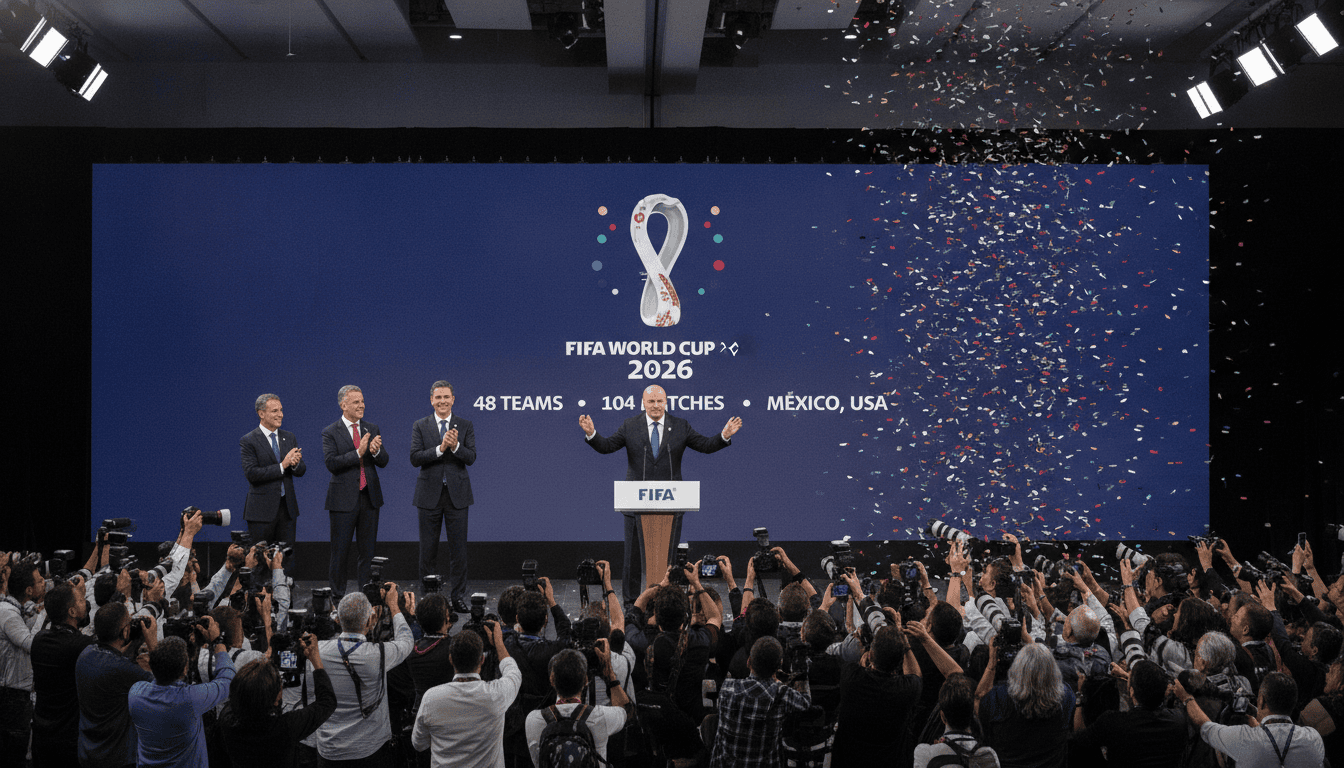
The FIFA World Cup 2026 is being staged across three countries — the United States, Mexico and Canada — using 16 stadiums and 104 matches, the most in the competition’s history. Venues range from Mexico City’s Azteca to the New York–area stadium in East Rutherford, with capacities between about 45,000 and more than 90,000 spectators. The tri-nation hosting arrangement has introduced time-zone challenges for global viewers and logistical demands for teams and organizers alike.
New 48-team format and group-stage mechanics
The tournament operates with twelve groups of four teams each; the top two teams in each group advance automatically, while the eight best third-placed teams qualify for a new round of 16. That change extended the group-stage narrative and left teams in some pools facing two days of uncertainty over whether a third-place finish would suffice to advance. Tiebreakers follow goal difference, goals scored and head-to-head results, with fair-play points used only as a last resort.
Germany’s campaign and early exit on penalties
Germany advanced from Group E after an emphatic opening win against Curaçao and a tight victory over the Ivory Coast, but a loss to Ecuador complicated their path. The DFB side reached the knockout stage but were eliminated in the round of 16 after a 1-1 draw with Paraguay and a subsequent defeat in the penalty shootout. The exit marked an unexpectedly early end to a campaign that had shown flashes of dominance and raised questions about tactical choices and squad rotation.
Knockout highlights, controversies and semifinal build-up
The knockout rounds produced several notable matches, including surprise results and tense penalty shootouts that reshaped the bracket. Spain’s semifinal success followed quarter-final victories that underscored a pragmatic, defensively disciplined approach. The other semi, contested between England and Argentina, was touched by off-field tensions and political commentary ahead of the match, which officials and team staff urged should not overshadow the sport. A third-place game and the final in New York remain scheduled as organizers and broadcasters prepare for the tournament’s climax.
Television and streaming arrangements across markets
Broadcasters in key markets have split rights across free-to-air public networks and subscription platforms. Public broadcasters ARD and ZDF are carrying a significant portion of the tournament’s matches, while the telecom and pay-TV provider MagentaTV is offering access to all 104 games. Viewers can also follow live streams via the official broadcasters’ apps and digital platforms, where scheduling is presented in Central European Summer Time for many international audiences.
As the FIFA World Cup 2026 moves into its final days, attention will focus on the remaining fixtures, stadium readiness and how the expanded format influenced competitive balance and fan experience. The tournament’s combination of record-scale hosting, shifting time zones and dramatic knockout football has left an indelible mark on this edition of the World Cup.
