
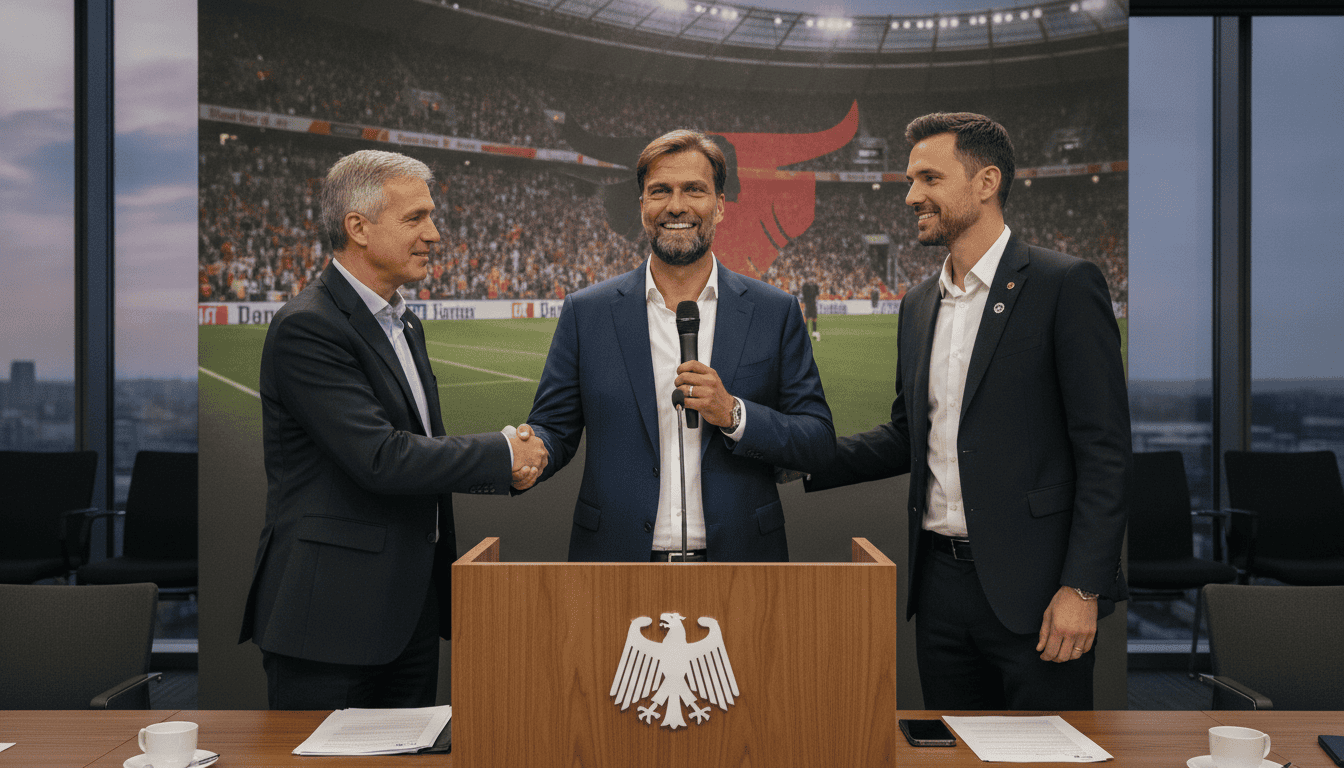
Jürgen Klopp Poised to Become Germany Coach After DFB and Red Bull Hold Key Talks
DFB negotiators edge closer to signing Jürgen Klopp as Germany coach after reaching terms in New York and entering final talks with Red Bull over his release.
Deal in New York Sets Contract Framework
The German Football Association (DFB) and Jürgen Klopp have reportedly reached agreement on the main terms of a contract that would see Klopp take charge of the national team through 2030. The DFB’s negotiating team, including president candidates and sports officials, met Klopp and his representative at New York’s John F. Kennedy airport, where the manager signalled willingness to lead Germany. The understanding reached in those talks is contingent on resolving contractual issues with Klopp’s current employer, Red Bull, whose permission is required before any formal signing.
DFB Holds Talks With Red Bull Over Release Terms
DFB vice-president Hans-Joachim Watzke confirmed discussions took place between senior DFB officials and Red Bull representatives in Munich as part of efforts to secure Klopp’s early release. Central to those conversations was whether Klopp can exit his existing role as Red Bull’s Head of Global Soccer, a contract that runs until 2029. The federation is said to be seeking an arrangement that avoids a substantial transfer fee while allowing Red Bull to retain Klopp in a reduced or advisory capacity.
Possible Advisory Role for Klopp at Red Bull
Negotiators are exploring a compromise that would permit Klopp to assume the Germany post while remaining on the periphery of Red Bull’s football operations in a consultancy role. Such an arrangement could preserve Red Bull’s investment while enabling Klopp to focus on the national team, according to people briefed on the matter. The federation has explicitly sought to limit financial outlays to secure Klopp, preferring a negotiated solution rather than paying a large compensation package to trigger an immediate contract termination.
Final Conversations Expected in the United States
DFB officials have indicated that conclusive talks between Klopp and Red Bull chief Oliver Mintzlaff are scheduled to take place in the United States later this week. Those meetings are intended to finalize the mechanics of Klopp’s departure and any transitional arrangements, with the DFB stressing that a completed agreement with Red Bull is a prerequisite for an official announcement. If those discussions succeed, the federation expects Klopp to be available to sign and be introduced as head coach imminently.
Transition Following Nagelsmann’s Resignation
Klopp would succeed Julian Nagelsmann, who stepped down after Germany’s poor showing at the recent World Cup. The DFB has been under pressure to stabilise the national team and secure a high-profile coach to lead preparations for upcoming Nations League fixtures and the path to major tournaments. Klopp’s appointment is being framed as a move to restore experience and credibility to a squad that has struggled for consistent form at senior international level.
Immediate Calendar and First Match Plans
Should Klopp’s release be confirmed, the DFB plans an early formal presentation, potentially at the start of next week. He is expected to remain available for broadcasting duties through the World Cup final this weekend, after which he would shift focus to the national team. The first match under Klopp’s tenure is scheduled for 24 September in Amsterdam, where Germany will face the Netherlands in the UEFA Nations League, giving the new coach a platform to set tactical direction and evaluate personnel.
Implications for Germany and Club Relations
An appointment of Klopp would reshape Germany’s coaching landscape and reaffirm the federation’s preference for an experienced, high-profile leader. It will also test the evolving relationship between national associations and global football groups like Red Bull, where long-term commercial and sporting commitments often complicate managerial mobility. How the parties resolve contractual overlaps could set precedents for future moves involving executives and coaches employed by multifaceted football conglomerates.
Klopp’s likely arrival triggers immediate practical questions about staff, player selection, and the blend of his club-style football with the national team’s existing structure. The DFB will need to determine whether Klopp brings a partial coaching staff from his previous roles or assembles a new team to handle international demands. Early preparations ahead of the September fixture will shape the narrative of his tenure and influence Germany’s performance in the short term.
Public and fan expectations will be high if the deal is ratified, given Klopp’s reputation for motivational leadership and tactical acumen at top European clubs. The federation faces the delicate task of managing expectations while providing Klopp the tools and time to implement a system that can reverse recent declines. Ultimately, the success of the appointment will be judged by tangible improvements in results and the team’s readiness for competitive fixtures.
If final agreement is reached with Red Bull this week, Klopp could be formally presented as Germany’s head coach within days, enabling a swift start to preparations for the Nations League encounter in Amsterdam on 24 September.
