
Knesset Approves Temporary Ultra-Orthodox Military Exemption, Suspending Arrests of Draft Refusers
Israel’s Knesset approved a temporary ultra-Orthodox military exemption, suspending arrests of draft refusers in a 58–54 vote amid protests and court petitions.
The Knesset on Tuesday approved a law that temporarily bars the arrest and prosecution of ultra-Orthodox Jews who refuse military service, a move that supporters call a necessary protection for religious students and critics say undermines equality. The vote, carried 58–54, shields tens of thousands of ultra-Orthodox men from detention for several months and heightens a national debate over the ultra-Orthodox military exemption.
Knesset vote and immediate effect
The bill was passed in a late sitting of the Knesset as parliament prepared to break for its summer recess ahead of a scheduled new election, and it takes immediate effect pending legal review. Formally, the measure suspends arrests and criminal proceedings against ultra-Orthodox draft refusers until November 30, but procedural clauses make a longer delay likely.
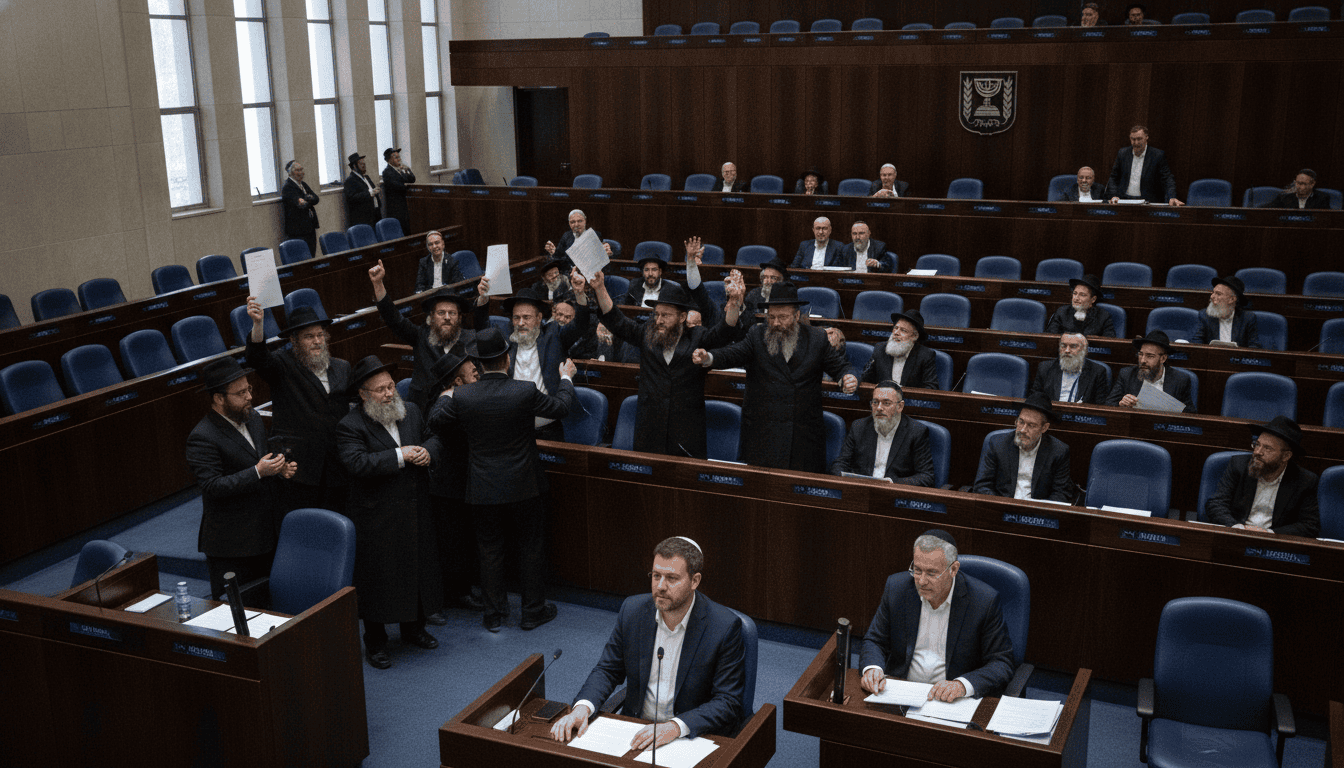
Members of the ultra-Orthodox bloc celebrated in the chamber after the result, while opposition lawmakers chanted “shame” and protested the timing and content of the legislation. The narrow margin reflected deep division across the chamber and underscored the fragility of the governing coalition.
Coalition tensions and ministerial fallout
Passage of the law exposed sharp rifts within Prime Minister Benjamin Netanyahu’s coalition, as ultra-Orthodox parties demanded priority consideration for the bill and threatened to withhold support from other government measures. Netanyahu ultimately acceded to those demands to secure approvals for other items his government sought to enact before the parliamentary break.
The dispute prompted political consequences: the deputy foreign minister, Sharren Haskel, resigned in protest, and members of nationalist-religious factions publicly criticized the exemption as detrimental to Israel’s security. Several coalition deputies reportedly refused to back the bill on grounds it created an unacceptable disparity in civic obligations.
Scope and practical duration of the exemption
While the law is written to pause enforcement for roughly three months until November 30, it contains an automatic extension provision tied to the formation of the next Knesset, meaning the pause could last at least half a year in practice. The exemption will apply not only to current cases but also to new draft refusers who emerge during the period.
Officials have cited an estimated 72,000 ultra-Orthodox individuals who currently refuse or have deferred service as the population most affected by the measure. Ultra-Orthodox lawmakers framed the bill as temporary relief from what they described as punitive enforcement actions against students of religious study.
Military and legal advisers raise objections
Senior military and parliamentary legal advisers warned against the measure before it passed, arguing the exemption could exacerbate personnel shortages and encourage deliberate avoidance of service. Israel Defense Forces Chief of Staff Eyal Zamir warned in a letter that pausing prosecutions would create incentives to shirk enlistment, while the Knesset legal counselor, Sagit Afik, reported substantial legal doubts about the statute.
Critics say the policy risks eroding discipline and fairness within the conscription system at a moment when the military cites staffing pressures. Supporters counter that immediate enforcement against religious students inflames social tensions and that the pause is a pragmatic, time-limited step.
Supreme Court petitions and legal uncertainty
Within hours of the vote, two opposition parties and a civil society organization filed petitions with the Supreme Court challenging the law on equality grounds and arguing it improperly facilitates draft refusal. Those petitions create legal uncertainty over whether the statute will survive judicial review and become enforceable.
Ultra-Orthodox leaders have signaled resistance to any judicial annulment, with one senior lawmaker asserting that a court decision striking down the law would carry no “legal validity” in practice and urging security forces not to implement such a ruling. That stance sets up a potential direct confrontation between the judiciary and political actors.
Public unrest and widening social divide
The debate over military exemptions has already produced weeks of mass demonstrations and outbreaks of violence, including attacks on police stations and the dwelling of a senior judge, as well as large-scale street protests by Haredi communities. The law’s passage is likely to deepen social cleavages between secular and religious Israelis over service, national duty and the rule of law.
Secular opposition figures decried the bill as creating a two-tier justice system, with one prominent critic calling it “one of the most shameful” laws passed since the state’s founding. Ultra-Orthodox supporters, by contrast, hailed the vote as an end to what they call persecution of Torah scholars and a necessary safeguard for religious life.
The short-term consequence is a politically charged lull in arrests of ultra-Orthodox draft refusers, but the lasting impact will depend on court rulings, the approach of security institutions, and the shape of the next Knesset. The episode has underscored deep institutional strains and set the stage for further legal and political battles over conscription, equality and the boundaries of religious exemption.
