
EU budget 2027: Member States Back €192 Billion Plan, €8 Billion Less Than Commission
EU member states agree on a provisional €192 billion EU budget for 2027, setting the stage for negotiations with the European Parliament and marking the final annual allocation under the 2021–2027 multiannual financial framework.
Council Sets €192 Billion Target for EU Budget 2027
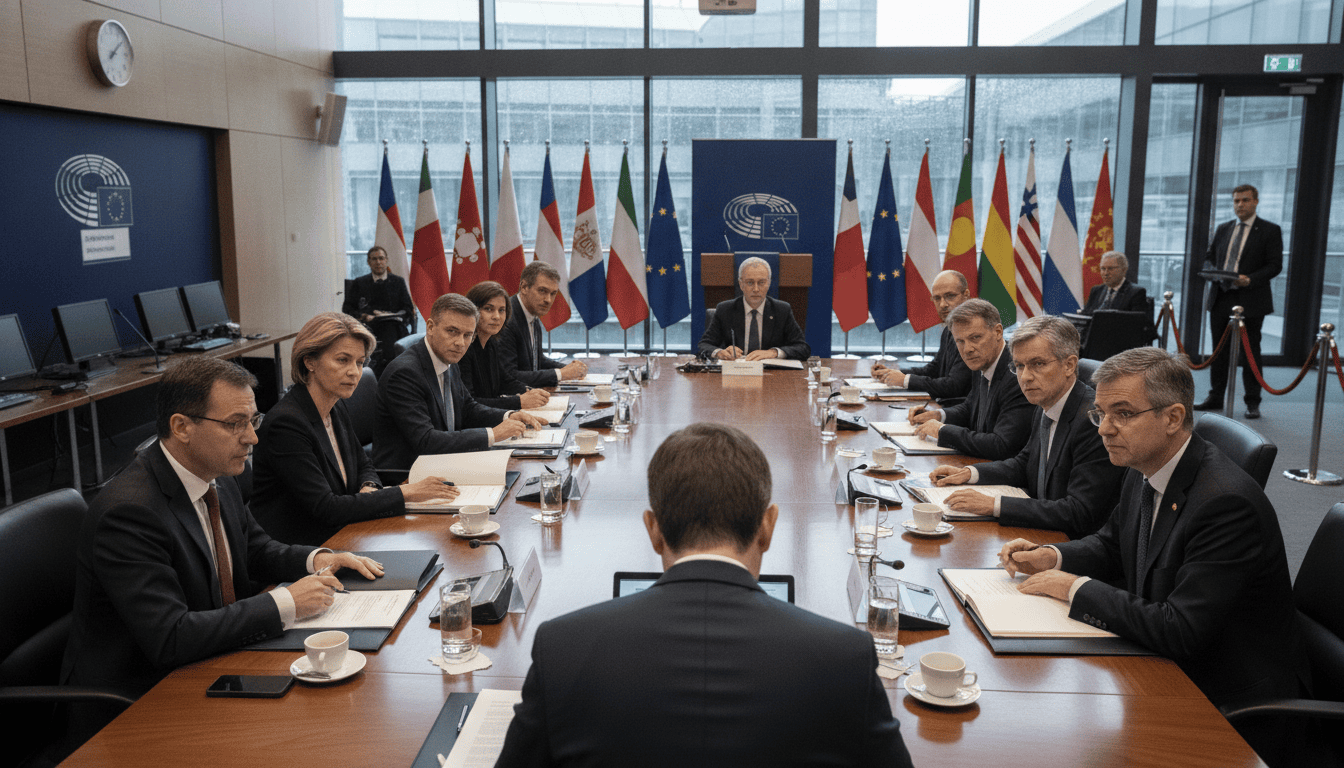
EU finance ministers meeting in Brussels have endorsed a joint target of €192 billion for the EU budget 2027, a figure that is €8 billion lower than the European Commission’s proposal of €200 billion. The decision, reached in the Council of the European Union, was presented as an attempt to balance fiscal restraint with the need to fund core EU policies and emergency responses. Irish Finance Minister Simon Harris, who chaired the session, described the number as a move toward a “responsible budget” intended to ensure each euro delivers value for citizens.
Disagreement with the Commission on Spending Envelope
The Commission had put forward a higher envelope for 2027, arguing that elevated geopolitical and economic risks require more robust funding. Member states instead opted to trim that ambition by roughly four percent, reflecting concerns among capitals about domestic fiscal pressures and the need to control contributions. The gap between national governments and the Commission will now be a central issue when the Council enters formal negotiations with the European Parliament.
Allocation Priorities: Agriculture and Cohesion Funding
Under the Commission’s blueprint, the largest single allocation would go to agriculture, with subsidies projected at about €54 billion for 2027, while support for structurally weak regions was estimated at €44 billion. Member states have signalled that the overall reduction should not undermine those core programs, but the precise distribution will depend on political give-and-take in the upcoming inter-institutional talks. Funding choices will also be assessed against the Union’s capacity to respond to crises and maintain long-term strategic investments.
Germany’s Contribution and Net Position
As the EU’s largest economy, Germany remains the biggest net contributor, supplying nearly a quarter of the bloc’s budgetary resources in monetary terms. That proportion means Berlin shoulders a substantial share of any rise or cut in the budget envelope, a dynamic that has repeatedly influenced negotiations at the Council table. At the same time, Germany—like other large member states—also benefits economically from the single market and programmes financed by the EU budget, complicating the domestic political calculus.
Crisis Pressures: Ukraine, Middle East and Contingency Needs
The Council explicitly tied the need for a robust 2027 allocation to ongoing crises, including the war in Ukraine and the conflict in the Middle East, which continue to drive humanitarian, defence-related and reconstruction spending. Member states stressed the budget must preserve flexibility to respond to sudden exigencies without requiring lengthy ad hoc funding rounds. That tension between predictability for long-term programmes and readiness for emergencies is expected to shape both line-by-line debates and the broader negotiations with Parliament.
Path to Final Adoption: Parliament and Interinstitutional Talks
The agreed figure from the Council is not final: the European Parliament must now enter trilogue talks with the Council and the Commission to agree the final 2027 appropriation. Those interinstitutional negotiations will determine the detailed ceilings for each policy area and any compensatory measures to protect key priorities. Timing will be tight: this is the last annual budget covered by the current 2021–2027 multiannual financial framework, while member states are simultaneously discussing the next seven-year budget cycle for 2028–2034.
The Council’s provisional endorsement of a €192 billion ceiling for the EU budget 2027 narrows the immediate dispute but leaves substantive choices about spending priorities and contingency arrangements unresolved. Political trade-offs in the weeks ahead will decide whether the final budget honors the Commission’s calls for higher spending or reflects member states’ push for restraint, with significant implications for agriculture, cohesion policy and the Union’s crisis response capacity.
