
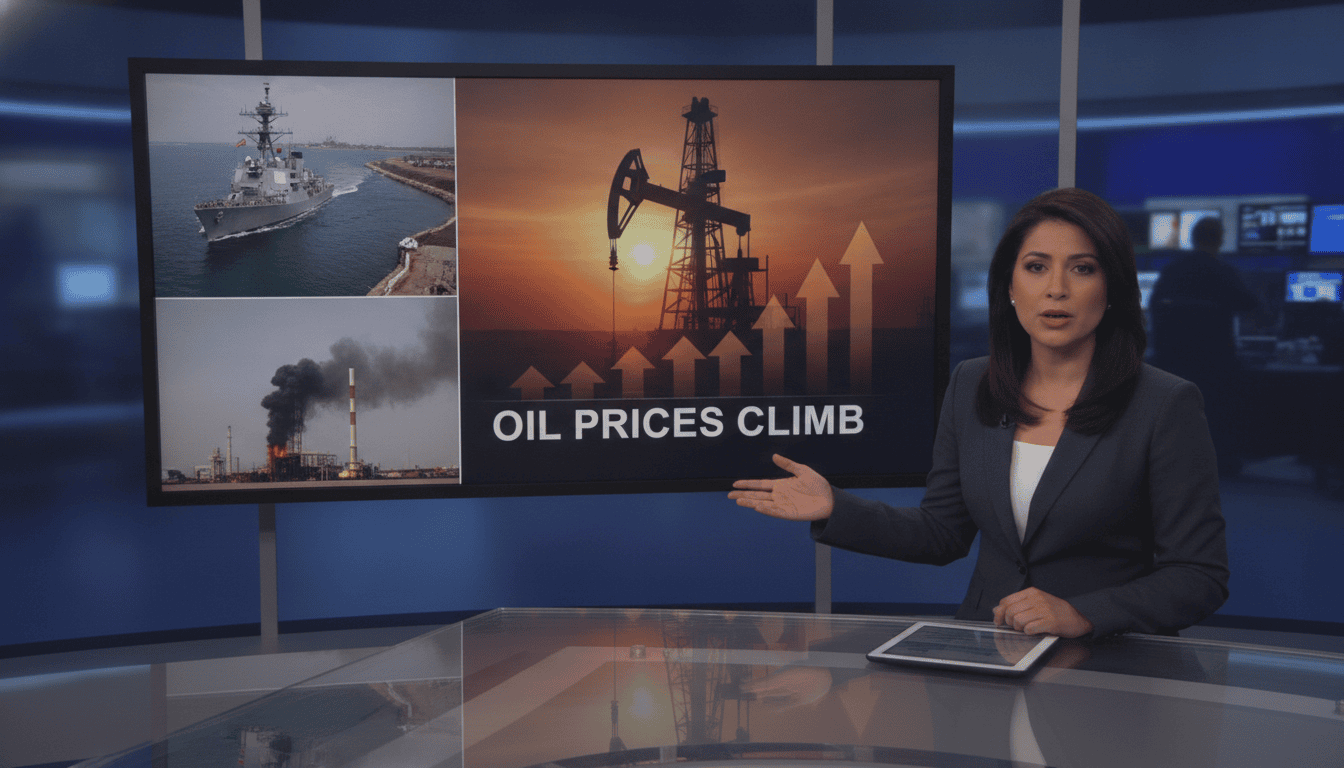
Oil price climbs as US strikes Iran push Brent to $78.50 amid Strait of Hormuz worries
Tensions between the United States and Iran have driven the oil price higher, with Brent crude jumping 3.3% to $78.50 per barrel and WTI rising 3.4% to $73.83, as concerns mount over potential disruptions in the Strait of Hormuz. The spike follows renewed US attacks on targets in Iran and retaliatory strikes attributed to Tehran across the Gulf region, raising fears of a prolonged chokepoint closure that would affect roughly one-fifth of global seaborne crude flows. Traders and ship-tracking services reported a sharp slowdown in transits through the crucial waterway, amplifying market anxiety about supply bottlenecks and price volatility. The moves mark a clear repricing of geopolitical risk in energy markets after a period of relative calm.
Brent and WTI post sharp intraday gains
Brent crude rose to $78.50 per barrel, an increase of about 3.3%, while US West Texas Intermediate climbed to $73.83, up roughly 3.4%. These levels sit well above pre-conflict pricing in late February, when Brent traded below $70 per barrel, but remain below the initial post-conflict surge that pushed prices past $90 per barrel. Market participants said the latest gains reflect risk premia tied directly to shipping disruptions and the prospect of sustained military escalation.
Trading desks reported heightened volatility as headline-driven flows dominated volume, with short-term traders and hedging activity intensifying on both sides of the market. Analysts noted that the move is consistent with patterns seen earlier in the conflict when sudden escalation produced rapid price jumps followed by periods of consolidation.
Strait of Hormuz transit volumes fall to five-week low
Ship-tracking data showed only six commercial vessels transited the Strait of Hormuz on the most recent measurement, the lowest daily count in five weeks and a sharp drop from typical passage rates. The Strait, through which about one-fifth of global oil trade moves, is the most direct route from key Gulf producers to international markets and is therefore central to supply risk calculations. Reduced traffic has translated into immediate concern among refiners and traders about cargo delays and rerouting costs.
The decline in transits contradicts public assertions that the waterway remains open without restriction, and market watchers say such discrepancies between official statements and observed activity heighten uncertainty. A sustained reduction in throughput would force ships to take longer routes, raise insurance premiums and increase logistical costs, all of which can feed into benchmark oil prices.
US military action and Iranian responses escalate regional risk
US forces said they struck multiple targets in Iran in a renewed campaign of attacks, reporting operations against roughly 140 sites, according to official statements. Washington framed the strikes as retaliation for attacks on civilian shipping in the Gulf, while Tehran contended earlier incidents involved warning fire against vessels alleged to be on unauthorized routes. The divergent narratives have complicated diplomatic efforts to stabilize the situation.
Iran, in turn, has been reported to have targeted locations tied to US operations in allied Gulf states, with claims of strikes on sites in Kuwait, Bahrain and Jordan; regional command authorities have not independently confirmed those specific incidents. The back-and-forth has increased the risk of miscalculation and made timelines for de-escalation unclear.
Political shifts widen the risk premium on oil markets
The uncertainty has been compounded by recent political decisions that alter the framework for US–Iran interaction. The US president declared a previously negotiated framework void, a move that analysts say removes an institutional pathway for deconfliction and increases the probability of prolonged hostilities. Tehran has also signaled it may impose fees for passage through the Strait of Hormuz, potentially formalizing a new cost for commercial transit.
Such political shifts force market participants to price in longer-duration risk rather than temporary disruptions, and they complicate forecasting for supply, demand and inventory cycles. Energy firms and national oil companies are revising contingency plans to account for protracted uncertainty in the region.
Historical context and implications for global supply
Before the conflict intensified late in February, benchmark crude had been trading under $70 per barrel; the outbreak of hostilities previously sent prices to more than $90 within a week, with intermittent periods above that level in subsequent months. The current spike is smaller than the initial reaction but still significant because it comes on top of months of elevated risk premia and logistical headaches. Commodity strategists say the potential for renewed, sustained disruptions in the Strait of Hormuz remains the single largest near-term tail risk for global oil supply.
Beyond immediate price effects, prolonged instability could push refiners to source crude from alternative suppliers, shift trade patterns and accelerate efforts to increase strategic reserves. Higher shipping costs and insurance premiums would also raise finished-fuel prices in importing markets.
Market outlook and what traders are watching next
Traders will closely monitor subsequent ship-transit counts, official statements from regional militaries and any diplomatic moves that might reopen channels for negotiation. Key indicators include daily vessel movements through the Strait of Hormuz, US and Iranian operational announcements, and any signals from major Gulf producers about export adjustments. Physical market data, such as cargo loading schedules and tanker positions, will remain critical for near-term price direction.
Energy market participants cautioned that headline risk can drive abrupt swings; while fundamentals remain sensitive to supply interruptions, prices could retreat quickly if passage rates normalize or if a diplomatic de-escalation materializes. For now, the oil price incorporates an elevated geopolitical premium reflecting the risk that the corridor could face prolonged restrictions.
Global energy markets are now balancing immediate supply-route disruption fears against the longer-term effects of shifting political arrangements, leaving producers, traders and consumers on alert as events unfold.
