
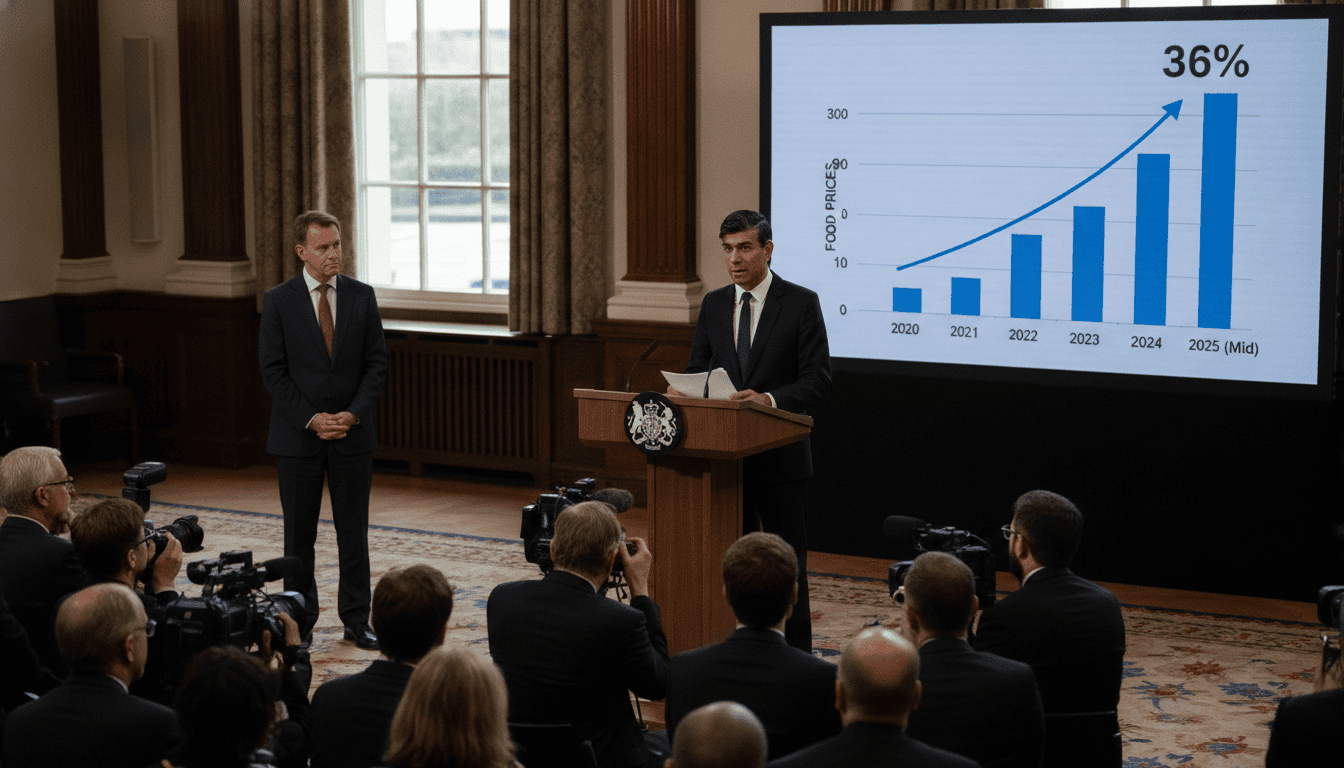
Food prices surge 36% between 2020 and mid‑2025, outpacing overall inflation
German government data shows food prices rose 36.3% from 2020 to mid‑2025, far above general inflation; calls grow for market oversight and VAT relief.
The price of food in Germany has risen sharply since 2020, increasing by 36.3 percent through mid‑2025 according to figures provided by the federal government, a pace that notably exceeds the 22 percent rise in overall consumer inflation for the same period. The discrepancy between food price inflation and general inflation has prompted renewed scrutiny of supermarket market structures and calls from opposition politicians for regulatory interventions. The data, reported in response to a parliamentary inquiry by the Left party and cited by national media, highlights significant variation across product groups and has intensified debate about relief measures for low‑income households.
Government figures and parliamentary inquiry
The agriculture ministry supplied the figures after a formal request by the Left parliamentary group, detailing price movements across food categories from January 2020 to mid‑2025. The ministry’s response shows a cumulative increase of 36.3 percent in food prices, compared with a 22 percent rise in the broader consumer price index over the same interval. Those numbers were published in press reporting that prompted political reactions and fresh calls for policy steps to protect consumers facing elevated grocery bills.
The ministry’s breakdown underlines that the headline food inflation measure masks wide differences between categories, with some items sharply more expensive than others. Officials have cited global supply disruptions, higher energy and input costs, and market concentration as contributors to the divergent price paths. The government did not in its response propose new regulatory measures, but the release of the data has already fueled political debate.
Products with the largest increases
Certain staples experienced particularly steep price jumps, the ministry said, naming poultry, many dairy products and eggs, edible fats and oils, and sugar among the hardest hit. These categories registered above‑average price growth relative to 2020, reflecting both production cost pressures and supply chain constraints. Producers and processors have faced higher costs for feed, energy, and packaging, factors that typically feed into consumer prices for those goods.
By contrast, the ministry noted more modest increases for fruit, fish, non‑alcoholic beverages, and ready‑to‑eat meals, where retail price growth was comparatively restrained. Analysts point to seasonal supply patterns, import exposure, and differing market structures as reasons for the cross‑category variation. The uneven pattern has implications for household shopping baskets, since spending shares differ widely by income and household type.
Political response from The Left
Ina Latendorf, a parliamentarian for The Left, pressed for more assertive action in response to the figures, arguing that the government has so far failed to confront the market power of the country’s largest supermarket chains. Latendorf urged creation of a statutory price monitoring office and measures to cap profit margins in the food supply chain, framing such steps as necessary to curb excessive markups. She also renewed calls for removing value‑added tax on basic foodstuffs as a targeted relief for economically vulnerable households.
Latendorf and other opposition figures presented the ministry’s numbers as evidence that competitive problems and corporate pricing behavior are key drivers of the disparity between food and general inflation. Government spokespeople have pushed back that a range of international and structural factors influence food costs and that fiscal or regulatory interventions require careful assessment.
Market structure and competition concerns
Economists and consumer advocates point to concentrated retail markets as one element that can amplify price movements, particularly when procurement power and vertical integration are strong. Germany’s grocery retail sector is dominated by a few large chains, a structure critics say can limit price competition and give retailers negotiating leverage over suppliers. That dynamic can transfer upstream cost shocks into retail margins as well as consumer prices.
Calls for a dedicated price observatory reflect a desire for more granular, timely data on markups and margins across the supply chain. Proponents argue such monitoring would enable regulators and parliamentarians to distinguish between cost‑driven price rises and profit‑driven increases. Opponents caution that mandatory margin caps or heavy‑handed intervention could disrupt supply relationships and have unintended effects on availability.
Household impact and policy options
For households, the disproportionate rise in grocery costs has concrete consequences for budgets, especially for lower‑income families who spend a higher share of their income on food. Analysts warn that sustained differences between food and general inflation can increase food insecurity risks and widen inequality if wages and social transfers do not keep pace. Policy options discussed publicly include temporary VAT exemptions on basic staples, targeted subsidies, or expansion of social benefits to offset the real‑term loss of purchasing power.
Any move to cut VAT would require legislative action and carry fiscal costs, while measures to limit corporate margins would prompt legal and economic scrutiny. The government faces a political balancing act between providing immediate consumer relief and avoiding policies that could destabilize production and distribution networks.
The government’s published response and the parliamentary debate it triggered have brought food‑price inflation back to the center of public discussion, underscoring the complexity of causes and the trade‑offs of proposed remedies.
Recent data has sharpened attention to the distributional effects of inflation and renewed pressure on policymakers to clarify whether and how they will address the gap between food prices and overall inflation.
