
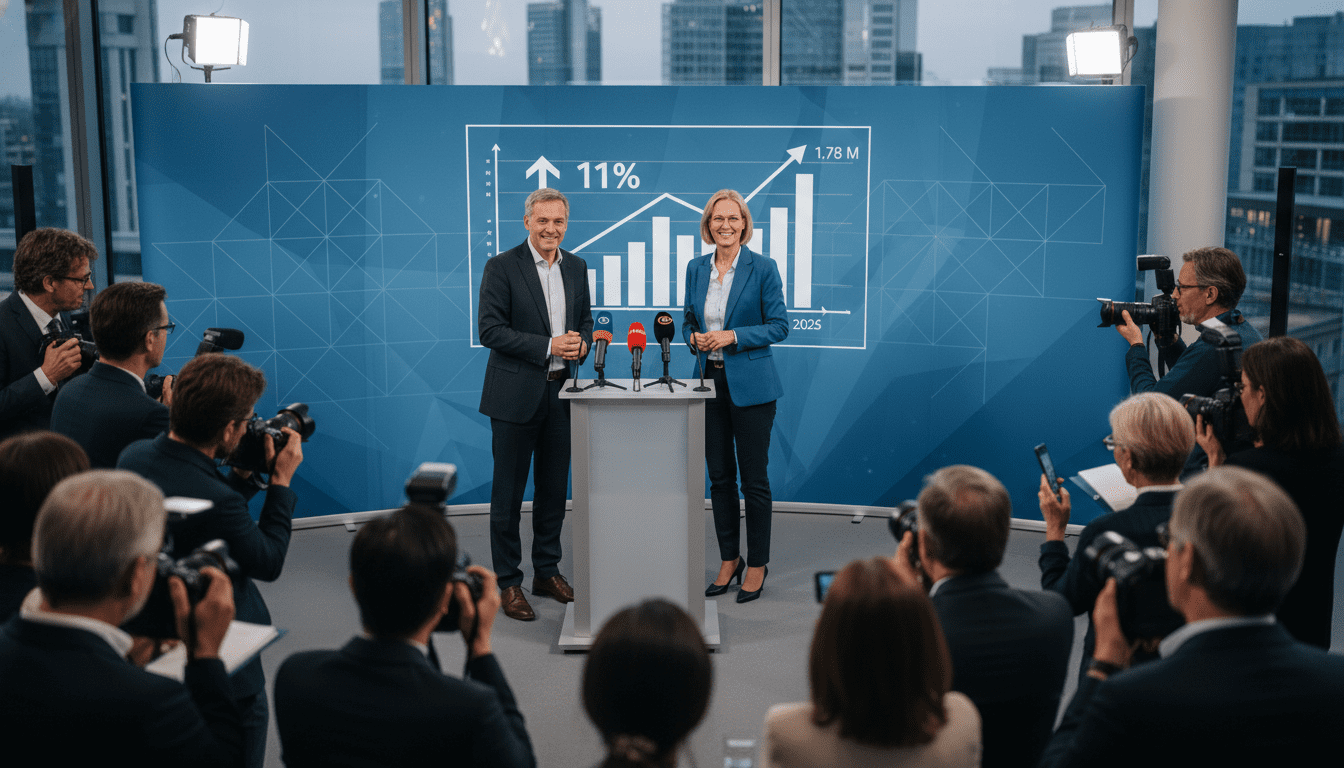
Millionaires in Germany Jump to 1.78 Million in 2025, Capgemini Report Shows
Capgemini: 1.78 million millionaires in Germany in 2025, up 11.1% as wealthy holdings hit $7.1T. Report cites stock rallies and easing inflation, worldwide.
Germany saw a sharp rise in the number of millionaires in 2025, with roughly 1.78 million people holding at least $1 million in investable assets, the latest World Wealth Report by Capgemini shows. That figure represents an 11.1% increase from the previous year and reflects broad gains in asset values as inflation eased. The report measures individuals with at least $1 million in investable wealth, a threshold equivalent to about €860,000. The uptick places Germany third globally by millionaire population and first among European nations.
Germany records 1.78 million dollar-millionaires in 2025
Capgemini’s figures show the 1.78 million “dollar-millionaires” are part of a wider global expansion in private wealth during 2025. The designation refers to individuals whose investable assets, excluding primary residences and collectibles, meet or exceed $1 million. Germany’s 11.1% year-on-year increase outpaced many European peers and reflected a rebound in financial markets and currency movements. Analysts say the pace of growth marks a continuation of trends that accelerated in the prior year.
Wealth of Germany’s richest rises to $7.1 trillion
Alongside the rising number of millionaires, the aggregate wealth of wealthy individuals in Germany climbed by 12.7% to about $7.1 trillion. Converted in the report’s estimates, that sum is roughly €6.1 trillion and marks one of the largest national increases recorded. Capgemini attributed part of the rise to valuation gains across equities and alternative investments held by high-net-worth individuals. The report also notes that prior inflation declines amplified real wealth growth for asset holders.
Stock rallies and easing inflation drive gains
The World Wealth Report identifies equity markets as the principal engine of wealth creation across most regions in 2025, with gains tied in part to technology and artificial intelligence-related stocks. Capgemini highlights that market rallies, bolstered by investor enthusiasm for AI-related sectors, were a dominant factor in five of the six geographic regions analyzed. At the same time, falling inflation improved purchasing power and lowered the erosion of asset values, making nominal gains more meaningful in real terms. Together, these forces produced the strongest single-year increase in global wealthy holdings reported to date.
United States, Japan and China lead global millionaire growth
Globally, the number of dollar-millionaires rose to about 25.3 million, an increase of nearly two million people compared with 2024. The United States remains the largest concentration, adding roughly 736,000 new millionaires to reach about 8.7 million, the largest national gain reported. Japan added about 436,000 millionaires and held second place, while China recorded an increase of roughly 154,000 and ranked fourth; Germany was third overall and led Europe. Together, those four countries account for nearly two-thirds of the world’s millionaires.
Wealth concentration remains pronounced
Despite broad increases in millionaire counts and total holdings, wealth remained highly concentrated among the richest households. Capgemini’s report states that the top 1% of wealthy individuals control 34.8% of the aggregate wealth measured in the study. Ultra-high-net-worth individuals — defined in the report as those with at least $30 million in investable assets — grew at the fastest rate globally, increasing by about 9.4% in 2025. The persistence of concentration underscores ongoing debates over inequality even as headline wealth figures climb.
Capgemini’s methodology and survey sample
The World Wealth Report aggregates investable assets including equities, bonds, alternative investments such as private equity, cash and real estate held for investment rather than primary residence. It excludes collectibles, personal-use items and other non-investable possessions. The analysis draws on several surveys and interviews, including responses from 6,510 wealthy individuals across 27 markets, 144 wealth-management executives and 1,317 client advisers. Those survey inputs are used alongside market and macroeconomic data to generate national and regional estimates.
The Capgemini findings paint a picture of rising private wealth in Germany and across the world driven by market performance and easing inflation, while also highlighting the continuing concentration of assets among the wealthiest households. Policymakers, investors and advisers are likely to weigh these developments as they consider taxation, regulation and portfolio strategy in the months ahead.
