
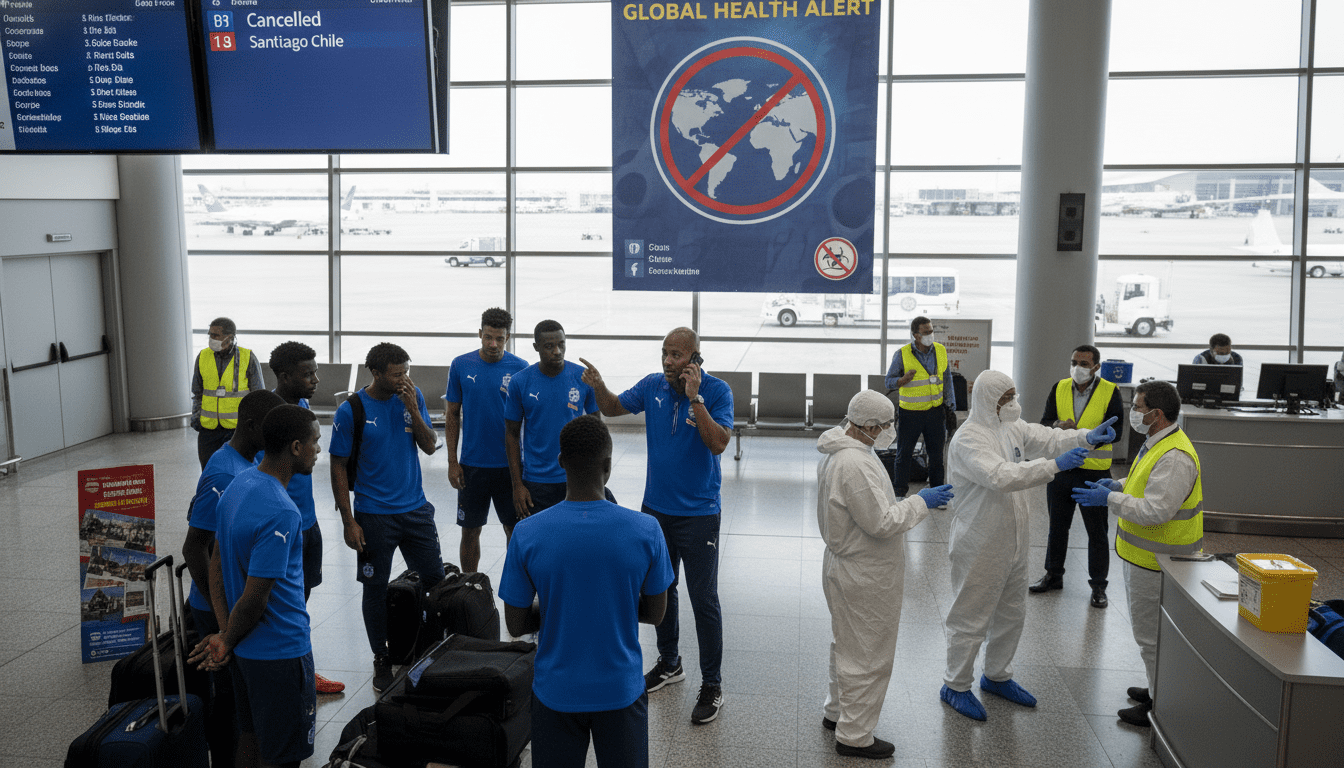
DR Congo vs Chile friendly canceled in La Línea over Ebola concerns
Chile and DR Congo cancel June 9 friendly in La Línea over Ebola concerns; Andalusian health authorities and the city mayor cite precautions before the 2026 World Cup.
The DR Congo vs Chile friendly canceled on June 9 after the mayor of La Línea de la Concepción declined to authorize the match, citing public-health concerns related to an Ebola outbreak in the Democratic Republic of Congo. The decision, announced by Mayor Juan Franco, follows guidance from Andalusian regional health services and removes a key warm-up fixture for both teams ahead of the 2026 World Cup. Organizers and national federations had been discussing alternative options, but municipal authorities said the permit would not be granted.
Mayor cites health precaution in formal decree
Mayor Juan Franco said he had signed a formal decree refusing approval for the fixture scheduled at the municipal stadium on June 9. The statement, distributed by the mayor’s office in an audio release, framed the move as a preventive measure based on the recommendations of local health officials. Franco’s decision makes clear that municipal authority will prioritize public health despite pressure to allow sports events to proceed.
Regional health service advised against the permit
The Andalusian regional health service advised local authorities to take a conservative approach because of the ongoing Ebola situation in northeastern DRC, officials said. That recommendation played a central role in the mayor’s decision not to permit the match to go ahead, according to local statements. Health officials emphasized that precautionary restrictions were intended to limit potential exposure in a border city that receives substantial cross-border traffic.
DR Congo coaching staff say preparations continue
DR Congo coach Sébastien Desabre and team officials responded by stressing that their camp remained a normal training period and that medical staff were coordinating with FIFA guidelines. Desabre noted that the squad had other options to prepare and that the team would follow the protocols laid down by tournament organizers and medical advisors. The federation is now working to reconfigure warm-up plans while maintaining its planned World Cup build-up.
Ebola outbreak and travel measures complicate logistics
The current Ebola outbreak, declared on May 15 in Ituri province of the DRC, prompted several countries to adjust entry rules and travel advisories. Mexico has already restricted entry for travelers who spent time in Uganda, the DRC or South Sudan within the previous 21 days, affecting travel plans and match scheduling. Such measures have added complexity to international fixtures and to team movements ahead of the World Cup, where DRC players are due to base in Houston for tournament preparations.
World Cup arrangements and U.S. entry requirements
DR Congo has confirmed Houston as its World Cup base and is scheduled to face Portugal in Group K on June 17 in the United States. U.S. authorities and World Cup organizers have indicated stringent entry and quarantine requirements for teams arriving from affected zones, including proposals for pre-departure isolation periods and controlled training environments. White House World Cup coordinator Andrew Giuliani previously discussed the need for tightly managed arrival protocols for delegations coming from outbreak areas.
Fixture fallout and alternatives under consideration
Federations, local organizers and FIFA representatives have been evaluating alternatives such as moving the match to another venue, staging it behind closed doors, or arranging a different opponent for Chile or the DRC. Stakeholders noted there are several stadiums and logistical options available, but time constraints and public-health considerations narrow feasible solutions. Any change will require rapid coordination among national associations, local authorities and medical teams to ensure compliance with international and host-nation rules.
Local authorities in La Línea pointed to their responsibility for community safety in a city that sits at the Gibraltar border and hosts frequent international visitors. The cancellation underscores how infectious-disease concerns can directly affect high-profile sporting calendars and force last-minute operational decisions. National teams already balancing tight World Cup timetables must now adapt again as the tournament approaches.
The canceled friendly highlights the tension between sporting preparation and public health safeguards, and it leaves both national teams seeking timely alternatives to preserve competitive readiness ahead of the 2026 World Cup.
