
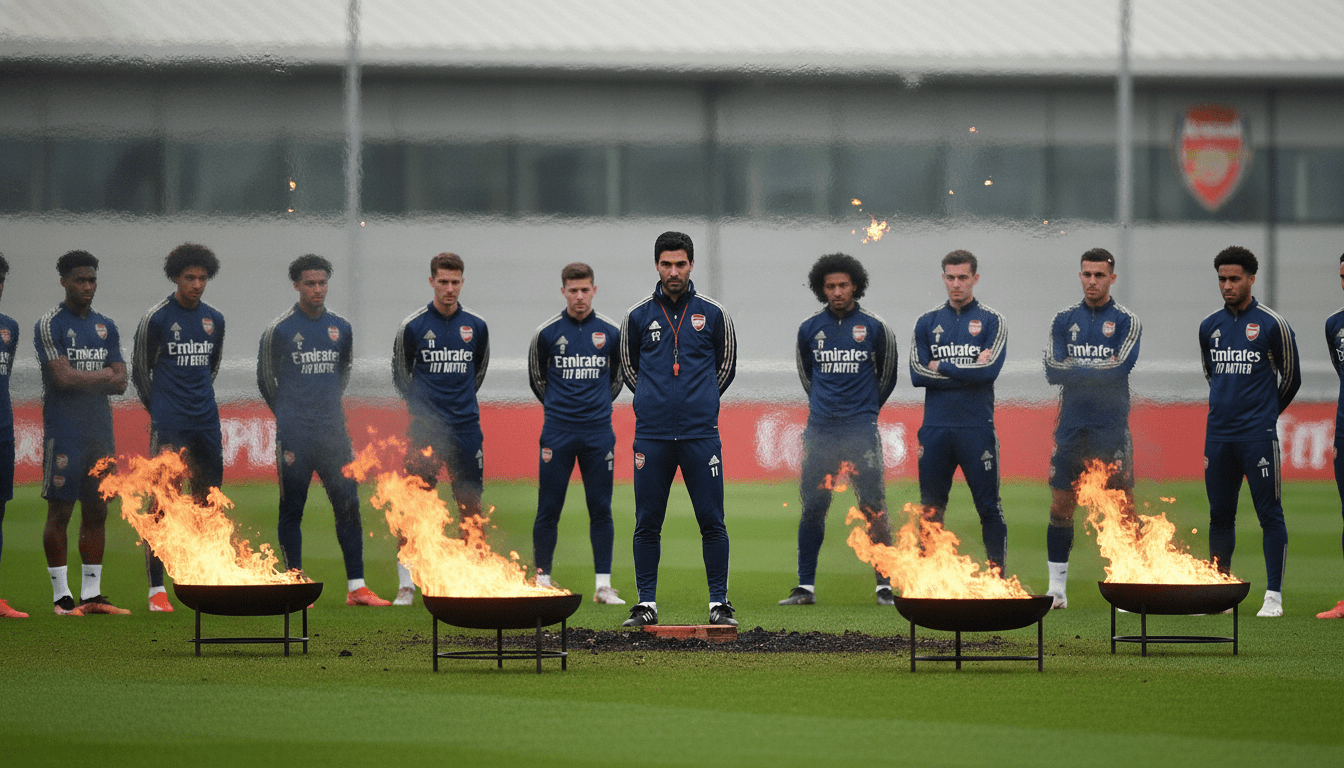
Arteta’s symbolic fire at Arsenal training caps six-and-a-half-year process
Arsenal boss Mikel Arteta lit a controlled blaze at the club’s training ground in April to demand renewed intensity from his players, a move now being hailed as the final act of a six-and-a-half-year project to rebuild the team.
Controlled blaze staged during team meeting
Mikel Arteta arranged a controlled fire on Arsenal’s north London training pitch during a team meeting, according to reports from nearby clubs and witnesses. The exercise was intended as a dramatic prompt for players to bring more “fire” to their performances after a dip in results. Club sources described the flame as symbolic and contained, and the staff managed the situation as a planned training event rather than an emergency. Neighbours and visitors to the site initially reported seeing smoke and smelling burning before the purpose of the exercise was known.
Watford coach among those who noticed smoke
Dan Gosling, coach of neighbouring Championship side Watford, said he noticed “smoke in the air” and that “you could smell the fire” when the training ground activity took place. Gosling later learned that the smoke had come from Arteta’s staged demonstration, which had been timed to coincide with a team talk. Residents in the surrounding area also reported seeing the plume and raised concerns before the situation was clarified. Local authorities were not reported to have been required on site because the club managed the controlled burn internally.
Six-and-a-half-year project declared complete
The training-ground demonstration came as Arsenal’s long-running rebuild under Arteta reached what the manager and club describe as a completion point after six and a half years. That period has seen a systematic overhaul of squad, coaching structure and club identity as Arteta sought to instil tactical coherence and a winning mentality. The controlled fire was framed within that narrative as a theatrical signal that the process had moved from construction to consolidation. Club officials view the gesture as a vivid, if unconventional, statement that the side must now convert groundwork into consistent competitive intensity.
Exercise followed consecutive league defeats
Arteta chose the dramatic measure after Arsenal suffered two straight defeats in the Premier League, moments that the manager judged required an immediate psychological response. By staging the controlled blaze during a tactical meeting, he aimed to rekindle urgency and competitive aggression on the training pitch. Coaching staff told players the image of fire was a metaphor for aggression, intensity and refuse-to-lose mentality they wanted to see in matches. The move underscores Arteta’s preference for combining tactical instruction with psychological and symbolic prompts to change team behaviour.
Club clarifies intent and safety measures
Arsenal has emphasised that the incident was a carefully managed, symbolic exercise rather than an unsanctioned or hazardous event. The club confirmed that safety protocols were observed and that the burn was supervised by staff trained to control it within a limited area. Officials said the demonstration formed part of a broader set-piece of training techniques intended to sharpen focus and were coordinated to avoid risk to people or property. The club declined to characterise the exercise as anything beyond an internal motivational tool and insisted there was no threat to the surrounding community once the plans were explained.
Reactions from players and outside observers
Players reacted to the demonstration with a mix of surprise and acknowledgement of its intended message, according to multiple accounts from inside the camp. Some squad members later described the event as an effective wake-up call that reinforced the manager’s demand for more intensity on the field. Outside observers, including rival coaches and local residents, initially expressed concern when smoke became visible, but most framed the episode as an unusual but memorable managerial tactic once context was provided. Analysts noted that theatrical gestures can have short-term motivational value but stressed that sustained on-field improvement depends on training, selection and execution.
The controlled fire episode highlights the lengths to which Arteta is prepared to go to shape culture and behaviour at Arsenal. Whether the symbolic gesture produces measurable improvements will be judged by results on the pitch in the weeks and months ahead. The club’s message is clear: after years of rebuilding, Arteta expects his players to bring the intensity and resolve his final-phase project demands.
