
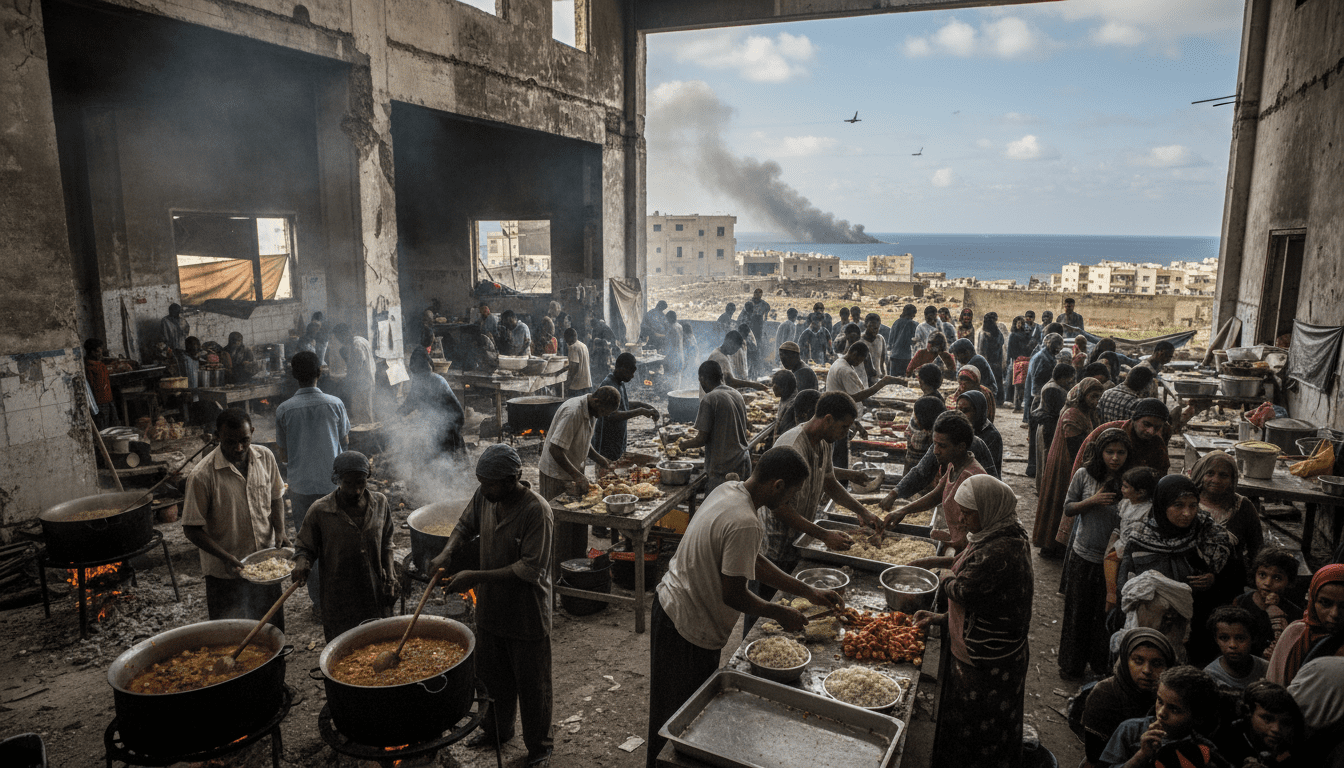
Migrant workers run community kitchens in Beirut as war drives displacement
Lebanon’s migrant workers are running community kitchens and food distribution networks in Beirut, offering daily meals and essential support to displaced migrants and families amid heavy fighting and mass displacement.
Migrant workers run community kitchens in Beirut
Beirut’s suburbs have seen a surge in community-led food operations run by migrant workers as conflict and displacement intensify across Lebanon. Migrant workers are preparing and distributing hundreds of meals each day from modest kitchens to reach people pushed from their homes by recent fighting. These efforts are filling gaps left by formal humanitarian systems and providing culturally familiar food and support to marginalized groups.
Community kitchens are operating in multiple districts north and south of the city, feeding migrants who work as cleaners, nannies and domestic staff, many of whom live under Lebanon’s kafala sponsorship system. Volunteers say food distribution also offers a measure of dignity and social connection for people who have few official protections or steady incomes.
Scale of displacement and concentration of migrants
Recent waves of displacement have affected large areas of southern Lebanon and parts of Beirut’s southern suburbs, forcing many residents to relocate or shelter in temporary sites. According to figures compiled by the American University of Beirut, more than 200,000 migrant workers live in Lebanon, and aid organizations say tens of thousands have been displaced since March. The International Organization for Migration has reported a high concentration of migrant communities in neighborhoods that have been repeatedly targeted by military operations.
Many migrant households are now living in precarious conditions, either in informal community housing, with relatives, or in public spaces after being evicted or evacuated from employers’ homes. These patterns have left migrants particularly vulnerable to interruptions in income, medical care and legal assistance.
Access barriers inside official shelters
Official displacement sites are intended to accept people regardless of nationality, but aid workers and migrants report uneven access in practice. Workers for Médecins Sans Frontières have documented cases in which migrants are turned away from shelters or placed in less secure, lower-priority areas inside facilities. Those experiences push many migrants to avoid official shelters and instead rely on community-run houses or makeshift arrangements.
Discrimination in shelter placement and restrictions linked to residency and employment status compound the difficulties for those who lack embassy support or stable local sponsors. Humanitarian groups say these access issues make independent community kitchens and mutual aid networks essential for survival among the most isolated groups.
How Tres Marias kitchen operates
One of the kitchens, Tres Marias, founded by Philippine-born Myra Aragon in a suburb north of Beirut, prepares roughly 200 meals a day for migrants and others in need. Aragon cooks traditional Filipino dishes such as chicken afritada and also packages raw ingredients for households that can prepare their own food. Volunteers from different migrant communities help with chopping, cooking and distribution to reach families who cannot safely leave their neighborhoods.
Aragon, who has lived in Lebanon more than two decades, says the operation grew out of longstanding community ties and a desire to respond quickly to need. She describes the kitchen as an extension of a social network that shares information, language, and cultural familiarity, and that often fills immediate gaps in assistance when formal channels are inaccessible.
Distribution amid security risks
Delivering food has become complex and dangerous as hostilities have moved into new areas and evacuation warnings are issued across multiple districts. Organizers say direct distribution inside the most affected southern suburbs is often too risky, so volunteers use motorbikes and trusted couriers to ferry packaged meals and supplies into neighborhoods. That workaround helps reach families in areas like Laylake, Haret Hreik and Ghobeiri, which have seen repeated evacuation orders and attacks.
Volunteers and aid workers emphasize that the security environment constrains not only movement but also procurement and storage of supplies, increasing logistical pressure on small community kitchens. Despite these obstacles, local networks report daily successes in keeping distribution lines open to those most in need.
Community solidarity and cultural exchange
Beyond meeting immediate hunger, migrant-run kitchens are fostering solidarity across nationalities and providing opportunities for cultural exchange through food. Organizers say requests for dishes from different communities — for example, Filipino cooks preparing biryani at the request of Bangladeshi neighbors — have strengthened bonds among migrants and between migrants and Lebanese families who occasionally receive meals.
Aid coordinators highlight that food distribution serves both nutritional and psychosocial needs, offering a sense of care and visibility to people who otherwise face marginalization. For many migrants, cooking and sharing meals has become one of the most effective ways to mobilize community resources quickly and equitably.
Aid groups and community leaders are calling for more inclusive shelter policies and targeted support for migrant households, including legal assistance, emergency cash and food vouchers, and safe access to health services. They warn that without broader, coordinated protection measures, ad hoc community responses will remain the main lifeline for thousands of migrants caught between displacement and limited institutional support.
The kitchens, volunteers say, will continue operating for as long as the need persists, adapting routes, menus and supply chains to the shifting security landscape and the evolving needs of displaced families.
