
Maldives raid on Adhadhu: Police seize devices and bar editors after documentary
Maldives raid on Adhadhu seizes journalists’ devices and bars editors’ travel after a documentary alleging an affair with the president; rights groups decry it.
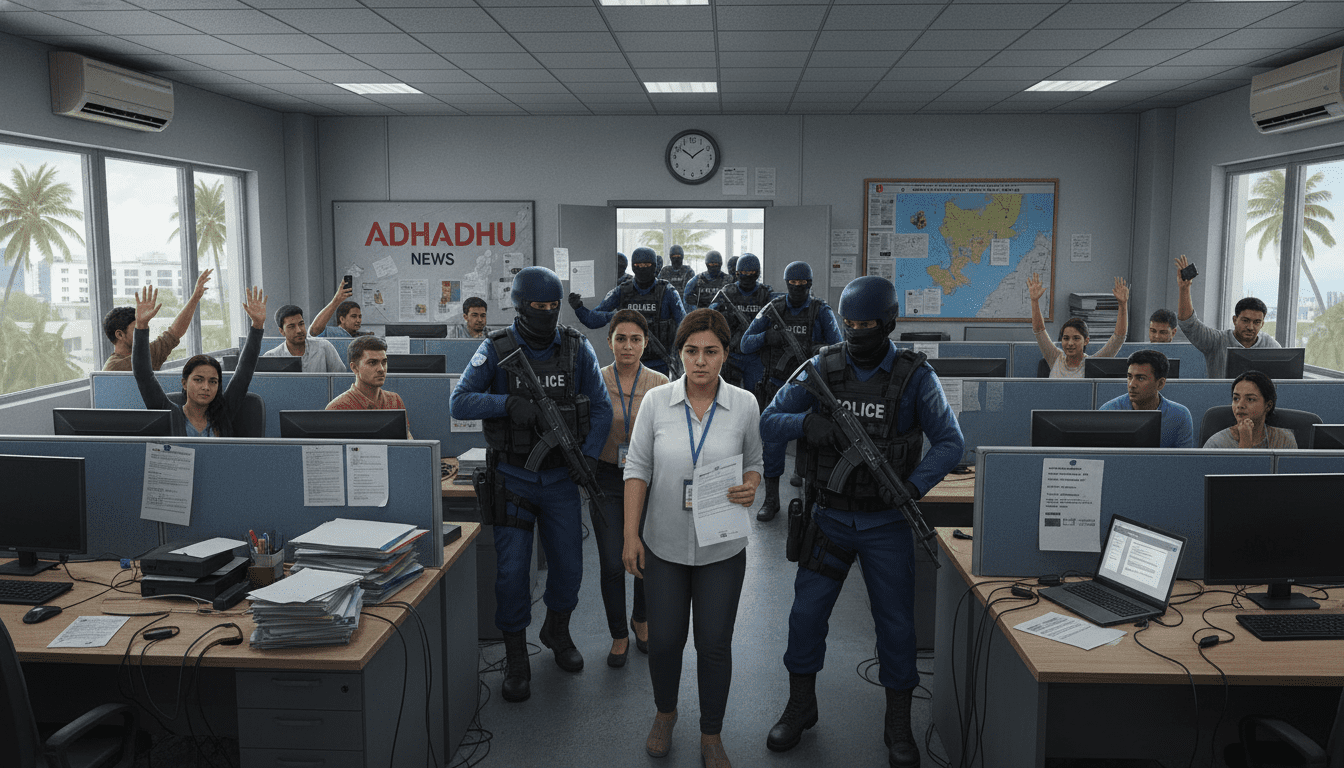
The Maldives raid on Adhadhu late Monday resulted in police entering the opposition-aligned newsroom in Male, seizing laptops, hard drives and other storage devices and imposing travel restrictions on senior editors. The action followed the publication of a documentary titled Aisha on March 28 that alleged an affair involving President Mohamed Muizzu. Government ministers defended the operation as a lawful response to what they called false allegations.
Police raid Adhadhu offices in Male
Police carried out the nighttime operation after receiving a search warrant, officers said, and spent several hours inside the outlet’s offices removing electronic equipment. Adhadhu’s CEO, Hussain Fiyaz Moosa, said journalists’ laptops, marketing staff devices and administrators’ hard drives were taken despite a warrant that authorised search and inspection. Authorities later presented a separate criminal court order that included travel restrictions on two editors.
Warrant invokes ‘qazf’ accusation and evidence from regulator
The search warrant cited the Islamic offence of “qazf,” the false accusation of adultery, as the legal basis for the criminal probe and the seizure of material. Under the provision cited by investigators, the offence carries a possible prison term of one year and seven months and may include corporal punishment. Officials also referenced a recent letter from the media regulator and a police intelligence report when securing permission to search the newsroom.
Government says action defends reputation of president
Minister of Homeland Security Ali Ihusaan posted on X that police were “right to investigate and raid the news outlet over false [adultery] allegations against the President,” and reiterated that press freedom is not a licence to spread lies. President Mohamed Muizzu publicly called for relevant authorities to press charges against those who spread what he described as baseless allegations. Government spokespeople told international outlets they would respond to questions about the operation; one senior official said he would comment later as he boarded a flight.
Editors barred from travel and summoned to police
A criminal court order subsequently froze the passports of CEO Hussain Fiyaz Moosa and Editor Hassan Mohamed until July 26 and cited a police intelligence assessment alleging plans to flee the country. Both men have been summoned to appear before police in the days following the raid. Fiyaz, who had returned to Male from an overseas trip shortly before the search, said the travel ban and seizure of equipment were aimed at stopping Adhadhu’s reporting.
Press freedom groups and journalists’ associations raise alarm
The Committee to Protect Journalists urged authorities to return the seized equipment and lift the travel restrictions, warning that invoking religious offences to criminalise journalism sets a chilling precedent. CPJ’s Asia-Pacific coordinator described the raid as an attempt to curtail investigative reporting under the guise of national and religious interest. The Maldives Journalists Association called the move a “clear red line” and demanded an immediate end to intimidation and suppression of the press.
Political context: timing after referendum and media law changes
The documentary’s release came days before a constitutional referendum on April 4 in which 69 percent of voters rejected a government proposal to align presidential and parliamentary election cycles. Critics argued that the government’s plan would weaken checks and balances. Tensions over media freedom have also intensified since a controversial media law was passed last September establishing a regulator with powers to fine, suspend and close outlets, a change journalists say has emboldened enforcement actions.
Adhadhu’s leadership vowed the newsroom would continue its work despite the seizures and legal pressures, framing the action as politically motivated and ordered to silence critical reporting. The outlet’s CEO told international media the police action was conducted “on the government’s order,” and said staff would not be deterred from publishing. Al Jazeera and other international outlets reported they were waiting for an official government response to the criticisms.
The raid on Adhadhu underscores growing concerns about the space for independent journalism in the Maldives, and it is likely to draw further scrutiny from rights groups and foreign observers. With criminal accusations now active and key staff travel‑restricted, the legal process and any subsequent prosecutions will be closely watched for their impact on investigative reporting and political dissent in the island nation.
