
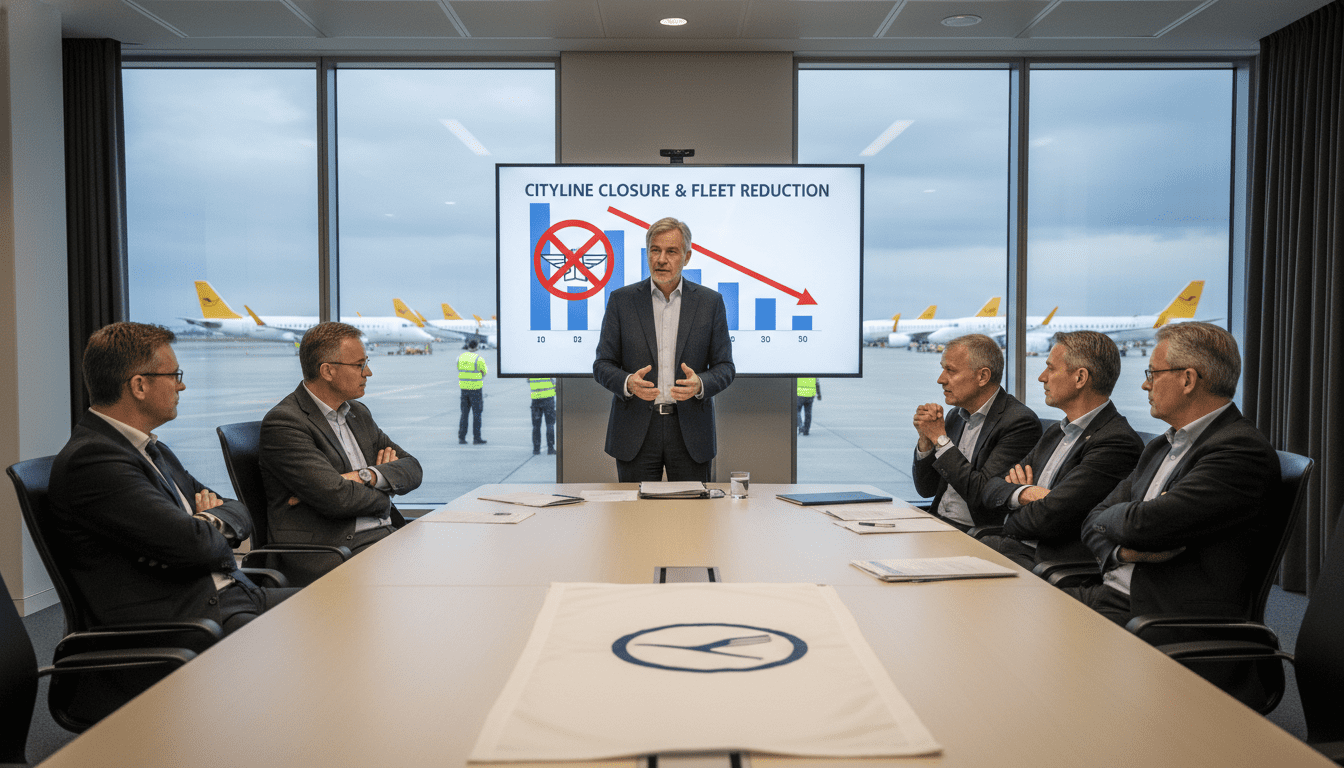
Lufthansa ends Cityline operations as strikes overshadow 100th anniversary
Lufthansa ends Cityline operations amid 100th‑anniversary strikes, grounding 27 aircraft and trimming short‑haul capacity as unions battle over pensions.
The company announced the immediate cessation of Lufthansa Cityline operations as strike action by flight attendants and pilots marred the carrier’s 100th anniversary, a move the airline tied to long‑planned fleet adjustments and rising jet fuel costs. The decision forces 27 Cityline aircraft out of service on Saturday and removes five short‑haul aircraft from the core Lufthansa schedule in the autumn, while also accelerating retirements of fuel‑hungry long‑haul jets. Unions called the shutdown a punitive escalation, and management said redeployment and social measures would be sought for affected staff.
Cityline shutdown and fleet changes
The airline said 27 Cityline aircraft will be taken out of service immediately, effective from Saturday, after strike days left the regional carrier grounded on Thursday and Friday. Lufthansa also flagged that five short‑haul aircraft of its mainline brand will be removed from service later this year, and that older, high‑consumption long‑haul types will be retired ahead of schedule.
At the same time, Lufthansa plans to reallocate nine new A350 long‑haul aircraft to a growing holiday unit that operates on different commercial terms. Company executives framed the package as part of a broader strategic evolution rather than an emergency measure tied solely to labour unrest.
Management frames decision around costs and strategy
Financial chief Till Streichert attributed the changes to “strongly increased” kerosene costs and geopolitical instability, while stressing that the end of Cityline had been planned for some time as part of strategic realignment. CEO Carsten Spohr pointed to persistent losses on certain short‑haul routes, saying those deficits were eroding the gains from profitable long‑haul services.
Management has emphasized the need to preserve capital for fleet investment and long‑term margin targets, arguing the reorganisation is necessary to safeguard the group’s financial health. Executives framed the moves as painful but unavoidable steps to raise productivity and focus growth where returns are strongest.
Unions denounce move as escalation
Representatives of the UFO flight attendants’ union and pilots’ union Vereinigung Cockpit (VC) reacted with anger, describing the sudden shutdown of Cityline operations as a drastic escalation in an already heated dispute. UFO’s tariff official Harry Jaeger told reporters the measure showed “a callous disregard” for staff and accused the company of turning industrial conflict into a strategy.
The announcement came during a week marked by alternating strikes from both unions, which disrupted anniversary events and prevented some invited guests from attending. Union leaders said the shutdown undercut trust and would harden positions in ongoing negotiations over pensions, working conditions and core collective agreements.
Calls for strike‑law reform raised at anniversary ceremony
At the centenary event, Lufthansa supervisory board chair Karl‑Ludwig Kley used his remarks to urge the government to codify strike law, arguing that clearer legal rules were needed for critical infrastructure sectors. Kley directly appealed to Chancellor Friedrich Merz to initiate a legislative debate that would, in his view, define permissible forms of industrial action in essential services.
Jens Bischof, president of the German Aviation Association (BDL), echoed the plea and pointed to comparator rules in other European states that require advance notice and guarantee minimum services in crucial transport sectors. The intervention crystallises a wider political debate about balancing labour rights with the operational needs of national infrastructure.
Financial context and stalled negotiations
Lufthansa’s core German brand reported an operating profit of €148 million in 2025, a slim margin of roughly 0.9 percent, while Swiss — a smaller group unit — posted about €600 million. Management says the group’s long‑term target margin is between 8 and 10 percent, and it sees capacity reallocation as essential to approach those levels.
Pension funding and the structure of company retirement provisions are central sticking points in talks with VC, which has demanded higher contributions. Lufthansa has offered alternatives such as allowing pilots to withdraw funds for private investment and proposals to merge pension pots, but it has not agreed to the increased employer contributions the unions seek.
Workforce impact and next steps on social protections
Lufthansa said affected Cityline staff will largely be released from immediate duties and the group will seek redeployment opportunities across its airlines and business units. The company also confirmed it would negotiate a social plan with employee representatives, signalling a shift from the union‑proposed tariff social plan to a works‑council led process.
Union leaders warned that transfer of flying to subsidiaries that operate under lower pay and different collective agreements — including newer brands that have already absorbed some short routes — undermines bargaining leverage and risks entrenching a two‑tier workforce. Management counters that growth units are necessary to serve markets profitably while the core brand restructures.
The dispute now moves into a more fraught phase: Lufthansa presses ahead with fleet and structural changes to protect margins, while unions vow further action to defend pay, pensions and working conditions. Negotiations, social plan talks and potential political responses to calls for legal reform will determine whether the crisis deepens or a mediated settlement can be found in the weeks ahead.
