
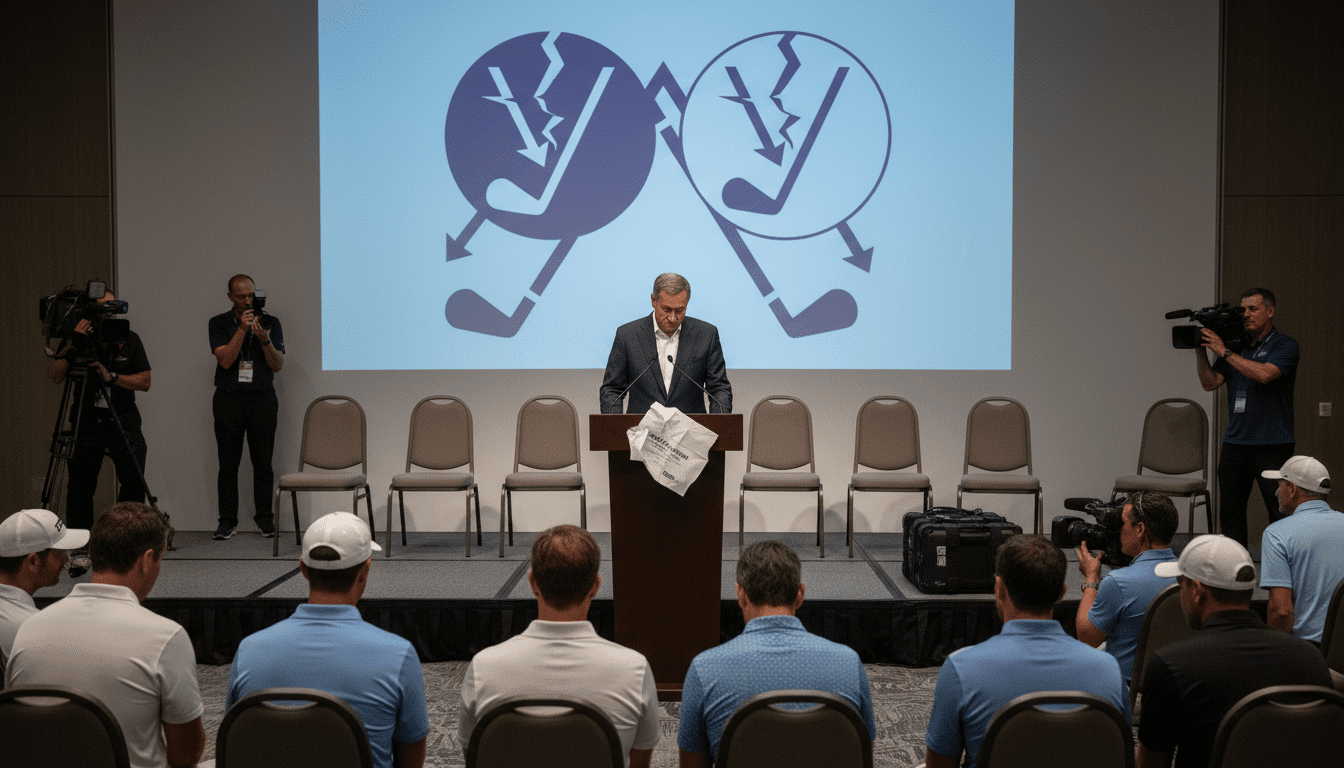
LIV Golf Faces Existential Crisis After Saudi PIF Signals Pullback
LIV Golf’s future is in doubt after a broadcast blackout in Mexico and a strategic shift from Saudi Arabia’s PIF, which announced a move toward efficiency and away from high-cost sports investments.
LIV Golf’s broadcast in Mexico was interrupted by a generator failure, producing a black screen that became a stark symbol of the tournament’s fragile finances and uncertain future. The tour, launched in 2022 with funding and strategic input from Saudi Arabia’s Public Investment Fund (PIF), now finds itself grappling with rising losses and shrinking political appetite for extravagant sports spending. What began as an aggressive attempt to reshape professional golf has left organizers, players and investors scrambling for answers as officials in Riyadh call for cost discipline.
Blackout in Mexico and the Optics of Failure
A technical breakdown during the Mexico event briefly deprived viewers of live coverage, drawing widespread commentary across the golf world. The interruption was more than a broadcast glitch; it crystallized concerns about operational stability and raised uncomfortable questions about the tour’s longer-term viability. Observers noted the irony that, at the same moment the field played, the infrastructure backing the product failed to deliver the audience the organizers had paid to reach.
Scale of Spending and the Financial Shortfall
LIV Golf spent heavily to attract top players and build an alternative circuit to established tours, offering large signing bonuses and tournament purses. Public filings in the U.K. show multiyear losses in the hundreds of millions, while industry insiders estimate total deficits in the billions since the project’s inception. Television audiences for key LIV events remained a fraction of traditional PGA Tour finals, undercutting revenue expectations and leaving a difficult calculus for backers weighing continued support.
PIF’s Strategic Reorientation Announced in Riyadh
On April 16, PIF leadership signaled a shift from high-profile global sports investments to more domestically focused, efficiency-driven projects. The fund’s governor framed the change as a pragmatic response to market and geopolitical pressures, and outlined a new emphasis on infrastructure and tourism within Saudi Arabia through 2030. That pivot implies the PIF will scrutinize which overseas sports ventures are essential and which are expendable, putting LIV squarely in the crosshairs.
Immediate Ripples Across Sporting Investments
The PIF’s recalibration has already produced tangible moves: reports indicate the fund plans to divest one of its top domestic football clubs and to reduce sponsorship footprints in tennis and snooker. Tournament locations linked to Saudi hosting have been flagged for relocation, and organizers say certain events will not return once current contracts expire. The announced retrenchment has forced tournament planners and leagues to reassess agreements that were built on expectations of long-term Saudi funding.
Players, Teams and Management Confront Uncertainty
Inside LIV, executives held emergency meetings after the Riyadh announcement to prevent an immediate funding collapse and to reassure staff and players. Leadership told stakeholders the season would conclude, but long-term funding was in question. High-profile contracted players face expiring deals and the prospect of diminished payouts, while team ownership models that relied on deep-pocketed backers now confront a shortfall that smaller investors are unlikely to bridge.
Broader Impact on Professional Golf Ecosystem
The unraveling of a major funding source reshuffles incentives across the sport, putting pressure on established tours and alternative ventures alike. The PGA Tour, which itself has faced investor demands to improve efficiency, has recently implemented staffing and cost cuts. Tournament organizers, sponsors and media partners will need to adapt to a market where blockbuster cash infusions are less reliable and television audiences remain a decisive factor in commercial value.
The coming months are set to determine whether LIV Golf can reconfigure into a self-sustaining enterprise or whether the project will wind down after the current season. Stakeholders will watch negotiating rooms in London, Riyadh and the United States as potential buyers, partners or creditors weigh alternatives. For now, the combination of a symbolic broadcast blackout and a public funding pivot has transformed what was once presented as a disruptive success into a high-stakes test of commercial realism for modern sports investment.
