
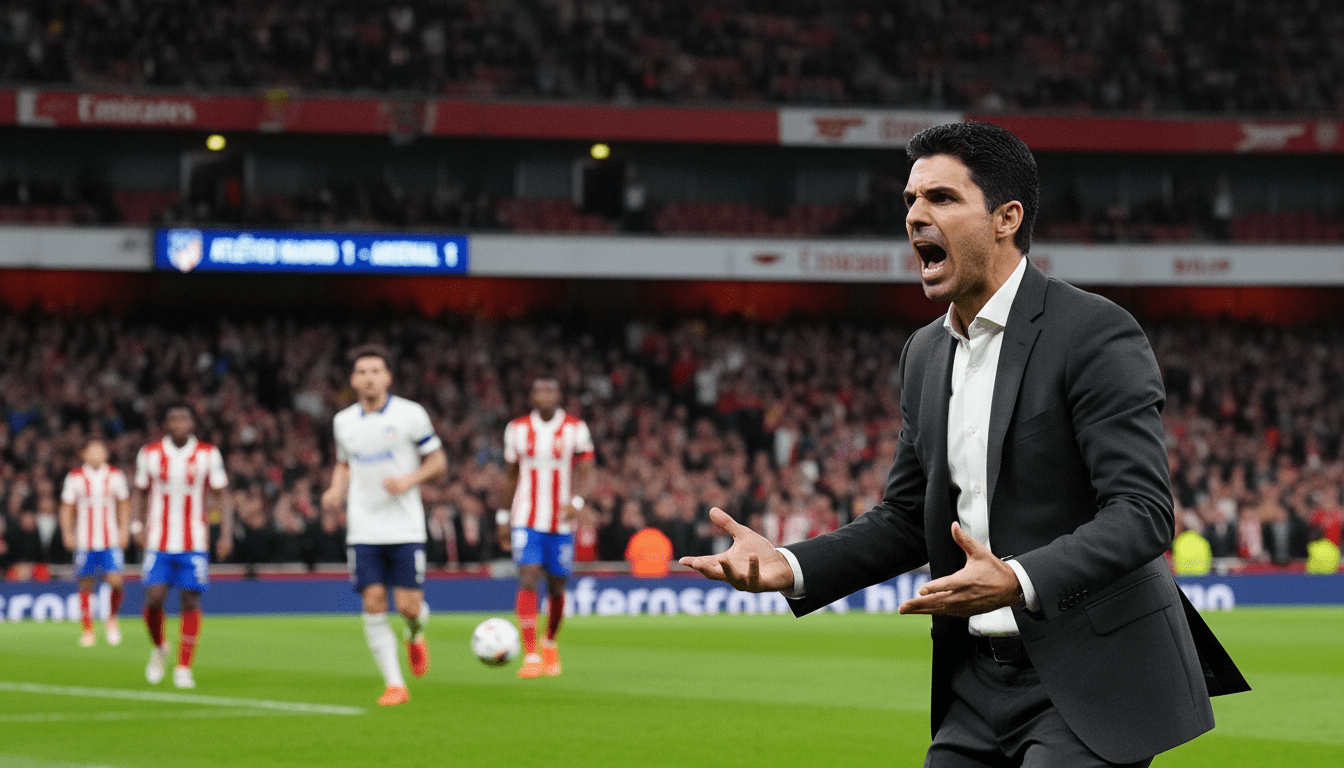
Mikel Arteta ‘I’m fuming’ after Arsenal held 1-1 in Champions League semi first leg at Atlético Madrid
Mikel Arteta’s terse declaration “I’m fuming” capped a tense night after Arsenal’s 1-1 draw in the Champions League semi-final first leg at Atlético Madrid, underscoring the manager’s public frustration. Speaking at the Estadio Metropolitano on Wednesday, the 44‑year‑old coach signalled displeasure with aspects of his team’s display even as the tie remains finely balanced. Arteta’s comments have focused attention on tactical choices, player execution and the psychological state of Arsenal ahead of the deciding encounter.
Arteta’s Public Outburst
Arteta’s short, sharp line to reporters crystallized a managerial reaction that was visible throughout the night. Observers noted a masked, restrained demeanor that gave way to blunt language when asked to appraise the result and performance.
The outburst serves as a rare, unfiltered window into the coach’s emotions after a high-stakes European fixture. It also raises questions about whether the public airing of frustration is meant to motivate players or to shift accountability onto on-field execution.
Tactical Concerns After a 1-1 Draw
From a tactical viewpoint the draw leaves the tie open but highlights specific areas for improvement. Arsenal will take encouragement from securing a result away from home, yet the manager’s tone suggests dissatisfaction with how phases of play were managed.
Coaches in this position commonly expect sharper transitions, more clinical finishing and tighter defensive coordination in high-pressure matches. Arteta’s remarks imply he sees deficiencies that must be addressed before the return leg.
Player Performances and Managerial Frustration
Individual performances rarely escape the manager’s scrutiny after a close match, and Arteta’s anger points to perceived lapses at key moments. Frustration in such cases often stems from missed chances, positioning errors or a loss of composure under sustained pressure.
How players respond in training and in front of the cameras will matter as much as any tactical tweak. Managers who express anger publicly risk motivating their squad or, conversely, amplifying internal pressure depending on how the message is received.
Implications for Arsenal’s European Campaign
A 1-1 first leg leaves the semi-final finely poised and magnifies the importance of the return fixture. The result ensures the tie will be decided over the course of two matches, with both teams carrying lessons and grievances into the next meeting.
For Arsenal, the immediate task is to recalibrate without overreacting, turning a solid result into a platform for improvement. The club’s European ambitions now hinge on how quickly coaching staff translate critique into measurable progress on the pitch.
Media Reaction and Fan Response
Arteta’s blunt statement has already become a focal point for media analysis and supporter debate. Fans often parse such comments for signs of internal dynamics, while pundits weigh the tactical and psychological implications for the squad.
The public exchange between manager, media and supporters can intensify scrutiny in the days that follow. How the club manages narrative and on-field preparation will influence whether the remark becomes a galvanizing moment or a distraction.
What Arteta’s Comments Reveal About Leadership
The outburst underlines a managerial style that is exacting and emotionally invested in outcomes. Arteta has built a reputation for demanding standards, and his visible ire may reflect a wider insistence on accountability and continuous improvement.
At the same time, leadership in elite sport requires balancing criticism with constructive direction. The effectiveness of Arteta’s approach will be judged by the team’s response and the results it delivers in the decisive weeks ahead.
Arsenal now face a compact calendar and intense scrutiny as they prepare for the return leg; Arteta’s public displeasure sets a clear expectation for immediate reaction. The coming days will show whether the manager’s words spur tactical clarity and sharper performances or feed into mounting pressure that the squad must manage on the road to the final.
