
Anja Blacha continues Lhotse push after Puja blessing and Khumbu Icefall delays
Anja Blacha reports from Lhotse basecamp as the German high-altitude climber receives a Puja blessing, navigates Khumbu Icefall delays and begins rotations without bottled oxygen.
Anja Blacha, Germany’s most prominent high-altitude climber, is advancing her expedition to Lhotse after a traditional Puja ceremony and months of preparation for a summit attempt without bottled oxygen. Blacha’s dispatches from Lhotse basecamp describe ritual blessings, logistical setbacks in the Khumbu Icefall and an acclimatization plan built around successive rotations to higher camps. Her aim remains to reach Lhotse’s 8,516‑metre summit, with a planned follow-up on Shishapangma later in the season.
Puja ceremony consecrates equipment for ascent
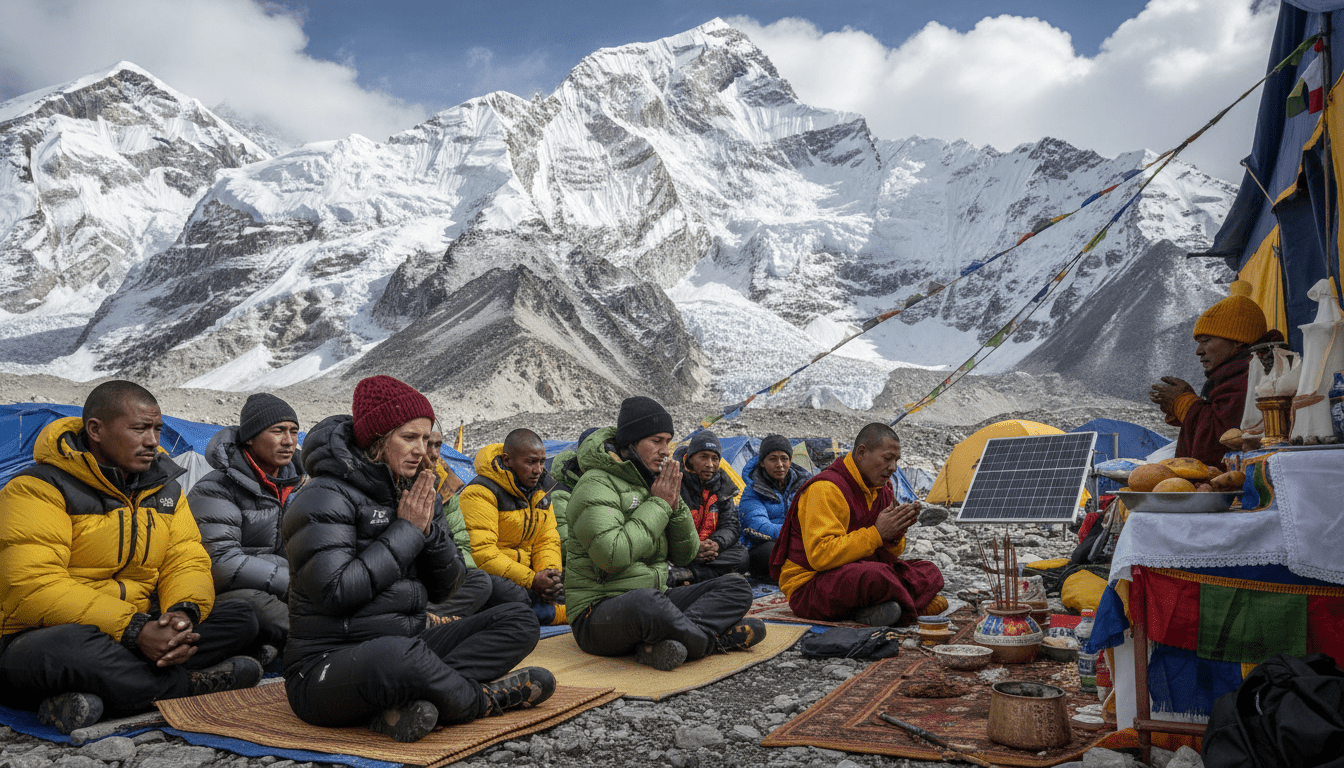
A Buddhist lama led a Puja at basecamp to seek the mountain’s goodwill before rotations began, Sherpas and climbers said. Boots, helmets, crampons and ice axes were placed on a stone altar decorated with prayer flags, gold cloth and offerings of fruit, sweets and baked goods. Participants smeared Tsampa, the region’s barley flour, on one another for luck and accepted garlands and small blessings before the first carries to higher camps.
The ritual underscores the cultural partnership between climbers and the local communities who regard the peaks as sacred, climbers noted. Many Sherpas traditionally refuse to climb until the Puja is completed, viewing the ceremony as necessary for the party’s welfare and for permission from the deities of the mountain.
Khumbu Icefall work paused after serac concerns
Work by the Icefall Doctors to fix ropes and ladders through the Khumbu Icefall was suspended intermittently this season because of a 30‑metre serac deemed unstable. The pause prompted uncertainty in basecamp and speculation about wider restrictions, but the route team and expedition leaders sought to evaluate options and minimize risk. After consultations, experienced Sherpa leaders assessed the situation and moved to re‑secure the passage, allowing rotations to resume in a limited fashion.
Mingma G., an experienced Sherpa who coordinates logistics for several teams, mobilized contacts and resources to restore safer passage, climbers reported. By midweek Sherpa teams had carried loads to Camp 2, enabling the first acclimatization rotations for those who chose to press on.
No bottled oxygen: acclimatization and medical choices
Blacha is attempting Lhotse without supplemental bottled oxygen, a strategy that makes staged acclimatization essential to success. She favors the classical “walk high, sleep low” method and conducts rotations to progressively higher camps to stimulate physiological adaptation to reduced air pressure. Blacha said she prefers in‑field acclimatization to long hypoxic tent training at home because real altitude exposure produces more reliable adaptations.
Medical decisions vary among expeditions, and the use of Diamox and other drugs is common in basecamp conversations, she noted. Blacha travels with emergency medications—including dexamethasone and nifedipine—but generally avoids routine medication, preferring to judge her performance and symptoms on the mountain.
Logistics and load‑carrying for high camps
Blacha’s packing reflects years of expedition experience: a pared‑down kit, redundancy across bags and careful sorting in basecamp. She reported carrying a heavy personal load for rotations—ten kilograms at minimum for a single stint to Camp 2—and maintaining broader expedition stores at basecamp. Overall expedition cargoes often exceed dozens of kilograms, and climbers typically spread critical items across multiple bags to mitigate single‑item loss.
Teams rely on Sherpa carries for higher‑camp equipment, and this season several Sherpas from Blacha’s operator have been moving tents, stoves and food upward. Blacha said she prefers to leave some gear at higher camps to reduce haul weight on summit pushes.
Risk assessment and leadership in camp
The season’s delays highlighted differing attitudes to risk among international climbers and local teams, Blacha observed. Some foreign climbers adopt a more passive role, deferring tactical decisions to operators and Sherpa leaders, while others push conversation and planning in basecamp to secure timelines and better safety margins. Blacha described herself as an active participant who shares information, asks questions and nudges decisions when necessary.
Past incidents inform current caution: a recent example of a climber falling into a crevasse after failing to clip into fixed lines reinforces the importance of conservative practices, she said. The balance between personal ambition and responsibility for others remains central in every decision to ascend.
Basecamp life, timelines and remaining uncertainty
Basecamp on the Khumbu Glacier functions as a transient high‑altitude village with domed lounges, kitchens and a dense concentration of international teams, climbers described. Helicopter traffic, limited to a set number of landing sites this year, contributes to persistent noise as equipment and personnel move in and out. Food and creature comforts vary by operator, but Blacha said the camp offers hot meals, wash facilities and a rhythm that helps teams conserve energy between rotations.
Despite ritual blessings and recent route progress, Blacha cautioned that summit timing remains fluid. The Icefall route must remain stable and further rotations will determine whether she can take a summit window this season. Concurrent activity on neighboring slopes, including climbers planning ski descents, adds to a complex operational picture that will shape decisions in the days ahead.
Anja Blacha’s expedition now shifts from preparation to active rotations as she and her team monitor route conditions, weather and personal acclimatization in pursuit of a high‑altitude summit without bottled oxygen.
