
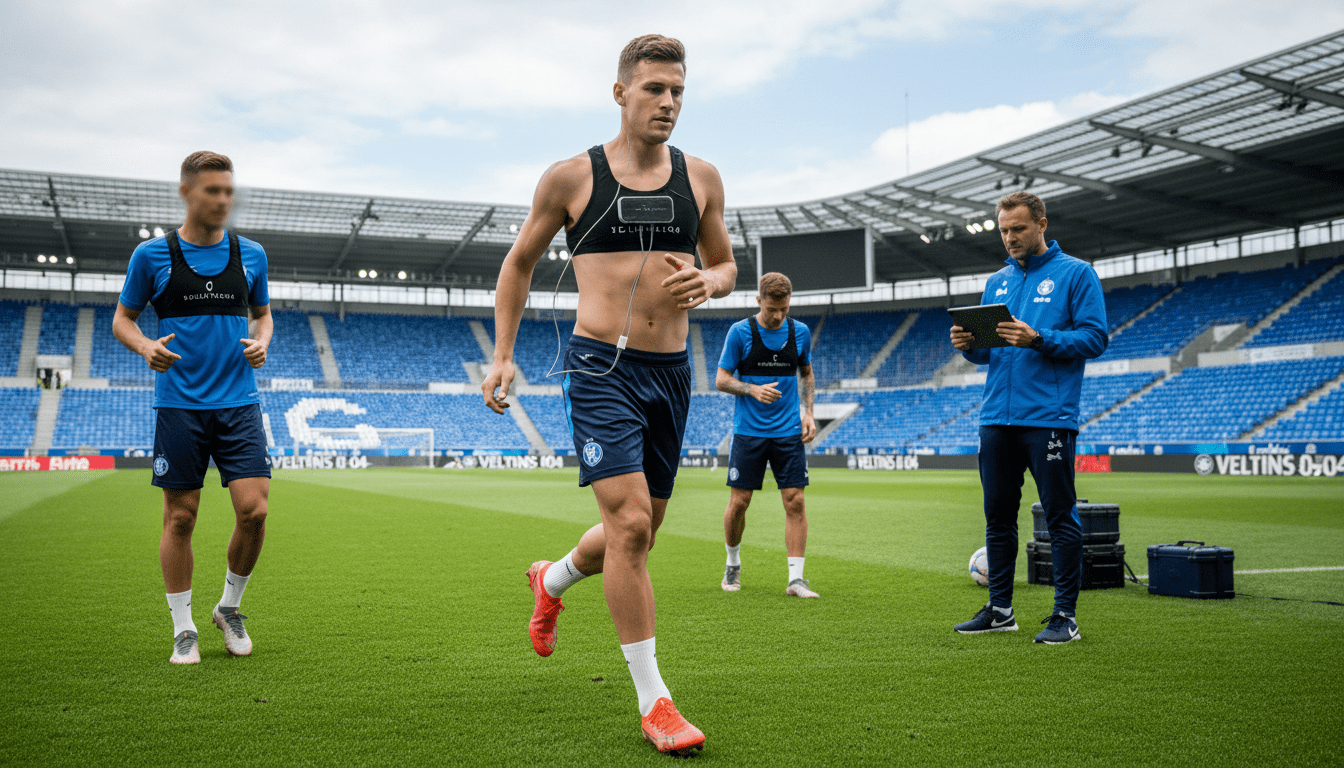
Schalke DNA Measured: Chest-Strap Sensors Quantify Intensity, Sprints and Running Load
Schalke DNA: chest-strap sensors track intensity, sprints and running load to shape tactics, training and welfare — seen in a match where Münster sat back.
Schalke’s performance team is formally measuring the club’s so-called “Schalke-DNA,” using wearable chest-strap sensors to capture intensity, sprints and overall running output for each player. The program translates those biometric markers into club-defined play criteria — intense, aggressive and courageous performance on the pitch. In one recent fixture, the data-confirmed match conditions changed when Münster adopted a deep block, allowing Schalke to play with more positional freedom than the metrics would normally demand.
How the club defines “Schalke-DNA”
Schalke-DNA is presented as a set of behavioral and physical standards the team must meet during a match and across training sessions. Those standards prioritize high-intensity actions, frequent sprinting and sustained running loads as proxies for an aggressive pressing and fast-transition style. The chest-strap sensors provide objective measures to compare individual and collective outputs against those standards.
The measurements are designed to be comparable across games and training, offering coaches a way to quantify adherence to club philosophy. Rather than replace subjective coaching judgment, the data is used to inform selection, substitution timing and session planning.
What the chest-strap sensors record
The devices worn by players capture core metrics such as heart-rate-derived intensity, number and length of sprints, and total distance covered at different speed thresholds. Those variables are fed into a central database where performance analysts can visualize spikes, drops and fatigue patterns during a match. This real-time and post-match data allows staff to identify which players are meeting the physical demands tied to the Schalke-DNA.
In addition to match metrics, the sensors are often paired with training loads to ensure players are progressing safely. Analytics teams look for consistent patterns rather than single-game outliers to guide longer-term conditioning and recovery plans.
Match context: Münster’s defensive approach altered demands
In the example match, Münster’s choice to sit deep reduced the need for constant high-intensity presses and long sprints from Schalke’s players. With fewer opportunities for explosive transitions, several typical Schalke-DNA markers registered at lower levels than on matches with open, end-to-end play. The situation illustrated how tactical context can suppress or amplify the physical indicators the club monitors.
Coaches and analysts flagged the discrepancy between the expected Schalke-DNA output and the actual match profile, interpreting it as a tactical outcome rather than a physical failure. The data helped explain why some metrics were lower while also reinforcing the need for tactical flexibility in player instruction.
How analytics informs coaching and selection
The performance data functions as an evidence base for coaching decisions, including who starts, who is substituted, and which training emphases are needed week to week. When a player consistently meets the intensity and sprinting thresholds, they are viewed as a stronger fit for the club’s pressing and transition demands. Conversely, recurring shortfalls trigger individualized conditioning or targeted tactical work.
Analysts present distilled dashboards to coaching staff that highlight deviations from Schalke-DNA goals, enabling rapid adjustments. That streamlined flow from sensor to coach is intended to align training stimuli with match expectations without overloading players.
Player welfare and load management considerations
Tracking intensity and running load also serves medical and welfare objectives, helping to manage injury risk and recovery. By monitoring cumulative load across matches and sessions, the club can identify players approaching fatigue thresholds and plan rest or modified training. This load-aware approach aims to balance the pursuit of Schalke-DNA standards with long-term availability and health.
This blend of performance and welfare metrics supports a more precise return-to-play pathway when injuries occur. It also reduces reliance on subjective estimates of readiness, allowing multidisciplinary teams to make conservative, data-supported calls.
Broader implications for recruiting and development
Beyond match-to-match management, the sensor data contributes to scouting and youth development by defining the physical profile Schalke seeks. Youth players and recruits can be assessed against concrete thresholds tied to the club’s playing identity, guiding development plans and recruitment choices. That alignment seeks to produce a pipeline of players already accustomed to the intensity and movement patterns demanded at senior level.
Using measurable criteria allows the club to compare potential signings and academy graduates on the same scale as first-team players, creating clearer targets for coaches and fitness staff.
Schalke’s integration of chest-strap sensor data into its definition of club identity demonstrates how modern performance programs can turn abstract playing principles into quantifiable targets. The Münster match showed those targets are context-dependent and that successful application requires close communication between analytics, coaching and medical teams.
As analytics continue to be absorbed into daily practice, the club faces the task of calibrating thresholds to evolving tactics and individual variability. The central challenge is to maintain the intensity and aggression that define Schalke-DNA while adapting to opponents and protecting players from overload.
