
How Planned Rocket Crashes Became Part of the Commercial Launch Playbook
Planned rocket crashes are now built into the operational cadence of some commercial launch firms, says a Roland Berger expert, reshaping satellite replacement and industry risk.
Opening summary
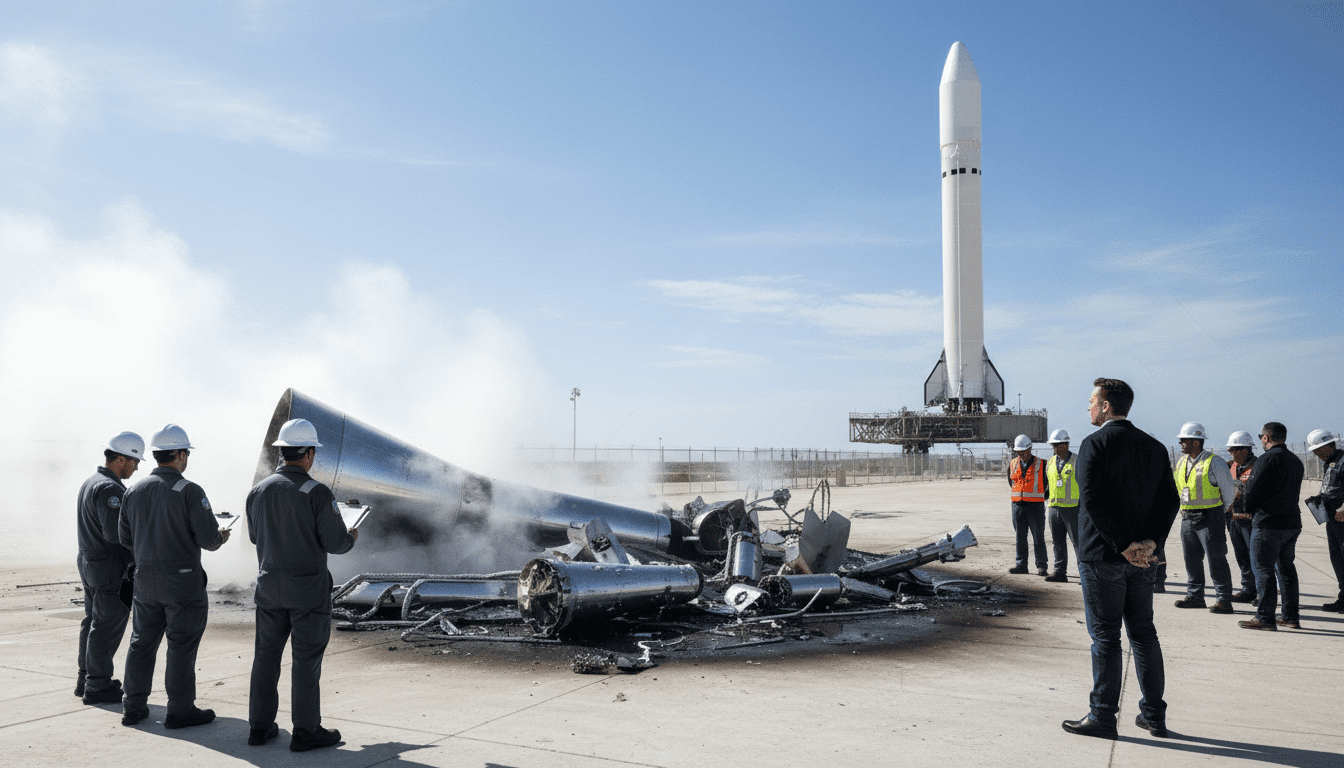
On August 27, 2024, what looked like a spectacular, isolated rocket failure was framed by industry analysts as part of a broader operational pattern. The phrase planned rocket crashes appears increasingly in boardroom and consultancy discussions as firms accept controlled losses to speed innovation. A Roland Berger aerospace specialist, Darot Dy, said regular crashes are effectively factored into the business model of major launch operators.
August incident reframed as system practice
The August 27 event reverberated across media and investor channels, but industry insiders treated it as one data point in an ongoing cadence of launches. Companies are launching rockets on weekly cycles to place upgraded satellites into orbit, deliberately cycling hardware through short operational lives. This approach treats some vehicle losses and atmospheric burn-ups as an expected trade-off for faster technological turnover.
Consultant analysis: business model and risk tolerance
Darot Dy of Roland Berger summarized the shift bluntly: regular crashes are anticipated and incorporated into planning and budgets. That assessment reflects a recalibration of acceptable failure rates relative to the speed and cost of deployment. For commercial operators, narrowly contained losses can be more tolerable if they accelerate product iteration and network capacity growth.
Launch cadence and satellite replacement cycle
A key element of the model is rapid replacement: new satellites with enhanced sensors and processing power are launched frequently to refresh capability. Older satellites are intentionally allowed to decay and burn up on reentry or are deorbited at end of life to make way for successors. The cadence enables operators to deliver incremental service improvements to customers without waiting years for a single, monolithic upgrade cycle.
Failure as feedback in product development
Treating failures as a source of learning reduces the time between design iteration and flight testing, proponents argue. When controlled losses occur, engineering teams can directly observe failure modes and apply corrections to subsequent builds, shortening development loops. This iterative feedback loop mirrors practices in other high-tech fields where rapid testing with acceptable discard rates accelerates progress.
Economic rationale and insurance considerations
Financially, the calculus depends on launch cost, revenue per satellite, and insurance structures that cover both launches and in-orbit assets. By accepting occasional losses, operators can lower per-unit development costs through volume production and faster deployment of higher-margin services. Insurers and investors are recalibrating models to price the higher-frequency launch environment, but premiums and liability frameworks remain significant levers in commercial viability.
Orbital debris and regulatory pressure
The shift toward frequent launches and planned reentries raises regulatory and environmental questions, especially around orbital debris and long-term space sustainability. Deorbiting protocols and post-mission disposal obligations are now focal points for regulators and international bodies. Critics warn that normalizing losses without stronger mitigation measures could increase congestion in vital orbital bands and raise collision risks for remaining assets.
Industry responses and mitigation measures
Some operators are adopting stronger end-of-life designs and controlled deorbit systems to limit long-lived debris, while others are investing in active debris-removal technologies. Regulators in several jurisdictions are updating licensing requirements to demand clearer plans for satellite disposal and debris risk reduction. The combination of commercial imperatives and regulatory scrutiny is pushing firms to document how planned rocket crashes will be managed responsibly.
The rapid deployment model—where planned rocket crashes are an accepted part of growth—reflects a broader tension between accelerating technological progress and protecting shared orbital commons. As companies iterate faster and fleets expand, transparency on failure rates, insurance exposures, and debris mitigation will shape both market acceptance and regulatory responses.
