
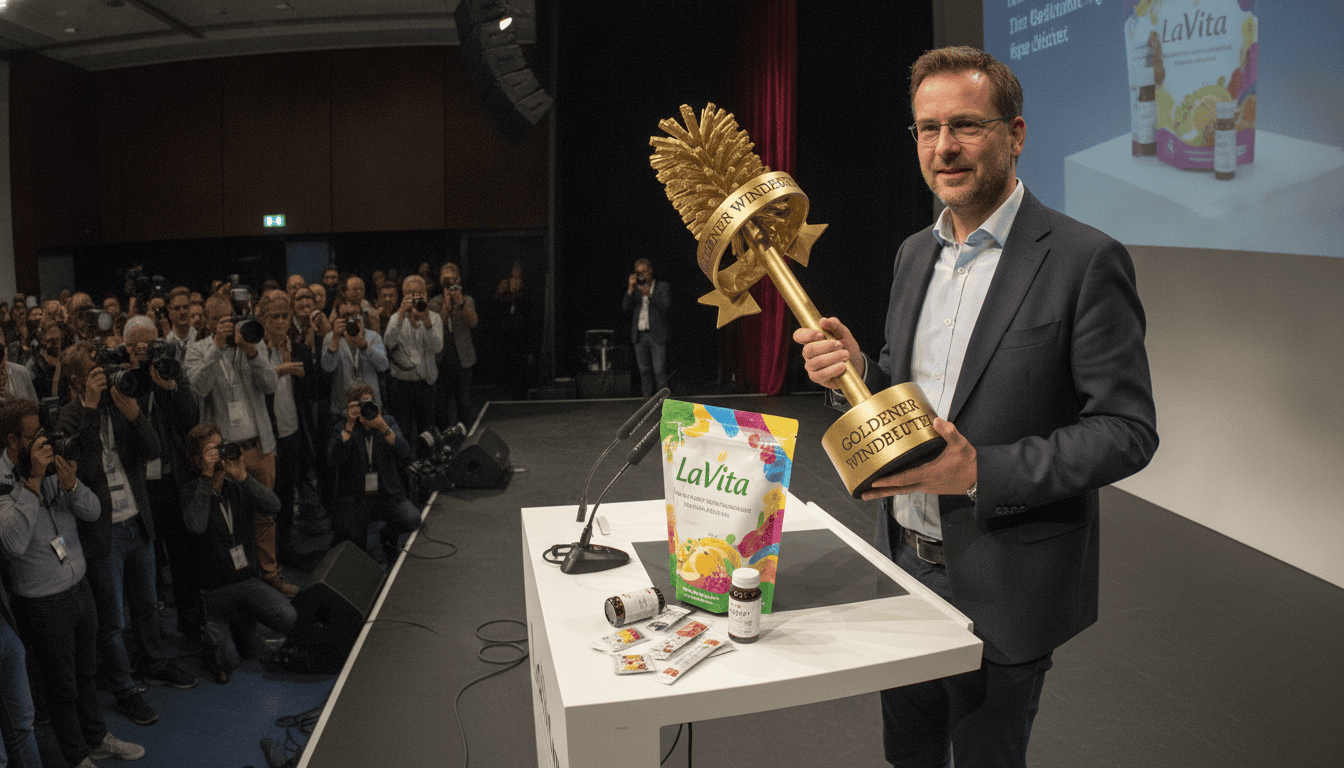
LaVita Wins Goldener Windbeutel as Foodwatch Blasts Misleading Micronutrient Drink
Foodwatch awards the Goldener Windbeutel to LaVita after 39% of 66,000 voters called its micronutrient concentrate misleading; calls for stronger oversight.
LaVita named recipient of the Goldener Windbeutel
LaVita was selected by the public as the winner of this year’s Goldener Windbeutel, the negative prize given by consumer group Foodwatch to products accused of misleading advertising. In an online vote with more than 66,000 participants, 39 percent of voters singled out the company’s micronutrient concentrate as the most brazen example of deceptive marketing. Foodwatch said the award highlights how health-oriented language can create false expectations for consumers.
Details of the public vote and Foodwatch’s statement
Foodwatch characterized the result as a consumer rebuke to aggressive health claims and opaque ingredient messaging. The organization emphasized that the popular vote is intended to call attention to systemic problems rather than to serve as a formal regulatory judgment. A Foodwatch spokesperson said the LaVita product exemplifies “the exploitation of consumers’ desire for health” through ambiguous labeling and promotional language.
Product composition and retail pricing
According to Foodwatch’s analysis, the LaVita micronutrient concentrate consists largely of fruit juice concentrate and contains up to 26 isolated vitamins and nutrients. The group said the product may include high doses of some nutrients and that fruit juice concentrates can account for as much as 70 percent of the formulation. Despite its composition, the concentrate is sold at a price equivalent to roughly 100 euros per liter, a figure Foodwatch cited to underscore the disparity between cost and substance.
Claims versus evidence in advertising
LaVita marketed the drink with phrases such as “natural product” and “daily basis for our health,” and promoted it on social media with terms like “Saubertrank” and “fit for life.” Foodwatch argues that those claims are misleading because the beverage’s nutritional profile is driven by concentrated juices and isolated nutrient additions rather than a proven, holistic health solution. The consumer group noted that LaVita has reportedly withdrawn some of the more explicit marketing language but said the broader trend of health-oriented buzzwords remains problematic.
Other nominees and the negative ranking
LaVita topped a shortlist of five products nominated for the Goldener Windbeutel this year, with Dr. Oetker’s “Airfryer Backin Backpulver” finishing second at 21.9 percent of votes. Foodwatch said the Dr. Oetker product is marketed as an innovation for air fryers despite being indistinguishable from standard baking powder and priced substantially higher. Close behind, Andechser Natur’s Matcha Mango yogurt drew 20.8 percent of votes, with Foodwatch pointing out that the advertised matcha content represents only a trace amount of the product.
Foodwatch’s call for stronger food supervision
In response to the vote, Foodwatch urged federal and state authorities to strengthen food monitoring and enforcement to prevent consumer deception in the booming supplements market. The organization highlighted that products with vitamin additives and supplements are proliferating while regulatory oversight has not kept pace. Foodwatch called for more resources and clearer rules so that marketing claims can be verified and misleading statements punished.
Consumers are increasingly targeted by wellness messaging that blurs the line between food and supplement, Foodwatch warned, and the group said public awareness alone is insufficient to curb commercial excesses. The Goldener Windbeutel, awarded by Foodwatch since 2009, is intended both to shame companies whose advertising crosses legal or ethical lines and to spur reform in monitoring practices.
LaVita and the other companies named in the ranking have not been subject to a court ruling through this contest, and Foodwatch framed the prize as a spotlight rather than a formal legal finding. The vote and accompanying analysis have renewed debate about how governments and market actors should balance consumer protection, truthful advertising, and the economic pressures of a growing supplements industry.
