
Israeli attacks in southern Lebanon injure nine in Zibqin, strikes hit multiple Tyre-area towns
Israeli attacks in southern Lebanon injured nine in the Zibqin area; four women were evacuated to Tyre hospitals as strikes also struck Aitit, al-Mansouri, al-Haniya, al-Qulayla and the Litani River.
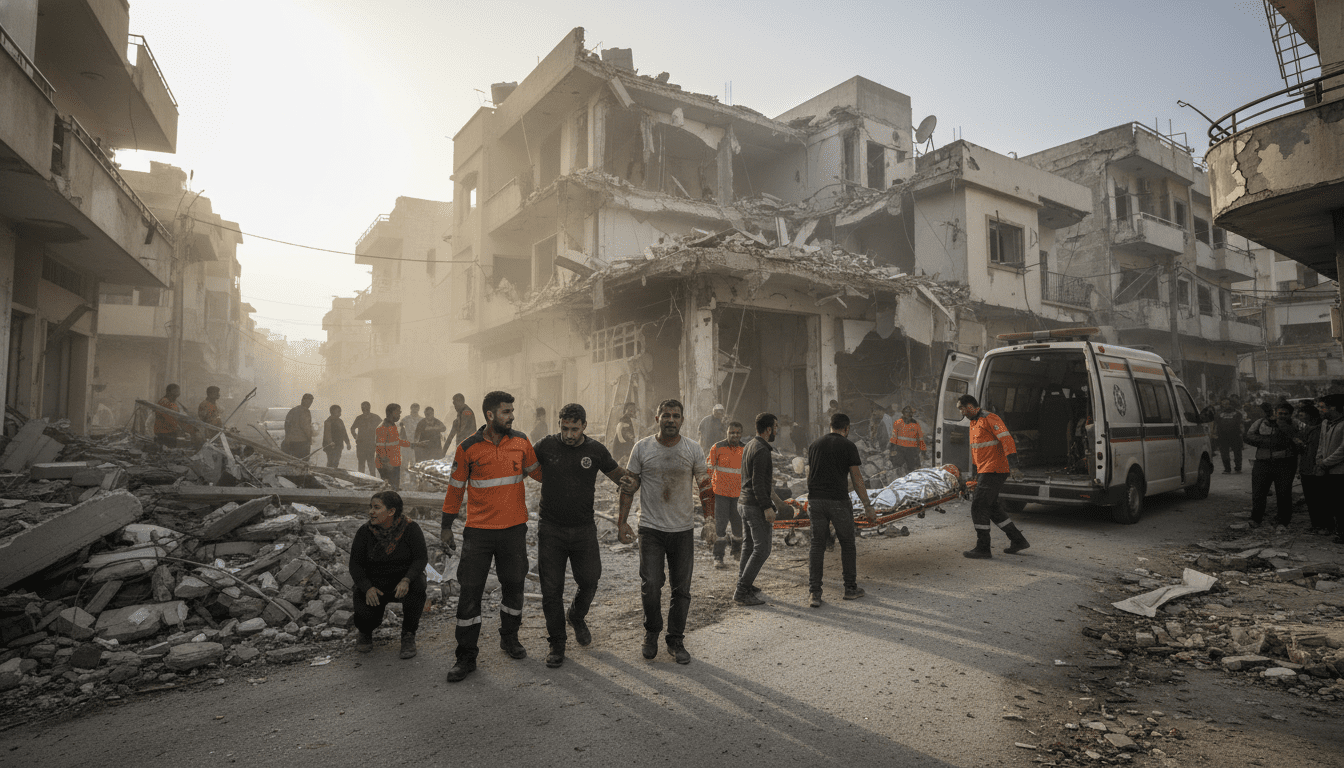
Overnight on May 13–14, 2026, a series of Israeli attacks in southern Lebanon struck residential neighbourhoods in the Zibqin area and other towns, injuring at least nine people, the National News Agency (NNA) reported. Four women among the wounded were evacuated to hospitals in the coastal city of Tyre for treatment, according to the agency.
Casualties and hospital evacuations
Nine people were reported wounded in Zibqin, with emergency crews moving quickly to evacuate the most seriously harmed to medical facilities in Tyre. The NNA said the four women required hospital care, though it did not provide details on the severity of their injuries or their identities.
Additional casualties were reported after a separate raid on the town of Aitit, the agency added, while local health authorities in Tyre continued to receive patients through the night. Hospitals in the area remained on alert as medics assessed and treated those brought in from multiple strike sites.
Towns and areas struck
The incidents affected several populated areas in the Tyre district, including al-Mansouri, al-Haniya and al-Qulayla, according to the NNA’s field reports. Military activity was not confined to towns; air strikes were also conducted along stretches of the Litani River, a major geographic and strategic feature of southern Lebanon.
Local residents described explosions and emergency sirens as the raids unfolded, and reports from the scene indicated damage to residential buildings in parts of Zibqin. Municipal sources and local media offered on-the-ground updates that matched the NNA’s account of multiple, coordinated strikes across the district.
Civilian impact and emergency response
The strikes targeted residential neighbourhoods, increasing the risk to non-combatants and prompting rapid medical and civil defence responses. Local authorities mobilised ambulances and first responders to move the injured to Tyre’s hospitals, where emergency departments prepared for further casualties.
Humanitarian agencies and community organisations in the area were reported to be monitoring the situation and preparing basic assistance for displaced families, while municipal officials called for calm and access for emergency services. The immediate needs included medical care, temporary shelter for damaged homes and information for worried relatives.
Nature of the strikes and military activity
NNA correspondence and local witnesses described a mix of aerial strikes and raids; the agency specified that air strikes were carried out along the Litani River corridor. The pattern of strikes across several towns in a single night indicates a coordinated operation affecting both populated areas and riverine zones.
There was no detailed military assessment from either side in the immediate aftermath, and the NNA’s reporting focused on civilian effects and local emergency measures. Independent verification by international monitors was not available at the time of initial reports.
Diplomatic and regional implications
Cross-border incidents such as these carry the risk of further escalation between Israeli forces and groups operating in southern Lebanon, and they complicate regional diplomacy. Analysts say renewed exchanges of strikes can heighten tensions for communities along the border and draw responses from regional actors monitoring stability in Lebanon and nearby countries.
International and local diplomatic channels typically urge restraint and emphasize protection for civilians, but the immediate reporting did not include statements from foreign ministries or international organisations. The evolving situation is likely to attract attention from regional capitals and multilateral bodies seeking to prevent wider clashes.
The NNA’s account represents the primary available local report on the overnight raids, and its figures and descriptions formed the basis of initial media coverage. Officials in Israel had not issued a public response to the NNA’s report at the time of publication, and details about the stated rationale for the strikes were not immediately available.
The situation remains fluid, with local authorities continuing to assess damage and tend to the injured while communities cope with the overnight strikes and the prospect of further security developments.
