
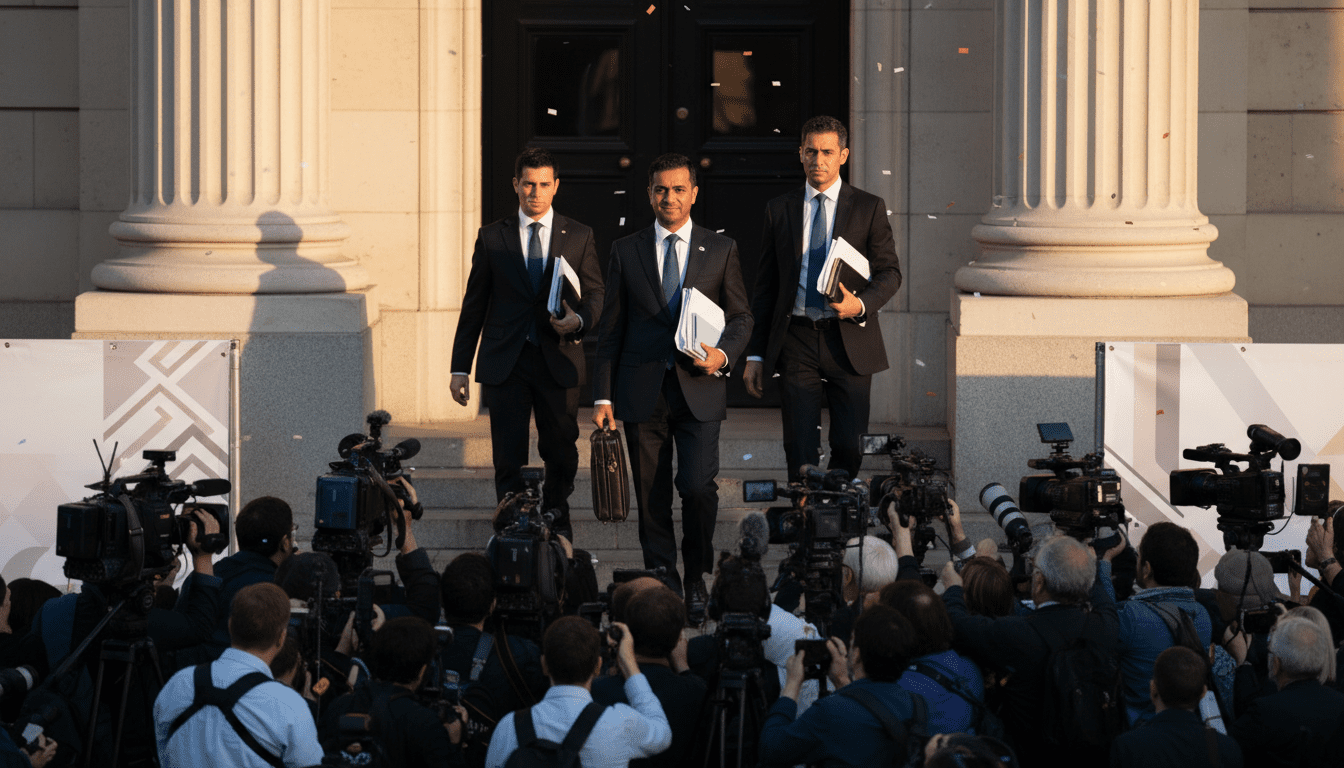
Karim Khan investigation: Judicial Panel finds OIOS evidence does not establish misconduct
A legal adviser retained by ICC prosecutor Karim Khan says a Judicial Panel has unanimously concluded that facts collected by the UN’s Office of Internal Oversight Services (OIOS) do not establish misconduct, following an investigation that ran from November 2024 to December 2025. The adviser, who reviewed the evidential record under a confidentiality agreement, told reporters the OIOS file comprised more than 5,000 pages and that the judges issued an 85-page reasoned report in March 2026. The development has intensified debate over a summary circulated by the Assembly of States Parties (ASP) bureau and renewed concerns about political pressure on the court.
Judicial Panel delivers detailed, unanimous judgement
The three-judge Judicial Panel completed a three-month review of the OIOS report and the underlying material before issuing its judgement in March 2026. In an 85-page report, the judges set out their analysis and concluded unanimously that the factual findings by OIOS did not meet the legal threshold to establish misconduct or breach of duty.
Those conclusions, the Judicial Panel said, followed a careful appraisal of witness statements, documentary evidence and the standards of proof applicable in proceedings that could lead to disciplinary or criminal characterisations. The legal adviser for the defence described the decision as a reasoned judgement grounded in the evidential record.
Scope and conduct of the OIOS inquiry
The OIOS inquiry began in November 2024 and continued through December 2025, during which investigators interviewed the subject, other parties and numerous third parties, and accepted material submitted by stakeholders. The evidence package provided to reviewers reportedly exceeded 5,000 pages and included interviews and independently collected documentation.
According to the legal adviser, that material did not yield corroborating witnesses for the most serious allegations, and contained gaps and inconsistencies the Judicial Panel identified in its analysis. The panel applied the relevant legal framework in reaching its conclusions, the adviser said, and determined the evidential record did not satisfy the standard required to establish misconduct.
Contested summary circulated by ASP bureau and subsequent leak
After the Judicial Panel’s report became public, the ASP bureau circulated what it described as an “OIOS Report Summary.” The summary, however, drew largely from the OIOS report’s early narrative overview rather than the report’s concluding “Findings” section, according to sources familiar with the documents.
That misalignment was highlighted by the Judicial Panel’s own analysis, which repeatedly referenced the absence of conclusive factual findings by OIOS. The bureau’s summary subsequently leaked to the public and gave rise to confusion about whether OIOS had made definitive factual determinations on the allegations. The legal adviser said the circulation and leak of the summary amplified misperceptions about the content of the OIOS findings.
External actors urge a different course despite limited access to evidence
Following publication of the Judicial Panel’s judgement and the leaked summary, several individuals and organisations publicly urged the bureau to take action that would effectively override the panel’s reasoned legal assessment. These calls included statements arguing that political bodies should reassess the legal characterisation of the OIOS material.
One cited example was a public explainer produced by the International Federation for Human Rights, which stressed that legal assessments should be conducted by experts independent of political organs to ensure fairness and institutional credibility. Critics argue some advocates for immediate political remedies did so without having had access to, or having examined, the evidential record compiled by OIOS.
Due process and risks to prosecutorial independence highlighted
Legal and rights experts involved in the review warned that discarding the Judicial Panel’s unanimous finding would raise serious questions about due process and the independence of the Office of the Prosecutor. Those concerns centre on the presumption of innocence and on the risk that political actors could impose sanctions or removal absent the evidential standards applied by impartial judges.
The legal adviser emphasised that a just outcome depends on a meaningful investigation, full participation by parties, respect for due process rights and impartial judicial review of the complete record under established standards of proof. Intervening politically after a reasoned judicial assessment, the adviser warned, could erode public confidence in the court and its prosecutorial independence.
A separate risk flagged by observers is the precedent created if a political body disregards or reinterprets a judicial panel’s careful legal analysis, particularly in a case involving the court’s chief prosecutor. Such an outcome would prompt debate about institutional checks and the proper relationship between oversight organs and judicial evaluators.
The Judicial Panel’s judgement and the surrounding controversy have set the stage for a decisive response from the ASP bureau. The defence adviser, constrained by a confidentiality agreement from discussing the evidentiary record in detail, has urged the bureau to accept the panel’s reasoned conclusion and to declare the matter closed on the basis of the evidence and applicable law.
The bureau faces a choice between upholding the unanimous findings of an independent judicial body or pursuing a politically driven course that critics say could undermine due process and the Office of the Prosecutor’s independence. The outcome will be closely watched for its implications for the International Criminal Court’s governance and credibility.
