
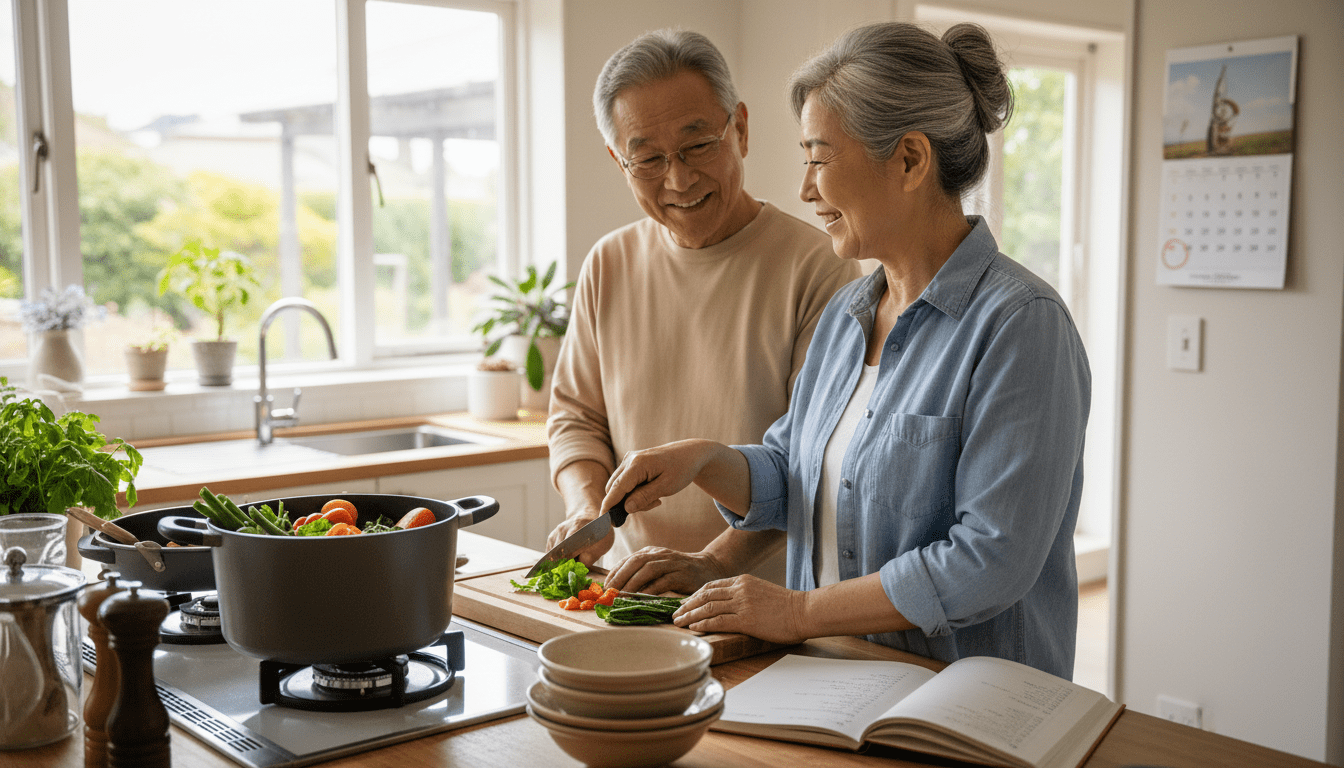
Home Cooking and Dementia: Weekly Home Cooking Linked to Lower Dementia Risk in Older Adults
New study finds home cooking and dementia risk reduction may be connected: older adults who cook at least once weekly showed lower dementia incidence, while experts stress the study is observational.
Older adults who prepare meals at home at least once a week were less likely to develop dementia over a six-year follow-up, according to analysis of a large Japanese aging study that tracked nearly 11,000 people aged 65 and older. The association between home cooking and dementia emerged even after researchers adjusted for socioeconomic and lifestyle factors, prompting suggestions that regular meal preparation might be a practical element of a brain-healthy lifestyle.
Study links weekly cooking to reduced cognitive decline
The research team analyzed data from the Japan Gerontological Evaluation Study, following participants for six years to measure new dementia diagnoses alongside self-reported cooking frequency and perceived cooking ability. People who cooked at least once weekly showed significantly lower rates of cognitive decline compared with those who cooked less often.
Men who cooked regularly had about a 23% lower risk of dementia, while women who cooked frequently showed roughly a 27% reduction. The strongest association appeared among participants who initially reported limited cooking skills, a group in which dementia incidence was markedly lower.
How researchers measured cooking and outcomes
Investigators relied on participants’ reports of how often they cooked and on standardized assessments to identify new cases of dementia during the study period. The dataset allowed adjustments for a range of potential confounders, including health behaviors, education, and income, which strengthened the observed link between home cooking and dementia.
Despite these controls, the study’s observational design means it cannot establish causation. Researchers acknowledged the possibility that early cognitive changes could reduce a person’s ability or inclination to cook, which would make decreased cooking an early symptom rather than a cause of dementia.
Experts urge caution on causation and generalizability
Neurologists and dietitians not involved with the study noted the findings are encouraging but should be interpreted cautiously. They emphasized that the research identifies an association, not proof that cooking prevents dementia, and that reverse causation remains a plausible explanation.
Commentators also pointed out that the study population was exclusively older adults in Japan, where culinary habits and social meal patterns differ from other countries. That cultural context could influence both how frequently people cook and the types of meals they prepare, potentially limiting direct application to other populations.
Possible mechanisms linking cooking to brain health
Researchers and clinicians outlined several plausible reasons home cooking might correlate with better cognitive outcomes. Meal preparation requires planning, sequencing, attention, memory, and decision-making—skills that engage multiple cognitive domains and could help maintain function through regular use.
Cooking also involves physical movements—standing, walking, reaching, chopping—that increase daily activity and may support cardiovascular and brain health. Preparing meals at home tends to reduce reliance on ultra-processed foods and can encourage consumption of whole grains, vegetables, fruits, and beneficial fats, which are linked in other studies to healthier cognitive aging.
Social and emotional factors may also play a role: cooking can foster independence, routine, and social connection when meals are shared, all of which are associated with healthier aging and reduced isolation.
Who appeared to benefit most in the study
The greatest relative gains were seen among participants who began with limited cooking skills. For those individuals, taking on meal preparation at least weekly corresponded to the largest reductions in dementia incidence, suggesting that acquiring or maintaining cooking ability later in life may be particularly impactful.
Researchers caution, however, that lower cooking frequency can itself be an early indicator of emerging cognitive problems. That nuance means clinicians should consider changes in daily living tasks—including cooking habits—when assessing older adults for cognitive decline.
Actionable tips for older adults who want to start cooking
Dietitians recommend practical, low-barrier approaches for people looking to add home cooking to their routines without feeling overwhelmed. Simple one-dish meals—grain bowls, sautés, and composed salads—can deliver balanced nutrition with minimal prep time and are good starting points for beginners.
Meal kits and pre-portioned ingredients can reduce decision fatigue and introduce new flavors and techniques safely. Building a “brain-healthy pantry” with staples such as canned beans, whole grains, olive oil, canned tomatoes, canned seafood, nuts, and frozen fruits and vegetables makes it easier to assemble nutrient-rich meals on short notice.
The focus should be on consistency rather than perfection: cooking once or twice a week and gradually increasing frequency can replace more highly processed options and provide cognitive, physical, and social engagement.
The research adds to a growing body of literature suggesting that everyday activities tied to independence and routine may support cognitive health. While more studies—especially randomized trials or research in diverse populations—are needed to determine whether home cooking itself reduces dementia risk, encouraging older adults to cook safely and regularly could be a low-cost, practical step within broader brain-health strategies.
