
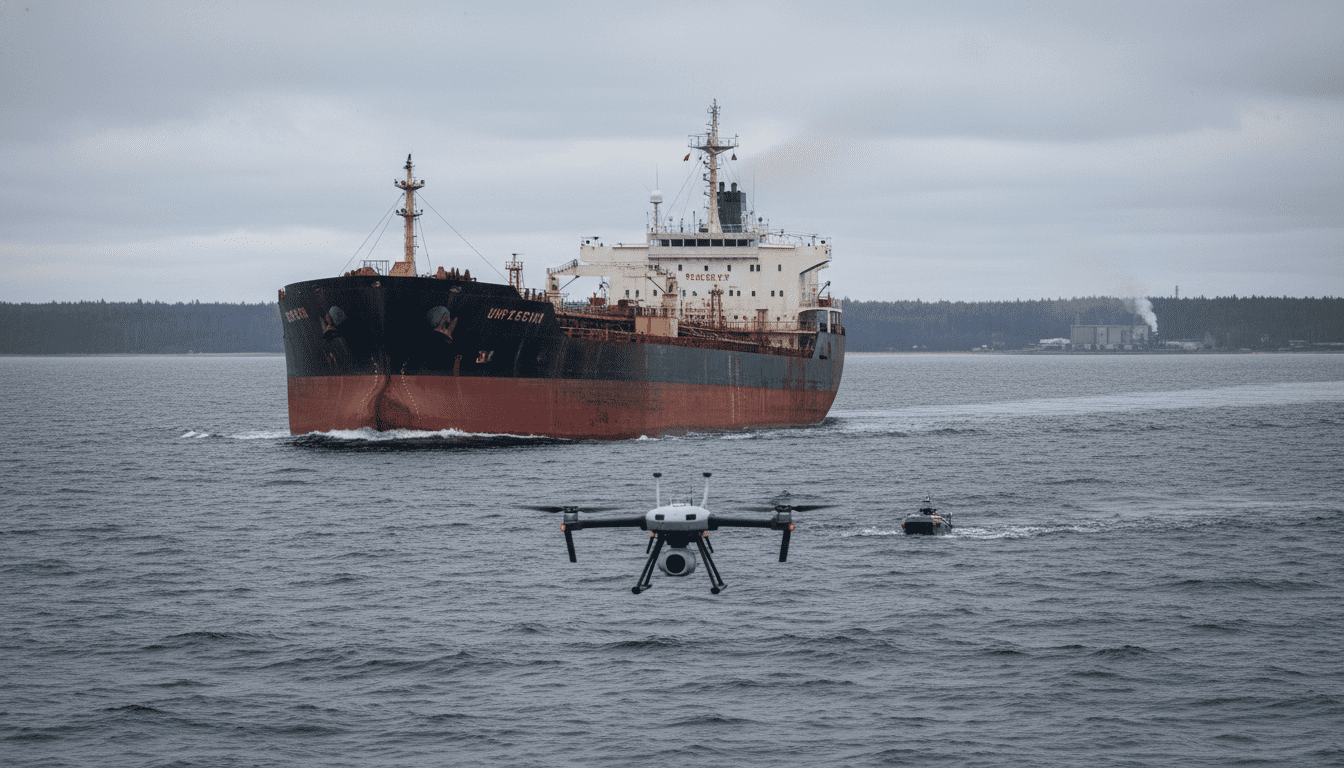
Greenpeace: Ukrainian Strikes Temporarily Disrupt Russian Shadow Fleet in Baltic Sea
Greenpeace says Ukrainian drone attacks temporarily halted movements of the Russian shadow fleet in the Baltic Sea, raising environmental and maritime concerns.
The environmental group reported a short-lived drop in loaded tanker traffic from the east after a series of Ukrainian drone strikes on Russian oil facilities, noting that many vessels remained anchored or sailed empty during the disruption. Greenpeace described the pause as temporary, but said it showed the vulnerability of the so-called Russian shadow fleet operating in the Baltic Sea. Authorities in Germany said they had no independent confirmation of the group’s maritime traffic assessment.
Greenpeace reports a brief reduction in loaded tanker departures
Greenpeace analysts observed that, for several days, few fully laden tankers left Russian Baltic ports, and those that did were often transiting without cargo. The group linked the decline directly to recent Ukrainian long-range drone attacks on onshore oil infrastructure that sparked fires and forced precautionary halts in operations. While Greenpeace characterized the interruption as short-term, it said the pattern suggested a disruption to the logistics chain used to move oil via nonstandard shipping channels.
A Greenpeace spokesperson cautioned that the frequency of future sailings remains uncertain because it is not clear how much oil and loading capacity survived the damage. The organization emphasized that even a transient pause can alter routing and increase reliance on older, less regulated tankers that form part of the shadow fleet. Maritime monitoring groups and insurers will be watching whether the temporary lull translates into longer-term changes in ship deployment.
Details of the Ukrainian drone campaign and targets
In recent weeks, Ukrainian forces have carried out drone strikes on multiple elements of Russia’s oil infrastructure, including storage facilities and loading installations, according to Western and NGO assessments. The strikes reportedly targeted installations in the Leningrad region, which services ports that move crude and refined products into the Baltic trade. Greenpeace said those attacks ignited fires and disrupted terminal operations, forcing staggered shutdowns and precautionary port restrictions.
Ukrainian officials have framed the strikes as part of an effort to degrade revenue streams that fund the war effort, while Moscow has described them as attacks on civilian infrastructure. Independent verification of damage and precise operational impact is difficult in contested areas, and much of the detailed assessment to date relies on satellite imagery, open-source monitoring, and reports from local observers. The scale of damage to storage capacity and loading infrastructure will determine how long any disruption might persist.
Operational status of Primorsk and Ust-Luga ports
Primorsk and Ust-Luga, two major Russian Baltic terminals, have been highlighted repeatedly as focal points for the recent hostilities and resultant operational uncertainty. Greenpeace pointed to repeated incidents in the Primorsk area and noted attacks on the Ust-Luga complex, both of which handle large volumes of oil and petroleum products destined for export. Port managers have at times curtailed loading schedules for safety, and repair work can extend delays at terminals that sustain damage.
Despite episodes of reduced activity, Greenpeace acknowledged that some port operations never fully stopped and that cargo handling has resumed in phases. Port authorities have alternated between reduced berthing and selective re-openings as inspections and repairs progress. The patchwork nature of those resumption patterns complicates predictions about how many laden tankers will return to regular Baltic routes.
Rise in anchored tankers and environmental risk concerns
Monitors reported a noticeable increase in tankers anchored off the coast of the Russian Baltic, a trend Greenpeace said is consistent with ships awaiting clearer loading instructions or insurance cover. The organization warned that many vessels used as part of the shadow fleet are older and underinsured, heightening the risk of accidents, spills, and inadequate response capacity. Anchored concentrations of aging tankers elevate the environmental stakes in the event of secondary incidents or navigational errors.
Greenpeace called attention to the danger such a pattern poses to the Baltic’s sensitive marine ecosystem, where a significant spill could have long-lasting ecological and economic consequences. Emergency response infrastructure and salvage readiness in the region are uneven, especially for vessels operating outside standard commercial frameworks. Environmental groups urge enhanced monitoring and cooperation among regional authorities to mitigate spill and collision risks tied to the shadow fleet’s activity.
Implications for Russia’s oil exports and price-cap circumvention
Analysts say the shadow fleet evolved as a mechanism for Moscow to circumvent a Western-imposed price cap and export restrictions, relying on older tankers, opaque ownership structures, and informal transshipment practices. By shifting cargoes through a network of underregulated vessels, Russia has sought to preserve crucial export revenues despite sanctions. Interruptions caused by attacks on terminals complicate that model by reducing immediate loading options and forcing temporary rerouting.
However, the headline effect of a brief drop in loaded sailings may be limited if terminals can restore operations and shippers find alternative transfer points or methods. The economic impact hinges on how long damaged facilities remain offline and whether insurers and charterers accept the increased risk of handling cargoes via the shadow fleet. Policymakers and market participants will be watching insurance flows, freight rates, and port throughput as indicators of how resilient those circumvention strategies are.
The recent sequence of strikes and Greenpeace’s maritime observations underscore a volatile intersection between military action, energy logistics, and environmental vulnerability in the Baltic Sea. Monitoring groups, port authorities, and regional coast guards face pressure to verify movements, manage risks from aging vessels, and ensure preparedness for potential spills or accidents. How quickly ports return to steady loading, and whether insurers and regulators adjust their responses, will determine whether the disruption remains a short-lived tactical effect or a catalyst for longer-term shifts in the region’s oil trade.
