
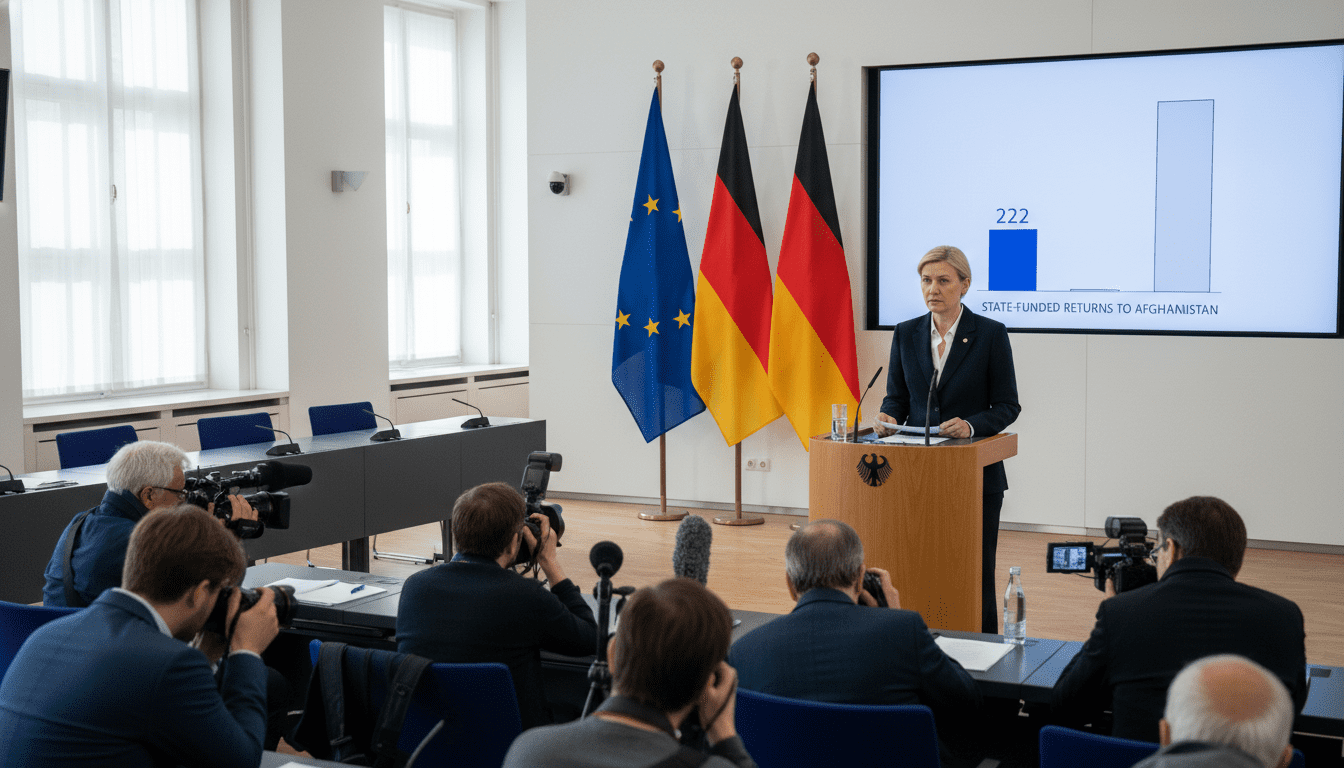
Voluntary returns to Afghanistan: Germany funded 222 departures from 2023 to March 2026
Government data shows just 222 Germany-funded voluntary returns to Afghanistan from 2023 to March 2026, sparking criticism of low support and program limits.
Germany’s federal government has disclosed that only 222 people left the country for Afghanistan with state financial support between 2023 and March 2026, underscoring the limited uptake of assisted voluntary returns to Afghanistan. The figures, released in response to a parliamentary inquiry from The Left and seen by the Evangelical Press Service, show a stark contrast with larger numbers for assisted departures to other countries. The data also indicate that the vast majority of applicants were men, while some women and minors also returned with financial help.
Government response and detailed figures
The federal reply to the parliamentary question states that, in addition to the 222 departures to Afghanistan, eight individuals received financial assistance to go to other countries during the same period. The document specifies that applicants supported for return were predominantly male, but that support was not exclusively limited to adult men; a small number of women and underage children were included among those who left with state aid. Officials framed these movements as voluntary returns supported by targeted funding mechanisms.
New Bund–Länder programme launched in 2025
Since 2025, voluntary departures to Afghanistan have been eligible for funding under a new federal-state (Bund–Länder) programme, according to the government response. That programme accounted for 88 of the assisted departures to Afghanistan recorded through March 2026, while earlier schemes allowed applicants to apply for partial financing of travel costs. The introduction of the Bund–Länder scheme was positioned by authorities as an effort to standardize and renew support channels for voluntary returns.
State-funded returns to Syria show far higher uptake
By contrast, the government’s data show far greater uptake of voluntary return support to Syria. The Federal Office for Migration and Refugees (BAMF) reported that, up to February 28, 2026, roughly 4,500 people had used state funding to leave Germany for Syria. The assistance for Syria includes travel expenses, a start-up allowance on arrival and, where necessary, coverage of certain medical costs. Officials cite those elements when explaining the higher numbers for Syria compared with Afghanistan.
Deportations to Afghanistan under the current government
Separate figures in the response address deportations rather than voluntary returns. The government states that 138 people have been deported to Afghanistan since the current black-red federal government took office; those deported were all men convicted of criminal offenses. The reply did not provide further demographic breakdowns for the deported group, but it distinguished clearly between state-enforced removals and the comparatively small number of assisted voluntary departures.
Critics call financial support inadequate and coercive
Clara Bünger, The Left party’s spokesperson on refugee policy, criticised the funded departures program, arguing that many so-called voluntary returns happen “under great pressure.” She said the financial support is insufficient to enable a safe, dignified life in Afghanistan, citing widespread economic collapse and humanitarian need in the country. Bünger highlighted what she described as the impossibility for many returnees to re-establish themselves given the country’s conditions, and warned that modest payments for travel and limited start-up aid do not address long-term security and livelihood needs.
Humanitarian and policy implications
Policy analysts say the disparity between the small number of assisted returns to Afghanistan and the much higher figures for Syria suggests several drivers: perceived or real safety risks in Afghanistan since the Taliban takeover, lack of economic opportunity, and the scale and structure of support offered. The low uptake may also reflect distrust of return arrangements and fears about the stability and prospects for families back in Afghanistan. The government’s figures raise questions about whether current assistance packages are sufficient to meet legal and humanitarian obligations regarding voluntary return and reintegration.
International and domestic human-rights organisations continue to press for clear safeguards, better reintegration packages and transparent monitoring of return processes, arguing that voluntary return schemes must ensure returns are truly voluntary and that returnees are not pushed by administrative or social pressures. The government response does not detail follow-up monitoring or reintegration outcomes for those who returned with state help.
The numbers laid out in the parliamentary reply highlight the limited use of Germany-funded voluntary returns to Afghanistan from 2023 through March 2026 and deepen the debate over the adequacy and ethics of state-supported return programmes.
