
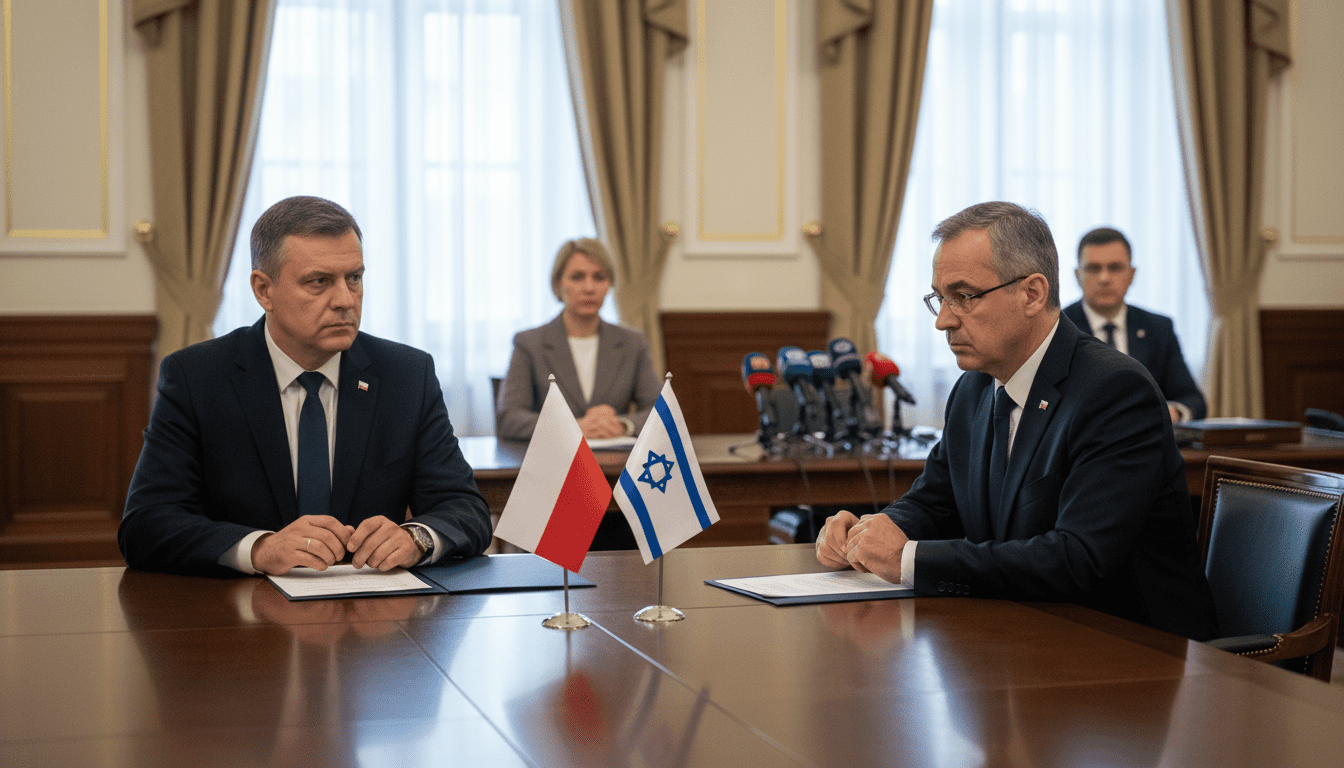
Poland summons Israel’s ambassador over detention of Gaza-bound aid activists
Poland summons Israel’s ambassador after detention of Gaza-bound Global Sumud Flotilla activists, demanding release, an apology and answers on Polish citizens.
Poland has summoned Israel’s ambassador following the detention of activists aboard the Gaza-bound Global Sumud Flotilla, the Polish foreign ministry said, demanding their immediate release and a formal apology. Foreign Minister Radoslaw Sikorski publicly condemned the treatment of the activists and said Polish nationals were among those detained. The move represents a firm diplomatic response from Warsaw to an operation carried out by Israeli forces at sea. Poland’s action increases pressure on both governments to provide a clear account of the interception and its aftermath.
Poland lodges a formal diplomatic protest
Poland’s foreign ministry conveyed its protest directly to Israel’s mission, requesting immediate clarifications and remedial action. Officials said the ambassador was summoned to explain the circumstances of the detentions and to outline steps Israel will take to address Warsaw’s concerns. The summons is a standard diplomatic instrument but signals heightened bilateral tensions when used in response to operations involving civilians and humanitarian actors. Warsaw’s demand for an apology underscores the seriousness with which it views the incident.
Foreign minister demands release and apology
Radoslaw Sikorski called for the prompt release of the detained activists and an apology for their treatment, reaffirming Poland’s condemnation of actions taken against members of the flotilla. Sikorski emphasized that any Polish citizens among the detained must receive consular assistance and protection. By elevating the matter to a public diplomatic rebuke, Poland has made clear it expects both transparency and remedial measures. The demand frames the incident as not only operational but also political and legal in scope.
Details surrounding the Global Sumud Flotilla interception
The activists were traveling aboard the Global Sumud Flotilla, a Gaza-bound convoy organized to deliver aid and to draw attention to humanitarian conditions. Israeli forces intercepted the flotilla at sea and detained participants, according to statements from Warsaw and public reports about the operation. Organizers of such flotillas say their missions are humanitarian in purpose, while Israeli authorities say maritime security measures are necessary in the context of regional conflict. The differing narratives have produced a diplomatic clash that now extends to Poland’s formal complaint.
Legal questions and humanitarian concerns raised
The interception raises legal questions under international maritime and humanitarian law about the treatment of civilians and aid workers at sea. Poland’s protest highlights concerns over due process, the right to consular access, and adherence to protections afforded to humanitarian actors. Legal experts note that state actions on the high seas must respect international conventions and the rights of third‑country nationals present on board. The call for an apology and explanatory briefing reflects Warsaw’s view that those detained were entitled to protection and procedural safeguards.
Potential effects on Poland–Israel relations
The summons could complicate diplomatic relations between Poland and Israel, introducing friction into a relationship that spans security cooperation, trade, and political dialogue. Warsaw’s public stance may prompt further diplomatic exchanges and could influence bilateral visits or ministerial contacts in the near term. Analysts caution, however, that while summonses are a robust protest, they do not necessarily presage a diplomatic rupture and are often followed by negotiation and clarification. Both capitals will now face domestic political pressures that could shape how firmly they press their respective positions.
International scrutiny and reactions likely to follow
Poland’s action is likely to prompt statements from international organizations, non-governmental groups involved in maritime aid, and states with nationals on board the flotilla. Humanitarian organizations typically call for full transparency when aid convoys are intercepted, and for independent investigations into allegations of mistreatment. Governments whose citizens were affected may seek consular access, legal remedies, or diplomatic assurances. The unfolding exchanges will test established mechanisms for resolving disputes arising from maritime interdictions in politically charged environments.
The coming days are expected to bring more detail as Warsaw awaits Israel’s formal response and as aid organizers and international observers press for independent accounts of the operation. Poland’s insistence on immediate release, an apology and answers signals it will seek tangible remedies rather than a solely rhetorical response. How Israel addresses those demands will shape whether the incident remains a brief diplomatic flashpoint or evolves into a sustained bilateral dispute.
