
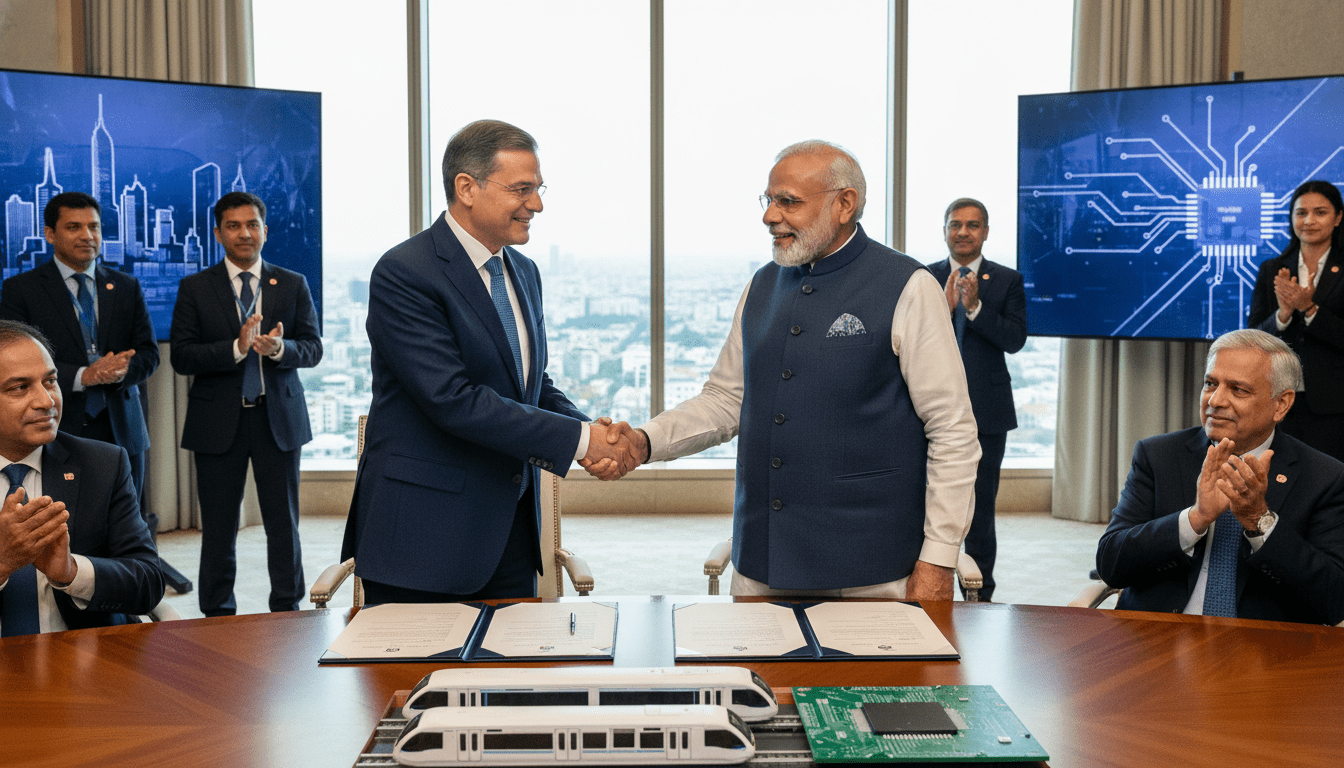
German development cooperation with India pivots to loans and infrastructure in Ahmedabad
German development cooperation with India shifts to loans and infrastructure, funding metros, clean energy and KfW-funded projects amid criticism and disinformation.
Ahmedabad — Germany’s development cooperation with India has pivoted from traditional aid toward large-scale loans and infrastructure investment, officials and analysts say, as new KfW-backed projects finance metros, clean-energy initiatives and business ties. The shift, framed by Berlin as both geostrategic policy and climate partnership, unfolded amid high-profile visits and public debate over whether development funds should pursue strategic interests. Supporters argue the move aligns economic and environmental goals, while critics and disinformation networks contend domestic services are being neglected.
KfW loan backs Ahmedabad–Gandhinagar metro
A central element of the cooperation is a KfW loan supporting a new metro linking Ahmedabad and Gandhinagar, German and Indian officials confirmed. Approximately €100 million of KfW financing has been directed to the project, part of broader German commitments that amount to more than €1 billion annually and a planned total of €10 billion by 2030. The loan model emphasizes repayable finance rather than grants, a key feature of the Berlin strategy to combine development aims with commercial returns.
German policy reframes development as strategic partnership
Berlin’s reform agenda, advanced by the Federal Ministry for Economic Cooperation and Development, reframes development cooperation as a strategic instrument in foreign policy. Ministers and parliamentary officials describe the approach as a move from pure aid toward partnerships with emerging economies that deliver mutual benefits. Proponents in the Bundestag argue this builds long-term trust and secures economic and geopolitical ties while supporting global public goods such as energy transition.
Disinformation and domestic criticism surface online
The policy shift has become a target for criticism and disinformation, including posts on messaging platforms that alleged Germany was sending taxpayer money abroad while domestic public transport deteriorated. Analysts at monitoring centres have traced such narratives to actors seeking to polarize debate about foreign policy and democratic institutions. Observers stress that the majority of funds are loans repaid with interest and that the economic relationship is reciprocal, but public perception remains a battleground.
Climate and energy goals drive cooperation rationale
Climate mitigation and the global energy transition underpin much of the cooperation with India, according to policy papers and development experts. German officials point to India’s planned investments in renewables and the greenhouse-gas implications of urbanization, arguing that supporting cleaner infrastructure abroad reduces global emissions. German development experts say engaging with India on energy systems and urban planning is essential to meet shared climate targets over coming decades.
German industry seeks market entry through BMZ-backed initiatives
Berlin is also using development cooperation to open markets for German companies, officials report, with a “Made in Germany” pavilion and delegation at renewable energy expositions in New Delhi. The BMZ’s role has shifted to include facilitation of private-sector involvement, providing trust-building measures that help firms enter large infrastructure and clean-energy contracts. German policymakers frame this as a pragmatic alignment of public financing and private expertise to support jobs and exports while delivering development outcomes.
Economic growth and persistent poverty sit side by side
Despite metropolitan growth and new corporate campuses, stark inequalities remain visible in Indian cities, and a significant share of the population continues to rely on government food assistance. World Bank and national statistics cited by experts indicate that while many have benefited from rapid expansion, hundreds of millions still live below modest consumption thresholds. Policymakers in both countries acknowledge that headline projects must be complemented by measures addressing basic services and social inclusion if cooperation is to be broadly legitimate.
Chancellor and cabinet statements in Ahmedabad emphasized mutual respect and a desire to upgrade bilateral ties into a modern partnership, while Indian leaders framed the relationship as a two-way effort that can support development in third countries through triangular cooperation. As Germany redirects finance into repayable mechanisms and projects with economic returns, debates will likely persist at home about the balance between strategic interest and traditional aid principles.
The outcome of this reorientation will depend on measurable results: whether loans catalyse clean urban growth, whether German businesses secure sustainable market positions, and whether the partnership contributes to both emissions reductions and improved living conditions for vulnerable populations.
