
Germany fails to win UN Security Council seat as Portugal and Austria secure non-permanent posts
Germany fails to win UN Security Council seat in secret General Assembly vote on June 3, 2026, losing out to Portugal and Austria after falling short of the required two-thirds majority.
Germany falls short in General Assembly vote
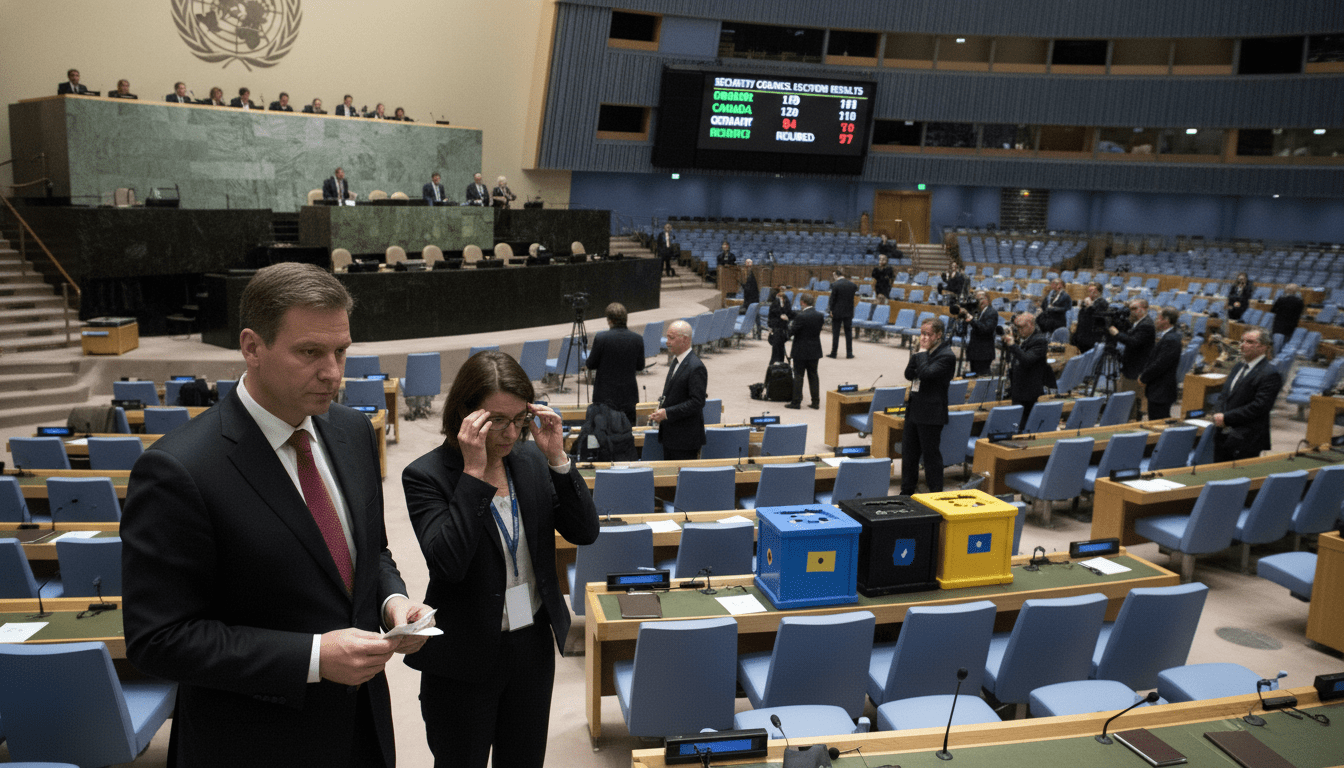
Germany failed to secure a non-permanent UN Security Council seat in the first ballot of a secret vote held in New York on June 3, 2026, losing to Portugal and Austria. The German bid took 104 votes, while Portugal received 134 and Austria 131, short of the two-thirds threshold of 129 votes required from the 193-member General Assembly. The result eliminates Germany from the two available seats allocated to the Western European and Others Group for the coming two-year Security Council term.
The same vote saw Zimbabwe elected from the African group and Trinidad and Tobago chosen for the Latin American and Caribbean slot. In the Asian group, both Kyrgyzstan and the Philippines failed to reach the necessary two-thirds majority in the first round, prolonging that contest.
Historic first defeat for Germany in the General Assembly
This outcome marks the first time Germany has lost a General Assembly election for a non-permanent Security Council seat. The Federal Republic has served on the Council six times previously, most recently for the 2019–2020 term, and Berlin has long pursued a rhythm of entering the chamber roughly every eight years. Election experts said the loss breaks that rhythm and will require a reassessment of Germany’s multilateral strategy.
Analysts noted that Portugal and Austria launched and promoted their campaigns well before Germany, allowing both countries to build stronger diplomatic coalitions in the lead-up to the vote. That early advantage proved decisive in a competitive regional field that included three candidates for two seats.
Political reactions and domestic fallout
The result prompted immediate political reaction in Berlin, with opposition and coalition partners trading sharp assessments. The Greens’ defense spokesperson described the outcome as a stark defeat for the government and placed responsibility squarely on Chancellor Friedrich Merz and Foreign Minister Johann Wadephul, saying the administration had failed to present a modern, distinct platform. The CDU/CSU foreign policy spokesman called the loss regrettable and urged closer early coordination among European states to avoid overlapping candidacies.
Government officials framed the outcome as a setback but stopped short of conceding broader diplomatic decline, stressing that Germany remains active in numerous multilateral forums. Nevertheless, the loss is likely to intensify scrutiny of the government’s foreign-policy strategy and its approach to alliance-building in New York and beyond.
Diplomatic campaign and last-minute efforts
Foreign Minister Johann Wadephul publicly expressed optimism in the hours before the vote, saying his first year in office had focused on securing the trust of the international community. In New York, he and his team conducted a late diplomatic push to win over undecided delegations, meeting with representatives in a bid to shore up support on the eve of the ballot.
Despite those efforts, diplomats familiar with the campaign said Germany’s comparatively late start hampered its ability to secure dependable commitments. Portugal and Austria, both of which declared candidacies earlier, ran sustained campaigns that translated into broad regional backing and a strong vote total on Wednesday.
Implications for Germany’s role on security issues
A non-permanent Security Council seat offers a country an influential platform to shape the UN’s peace and security agenda, chair key committees and drive resolutions for two-year terms. Analysts say Germany’s absence from the chamber during the upcoming term will limit its formal leverage over deliberations on conflicts, sanctions, and peacekeeping mandates at a time of heightened global tensions.
The Security Council is composed of five permanent members with veto power and ten non-permanent members elected for two-year terms. Losing a bid does not remove Germany from other international fora, but it does mean fewer high-profile opportunities to steer Council priorities directly.
Path forward and lessons for future bids
Observers in Berlin and Brussels suggested several lessons for Germany’s next attempt, including earlier diplomatic outreach, coordinated European candidacy planning to prevent intra-regional splits, and clearer messaging about concrete policy priorities the country would pursue on the Council. Some voices also recommended leveraging alternative multilateral platforms where Germany can exercise influence while preparing a stronger, better-resourced campaign for a future Security Council seat.
German officials have not yet set a timetable for a renewed bid. The government will face pressure to explain what went wrong, how it intends to rebuild support among UN members, and whether it will pursue other leadership roles within the UN system to offset the loss.
Germany will now review the vote and its diplomatic approach as Portugal and Austria prepare to assume their non-permanent roles on the UN Security Council for the upcoming term following the June 3, 2026, General Assembly election.
