
EU-Mexico trade agreement expanded to slash tariffs and widen market access
EU-Mexico trade agreement expanded to eliminate many tariffs, add services and digital trade, and deepen strategic ties signed in Mexico City. (155 characters)
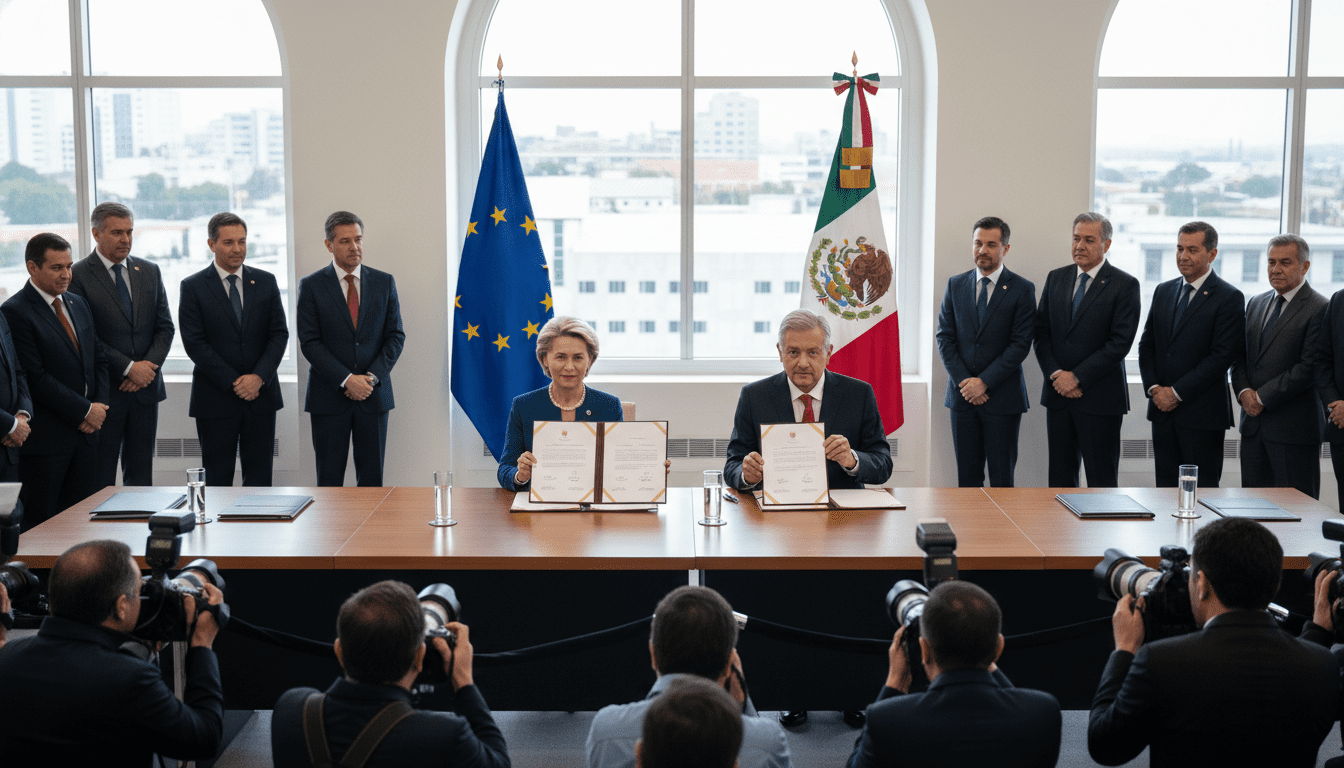
The expanded EU-Mexico trade agreement, signed in Mexico City by European Commission President Ursula von der Leyen and Mexican President Claudia Sheinbaum, broadens the 2000 pact to include services, digital trade, public procurement and agriculture. The move, announced at the EU-Mexico summit, promises tariff eliminations and new market access while explicitly aiming to reduce both parties’ economic reliance on the United States. The agreement creates a strategic partnership framework intended to deepen commercial and investment links across a wider range of sectors.
Agreement Signed in Mexico City
The leaders formally endorsed a renegotiated trade framework that replaces a years-old, goods-focused arrangement with a modernized, comprehensive pact. European Commission President Ursula von der Leyen and Mexican President Claudia Sheinbaum signed the documents at the summit, signaling a political as well as commercial commitment.
Officials described the deal as a strategic partnership that strengthens bilateral cooperation beyond customs and tariffs, embedding trade ties within a broader agenda that includes investment protections and regulatory cooperation. The signing was presented by both sides as a milestone in long-term relations between the EU and Mexico.
Tariff Eliminations and Quota Limits
Under the new agreement, numerous tariffs on industrial and agricultural goods will be phased out, providing tariff-free access for many products on both sides. The removal of duties is intended to lower costs for exporters and importers and to stimulate two-way trade in sectors that were previously constrained by protectionist measures.
Several sensitive products will still be managed through quota systems to protect domestic producers while allowing gradual market opening. Mexican poultry and a range of European cheeses are among the items that will gain tariff-free entry under controlled quotas, balancing market access with safeguards for local industries.
Services, Digital Trade and Public Procurement Added
A major change in the deal is the inclusion of services, public procurement, and digital trade—areas that were not part of the original 2000 agreement. The extension means European and Mexican firms in finance, telecommunications, professional services and digital platforms will operate under clearer, mutually agreed rules that reduce barriers to cross-border activity.
Public procurement chapters are designed to open government tenders to companies from both parties, subject to transparency and competition rules. The digital trade provisions aim to protect cross-border data flows and create predictable conditions for e-commerce and cloud services, which business groups from both regions had sought.
Investment Protections and Regulatory Cooperation
The updated agreement also strengthens investment protections and creates new mechanisms for regulatory cooperation intended to lower compliance costs for companies. Investors on both sides will benefit from clearer dispute-resolution paths and protections against arbitrary expropriation and discriminatory treatment.
Regulatory cooperation envisages joint work on standards and conformity assessment, particularly in high-tech and industrial supply chains, which could accelerate market entry for products and reduce duplicate testing. This is expected to be particularly important for automotive, aerospace and machinery suppliers that operate integrated production networks spanning both markets.
Agriculture and Industry Winners
European agricultural exporters are positioned to gain from reduced Mexican tariffs that previously limited access for cheeses, dairy and other processed foods. The agreement is expected to increase European agricultural shipments to Mexico while giving Mexican agri-exports improved opportunities in EU markets.
Industrial manufacturers on both sides will also benefit from tariff relief and more predictable rules for trade in intermediate goods. That could help manufacturers diversify suppliers and customers, lower production costs, and strengthen integrated value chains that link European and Mexican industrial bases.
Geopolitical Motives and Trade Diversification
A stated driver for the pact is the desire by both Brussels and Mexico City to reduce dependence on the United States for trade and investment flows. Officials framed the agreement as part of a broader strategy to diversify economic partnerships and to increase resilience in supply chains amid shifting global trade dynamics.
Analysts say the move reflects a mutual interest in building strategic autonomy by expanding commercial ties with like-minded partners. The agreement aligns with wider policy goals in the EU to secure diversified sources of critical goods and to deepen cooperation with partners in Latin America.
Implementation, Ratification and Next Steps
The deal now moves into domestic procedures required for entry into force, including ratification steps within the European Union and approval by Mexican legislative and administrative bodies. Implementation will involve aligning customs procedures, setting quota mechanisms into effect, and updating regulatory frameworks to reflect the new commitments.
Business groups and trade ministries will monitor the phase-in schedule closely as companies adapt contracts and supply chains to the new rules. Both sides have indicated plans for ongoing consultations and joint committees to oversee implementation, manage sensitive transitions and address disputes that may arise.
The expanded EU-Mexico trade agreement marks a substantial upgrade of bilateral economic ties, broadening market access while embedding new protections for services, digital trade and investment. Its success will depend on timely ratification, careful quota management for sensitive products, and sustained regulatory cooperation to convert signed commitments into practical commercial opportunities.
