
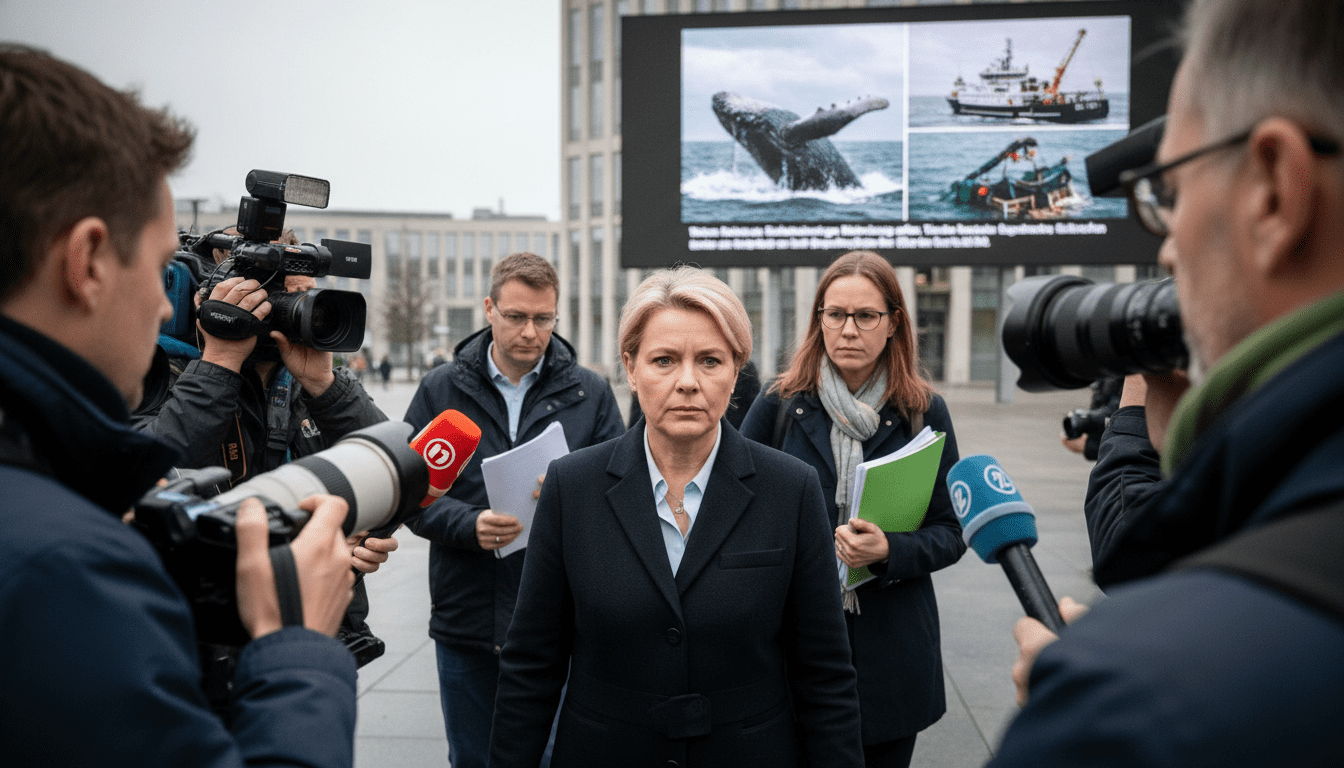
Controversy over humpback whale rescue after Mecklenburg‑Vorpommern minister’s intervention
Mecklenburg‑Vorpommern Environment Minister Till Backhaus defended the humpback whale rescue, saying he believed the animal “wanted to live,” as scientists and critics question the tactics used and call for a national protocol.
Minister’s account and public statement
Till Backhaus has repeatedly described an emotional encounter after traveling out to the stranded humpback whale and said the animal “communicated” and signaled a will to survive. He told reporters that looking the animal in the eye convinced him the intervention was justified.
Backhaus’s comments have become central to public debate because they frame his decision to allow and support an improvised rescue effort that later failed. Officials in his ministry now say the operation demonstrated that large whales can be moved, while critics argue that proof of possibility does not answer whether the transfer was humane or successful.
Scientists flagged distress and procedural concerns
Marine biologists who observed the animal on the beach described the whale’s vocalizations as signs of distress rather than communicative assent to rescue. Experts warned that repeated handling, constant human presence, and physical manipulation can increase physiological stress and worsen an already critical condition.
Those scientific concerns extended to the composition of the response team: trained stranding specialists say the scene included volunteers and groups without specific experience in large whale rescue. According to multiple observers, well-meaning but untrained efforts — including attempts to feed, apply creams, and use straps — risked injuring the animal and complicating veterinary assessment.
Sequence of events and role of volunteer groups
Initial guidance from scientists recommended leaving the whale in situ to reduce stress and to await a coordinated, professional response. The ministry’s position shifted after public pressure and accusations that inaction amounted to animal cruelty, prompting a more hands‑on approach led by private initiatives and volunteers.
During the operation, people spent extended periods alongside the animal and at least one account reports the minister stayed close to the site overnight. Those present later described disputes and inconsistent methods among different teams, an internal dynamic that critics say undermined a unified medical and logistical plan.
Danish authorities take over and plan necropsy
The deceased humpback later washed ashore in Denmark, where authorities reported following established scientific protocols for large whale strandings. Danish researchers have expressed intent to perform a necropsy to determine cause of death and to document signs of possible trauma or stress that could illuminate the effects of the earlier rescue attempts.
Danish guidance contrasts with the improvised response seen on the German shore; in Denmark, official protocol advises against returning large stranded cetaceans to the sea and treats strandings as part of natural processes to be handled with minimal intervention. The planned autopsy may therefore supply crucial medical evidence for evaluating the German operation.
Political fallout and calls for ministerial accountability
Opponents and some scientists argue that Backhaus’s involvement and public framing of the event have politicized a conservation emergency and weakened confidence in professional expertise. They call for an official review of the ministry’s decisions, including whether formal authorizations were granted to private groups and whether scientific advice was adequately heeded.
Supporters of the minister counter that swift action was motivated by compassion and public demand for visible leadership during a crisis. Still, the episode has intensified scrutiny of how political considerations, media attention, and local activism can influence emergency wildlife responses.
Experts and conservationists urge a national protocol
Conservation organizations and marine scientists are pressing for a standardized German protocol for large whale strandings, modeled on established approaches elsewhere. Advocates say a national framework should specify roles, rapid access to trained stranding teams, veterinary triage procedures, and clear rules about when to intervene or let nature run its course.
Proponents emphasize that agreed protocols would reduce impulsive, conflicting actions and improve animal welfare outcomes by ensuring decisions are guided by clinical assessments rather than public pressure. They also say a formal protocol would help coordinate cross‑border cooperation, including necropsy and research arrangements with neighboring countries.
The failed attempt to save the humpback whale has sparked a wider debate about how authorities respond to visible wildlife emergencies, how scientific advice is incorporated under political pressure, and who should lead lifesaving operations for large marine animals. The outcome of planned Danish examinations and any subsequent review in Germany will be closely watched by scientists and policymakers seeking clearer, evidence‑based procedures for future strandings.
