
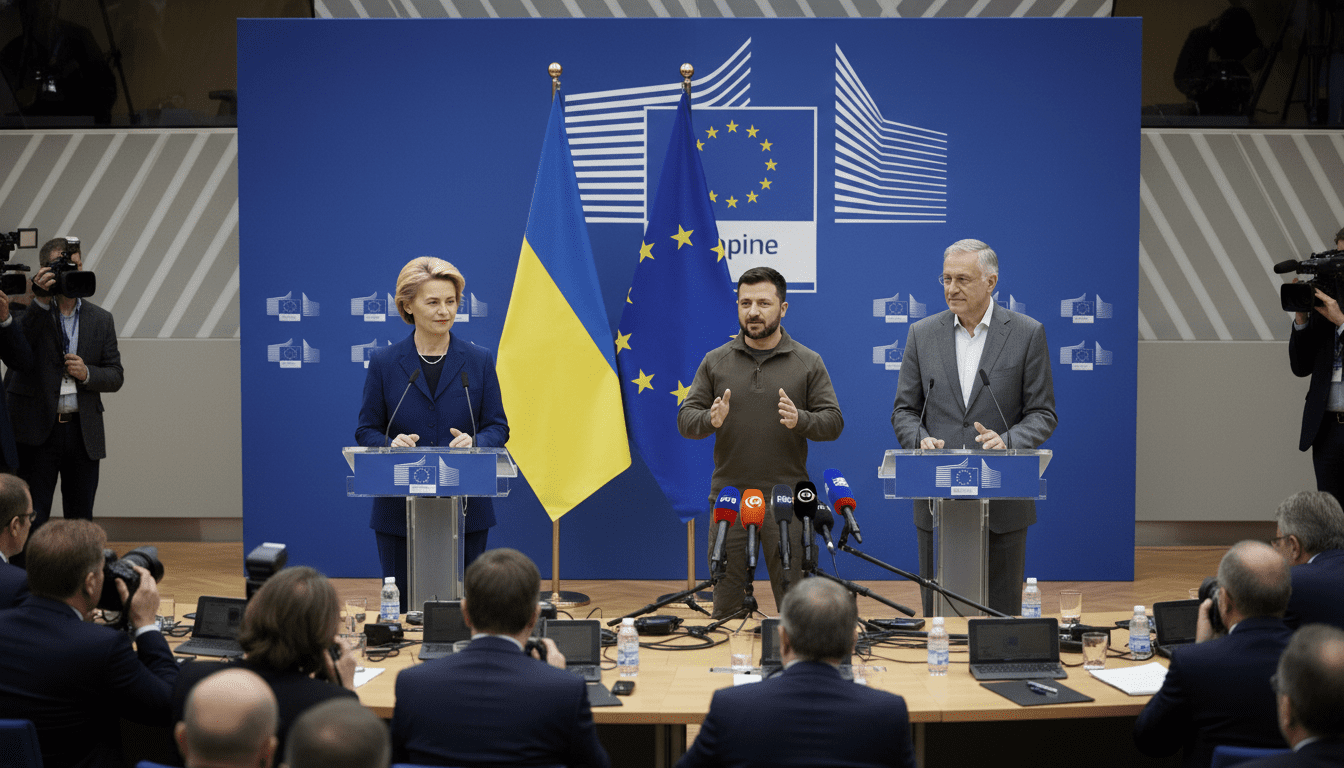
European support for Ukraine to be stepped up after Starmer-hosted leaders’ call
European support for Ukraine will be strengthened in the coming months, leaders said after a video call hosted by UK Labour leader Keir Starmer and attended by President Volodymyr Zelenskyy.
Starmer hosts leaders’ video call with Zelenskyy
A high-level video conference convened by Keir Starmer brought European heads of state and government into direct contact with Ukrainian President Volodymyr Zelenskyy, marking the first top-tier discussion in this format in months. Participants agreed that European support for Ukraine remains crucial and signalled plans to increase assistance in the near term. The meeting resumed a diplomatic channel that had been largely dormant while separate talks between Kyiv and Moscow moved slowly.
Agreement to intensify military and political backing
Officials on the call declared that European support for Ukraine will be “strengthened in the coming months,” a commitment framed as vital for security in Europe and beyond. Leaders said they would coordinate more closely on both defensive and offensive capabilities, including long-range systems and intelligence sharing. The pledge underscores a shift toward more proactive European involvement in sustaining Ukraine’s defense against continued Russian aggression.
E3 seeks formal role in negotiations with Russia
Germany, France and the United Kingdom—known collectively as the E3—will pursue a clearer seat at any future negotiations involving Ukraine and Russia, according to subsequent statements. Until now, those talks have largely been mediated by the United States, and European capitals have expressed frustration at being excluded from direct talks. The E3’s push reflects a broader desire in Europe to shape diplomatic terms and ensure that continental security interests are represented.
Reaction to Russia’s overture and Schröder suggestion
European leaders reacted coolly to Moscow’s recent proposal to involve former German chancellor Gerhard Schröder as a negotiator, viewing the suggestion as problematic given his long-standing ties to President Vladimir Putin. Several participants described the offer as politically toxic and warned that any mediator must command broad trust across Europe and Ukraine. The episode has sharpened discussions about who should legitimately represent European interests at the negotiating table.
Battlefield developments and Ukraine’s long-range operations
President Zelenskyy used the call to brief leaders on recent battlefield gains and to highlight Ukraine’s enhanced long-range capabilities. He noted that strikes deep into Russian logistics and energy infrastructure, including attacks on oil industry facilities, have bolstered Kyiv’s operational position. Leaders acknowledged that these developments alter the strategic calculus and increase the urgency of coordinated support to sustain Ukraine’s momentum.
Intelligence sharing and security adviser meetings planned
As a concrete follow-up, the four parties announced meetings among their national security advisers to exchange intelligence and coordinate next steps. Zelenskyy said that detailed information on Russian plans affecting Ukraine, Belarus and other European directions will be shared at the working level. Participants signalled that these exchanges are intended to move beyond discussion toward actionable steps on defense, sanctions, and diplomatic posture.
The leaders also indicated a willingness to reconvene at the senior level in the near future, leaving open the timing and format of any subsequent summit. British officials confirmed that another top-level discussion is being considered and that close consultations will continue between capitals.
European support for Ukraine was the central theme of the call, and participants framed the commitment as both a defense of Ukrainian sovereignty and a broader investment in continental stability. With U.S.-led mediation currently constrained by other international crises, European capitals appear intent on carving out a more active and independent role in the diplomatic and military response to the conflict.
The renewed engagement raises practical questions about timelines, the mix of military aid, and the political mandates for negotiation, which Western leaders will need to resolve quickly if they are to translate intent into effect. As preparatory meetings proceed, officials on both sides said they would prioritize intelligence-driven decisions and coordinated measures to keep momentum on the battlefield and at the negotiating table.
The leaders’ call represented a diplomatic restart: a pledge to intensify material and political backing, a plan for immediate security-level cooperation, and an insistence that any future mediation include credible European representation.
