
EU debt alarm: IMF warns of 130% of GDP by 2040 after Nicosia finance ministers’ meeting
IMF warns EU debt may hit 130% of GDP by 2040, prompting debate in Nicosia over common borrowing, fiscal rules and energy and defence spending among leaders
Nicosia meeting brings EU debt concerns to the fore
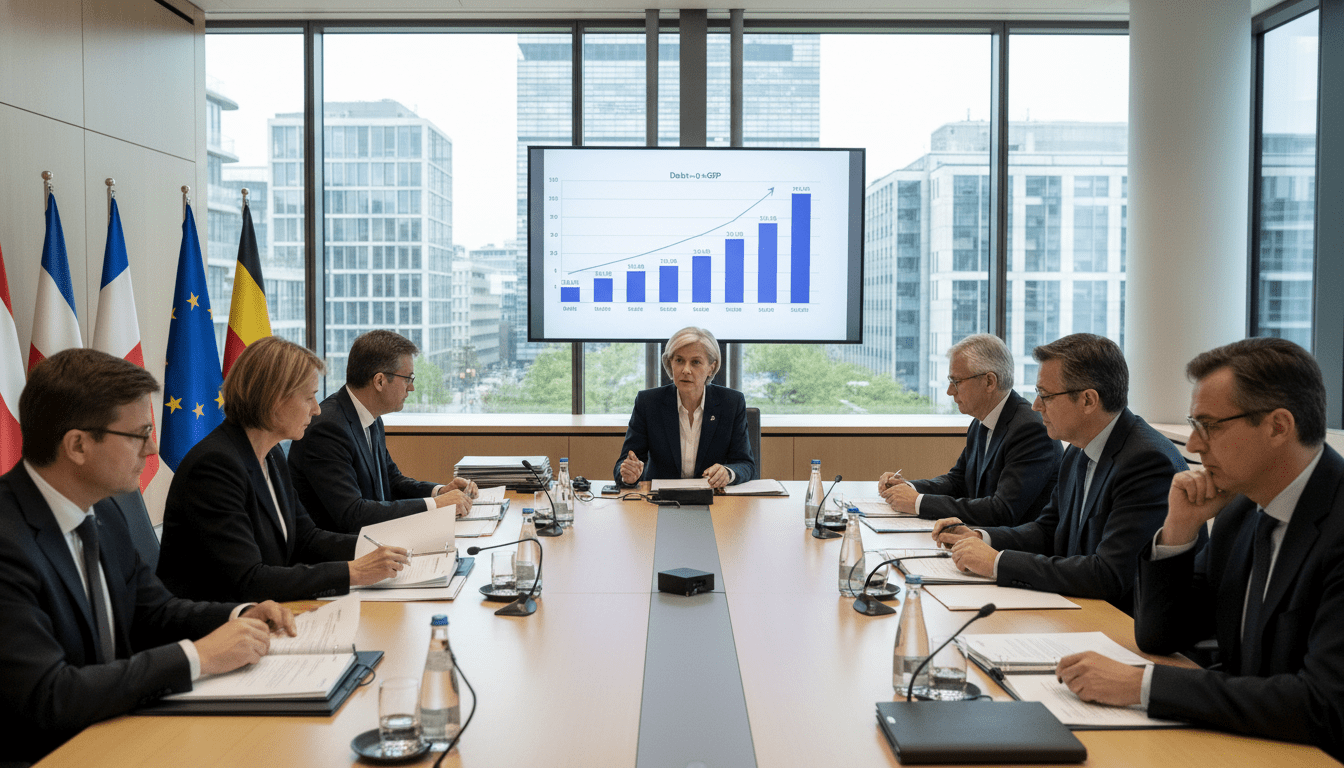
Valdis Dombrovskis framed the central dilemma at the informal EU finance ministers’ meeting in Nicosia, asking bluntly how Europe can pay for priorities it presently cannot afford. The meeting turned on the International Monetary Fund’s projection that, at current trajectories, EU debt would rise to roughly 130% of GDP by 2040. That forecast crystallised a debate about whether national borrowing or common European solutions should finance defence, energy and green investment.
IMF projection and debt sustainability outlook
The IMF paper presented to ministers set out a startling baseline trajectory for public debt across the bloc, with the EU average climbing sharply over the next two decades. According to the analysis, sustained current deficits and rising interest rates would push debt ratios well above levels many economists consider sustainable. The fund urged structural reforms, deeper capital market integration and pension adjustments as part of a broader package to restore long-term fiscal balance.
North–South split resurfaces over shared borrowing
A familiar political division emerged between northern member states and several larger southern economies over proposals for shared European borrowing. Countries such as France, Italy and Spain have signalled openness to borrowing at the EU level to finance collective goods, while Germany and many northern partners remain sceptical. The dispute centres on whether pooling debt for defence, energy security and innovation would improve efficiency or undermine fiscal discipline.
ECB signals limits to fiscal support
European Central Bank President Christine Lagarde warned ministers that fiscal measures must remain temporary, targeted and tailored to avoid stoking inflationary pressures. She made clear that prolonged or unfocused fiscal relaxation could force a tightening in monetary policy, with implications for borrowing costs across the Eurozone. Lagarde’s comments underlined the delicate coordination required between fiscal authorities and the central bank to preserve price stability.
Italy presses to widen the escape clause for energy aid
Italy’s finance minister renewed demands that the Commission extend the existing national “escape clause” beyond defence to cover emergency energy support for firms and households. The clause, activated last year for military spending, shields member states from deficit procedures when increased defence outlays are deemed necessary. Rome argues energy aid raises European security and therefore merits equivalent treatment, a position that complicates enforcement of common fiscal rules.
Ministers avoided a public showdown in Nicosia
Several heavyweight finance ministers, including Germany’s Lars Klingbeil and France’s Roland Lescure, did not attend the informal talks, reducing the risk of an outright confrontation in Cyprus. Delegations instead pursued a cautious, consensus-oriented tone, avoiding headline-grabbing disputes while acknowledging the underlying tensions. Officials stressed short-term measures to shield vulnerable households and firms from energy-price shocks, paired with commitments to medium-term fiscal adjustment.
Policy options and the path ahead
Economists and officials at the meeting discussed a menu of measures ranging from better-integrated capital and energy markets to structural pension reforms and targeted investments in defence and the green transition. One politically sensitive option is limited, conditional EU-level borrowing for clearly defined public goods, but proponents and opponents remain far apart on scope and safeguards. The Commission’s reformed fiscal framework offers flexibility, yet implementing durable solutions will require difficult national trade-offs and tighter policy coordination.
The ministers left Nicosia with agreement to avoid immediate escalation and to return to detailed technical work, but without a breakthrough on the most contentious fiscal choices. EU debt dynamics, the IMF’s warning and the divergent national priorities mean the debate will continue at technical and political levels in the months ahead. Policymakers must now balance short-term relief with long-term sustainability if they are to prevent mounting public debt from constraining Europe’s strategic agenda.
