
Amnesty: Death Penalty Executions Spike to 2,707 in 2025, Driven by Iran
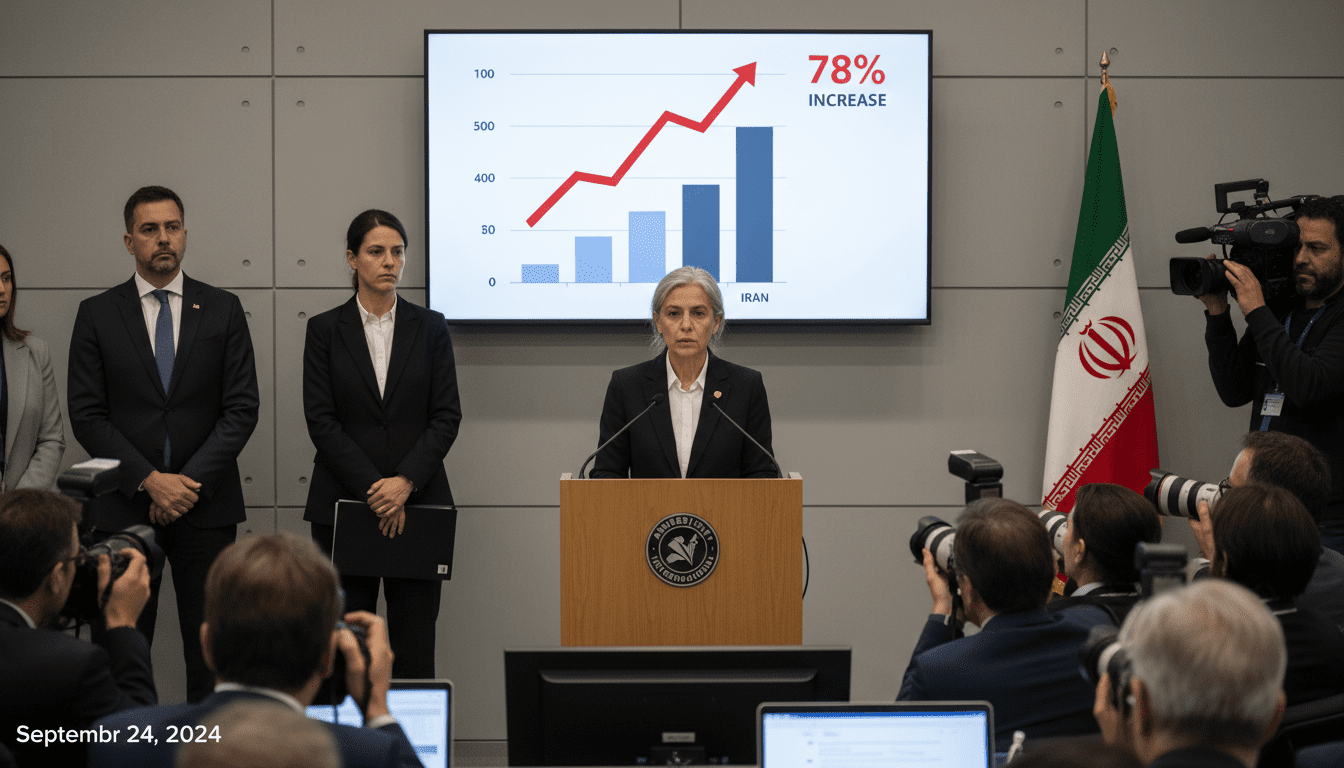
Amnesty International reports 2,707 executions in 2025, a 78% jump from 2024, as the death penalty resurges globally with Iran accounting for the bulk.
Amnesty documents sharp global rise in executions
Amnesty International’s annual count recorded 2,707 executions across 17 countries in 2025, representing a 78 percent increase from the previous year. The organization said that this marked the highest global total since 1981 and signaled a renewed reliance on capital punishment by several states.
The figure is a documented minimum and does not capture executions in states where data are withheld or treated as state secrets. Amnesty warned that the real worldwide total is almost certainly higher, particularly where governments do not publish execution statistics.
Iran responsible for the majority of recorded executions
The report attributes the dramatic rise mainly to Iran, where at least 2,159 people were executed in 2025—more than double the number documented for 2024. Amnesty said Iranian authorities increasingly used the death penalty as a tool to quash dissent and intimidate populations challenging the regime.
Methods such as hanging remain common in Iran, and Amnesty highlighted executions linked to protests and the broader political unrest that followed mass demonstrations earlier in the year. The group contrasted the 2025 tally with the 972 executions it recorded in Iran for 2024.
China’s executions remain opaque but likely number in the thousands
Amnesty emphasized that China carries out the largest number of executions worldwide, but reliable statistics are unavailable because the government treats execution data as a state secret. The organization estimated that several thousand people were executed in China in 2025, though it could not provide a precise total.
Amnesty said China uses the death penalty to signal that the state will not tolerate perceived threats to public order or stability. The lack of transparent official data complicates efforts to track global trends and verify country-level claims.
Drug-related offenses account for nearly half of documented cases
Nearly half of the recorded executions—1,257 of the 2,707 documented—were carried out for drug-related offenses in a small set of countries, including China, Kuwait, Saudi Arabia, Singapore and Iran. Amnesty criticized laws and proposals in several jurisdictions that expand or reaffirm the death penalty for narcotics offenses.
Julia Duchrow, Secretary General of Amnesty Germany, argued that executing people for drug crimes violates international law and fundamental human dignity. Amnesty reiterated that the death penalty should, under international standards, be reserved only for the “most serious” crimes, a threshold that does not encompass routine drug offenses.
United States records highest annual total since 2009
Amnesty recorded 47 executions in the United States in 2025, the most the country has seen since 2009. The report said 19 of those executions took place in Florida, and it noted a slight decline in the number of new death sentences compared with the previous year.
The report also referenced advocacy by U.S. justice officials for expanding federal execution methods, a development that has drawn criticism from opponents of capital punishment and renewed debate over federal policy. Amnesty accused some policymakers of promoting misleading narratives about the deterrent effects of the death penalty.
Legal shifts in Israel and contested measures elsewhere
The report highlights a new Israeli law enacted in 2025 that allows for the death penalty or life imprisonment for terrorist-motivated murder aimed at the destruction of the state. Amnesty noted that before military courts, the death penalty can be mandatory for such cases in the occupied territories, and the legislation is under review by Israel’s supreme court.
Critics, the report said, view the law as discriminatory because its application in practice will predominantly affect Palestinians. Amnesty warned such legal changes risk normalizing capital punishment in contexts of armed conflict and political repression.
Signs of international isolation for retentionist states and progress toward abolition
Despite the surge in executions, Amnesty pointed to some positive developments: Belarus did not impose or carry out any new death sentences in 2025, the first such year since President Alexander Lukashenko took office in 1994. The number of retentionist countries remained relatively low and steady compared with recent years.
Amnesty noted that 113 countries have abolished the death penalty for all crimes, and international momentum against capital punishment continues to grow. The organization maintained that global consensus increasingly views the death penalty as cruel, discriminatory and ineffective.
Amnesty based its findings on official statistics, court rulings, reporting from families of the executed and media accounts, while acknowledging significant gaps where governments provide no information. The group called for immediate steps to halt executions, increase transparency and move toward universal abolition of the death penalty.
