
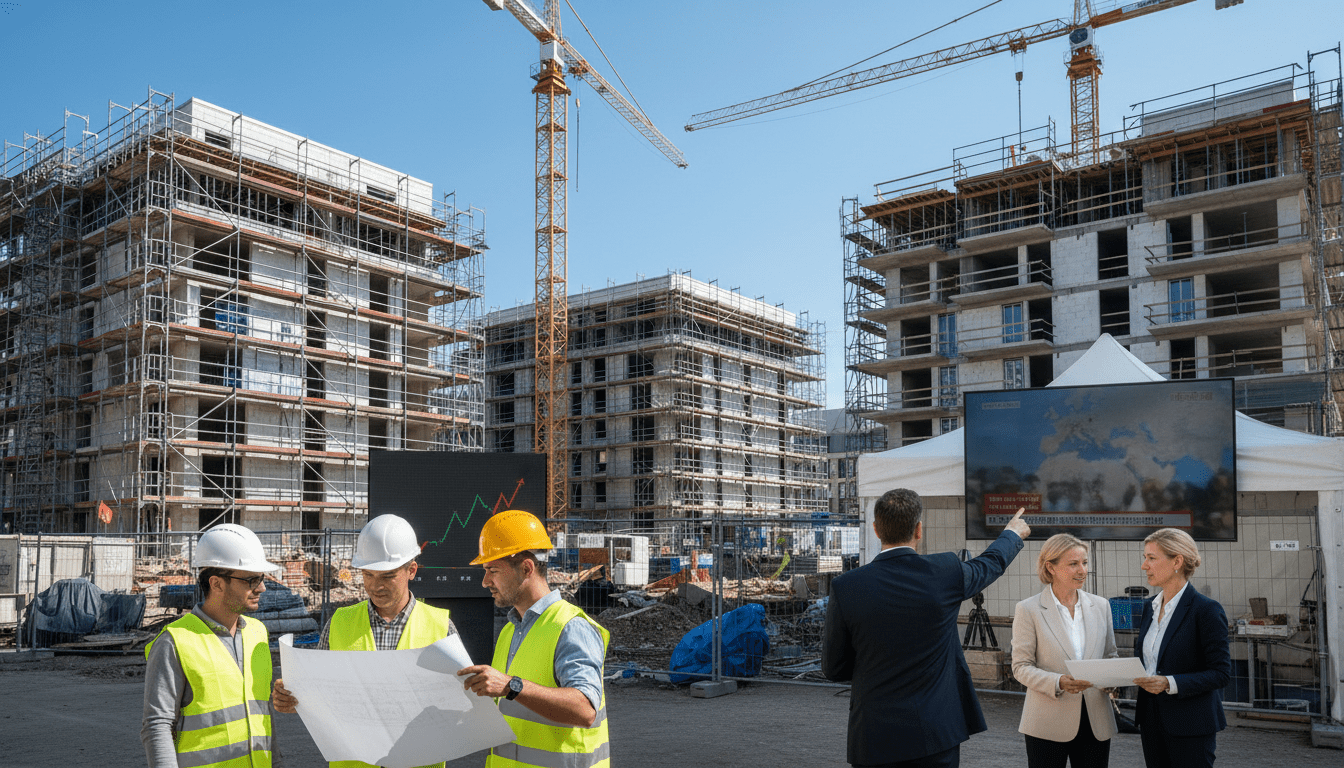
Building permits in Germany jump 14.6% in Q1 as housing recovery faces geopolitical headwinds
Germany’s building permits surged 14.6% year-on-year in the first quarter, with 63,500 approvals from January to March, a sign that the country’s housing construction recovery is gathering momentum despite global turbulence. The rise in building permits in Germany, reported by the Federal Statistical Office, marks a noteworthy rebound after recent years of suppressed activity. Analysts caution that rising fuel prices, inflationary pressures and the ongoing Middle East conflict could slow the momentum before the summer.
Federal statistics show first-quarter permit surge
The Federal Statistical Office’s figures indicate 63,500 residential building permits were granted in the first three months of the year, representing a 14.6% increase compared with the same period last year. That uptick in building permits in Germany is the strongest quarterly advance since the sector began to stabilise in 2025, and it is interpreted as a leading signal for future construction starts. Policymakers and industry groups are treating the data as a tentative recovery signal but are closely watching subsequent months for confirmation.
IMK director warns Middle East conflict could dent growth
Sebastian Dullien, scientific director at the Institute for Macroeconomics and Economic Research (IMK), said the conflict in the Middle East could impose a noticeable dampening effect on construction momentum. Dullien pointed to the risk that higher fuel prices and supply chain disruptions tied to the conflict would feed inflation and force monetary tightening that raises borrowing costs. His assessment frames the recent rise in building permits in Germany as vulnerable rather than guaranteed, especially if geopolitical tensions persist.
Fuel prices and inflation create interest-rate headwinds
Industry analysts explain the mechanism linking geopolitical shocks to slower housing construction: rising energy costs push headline inflation higher, which in turn can prompt central banks to keep or raise interest rates. Higher mortgage and developer financing costs would reduce affordability for buyers and squeeze developer margins, making some projects uneconomical. Material costs and logistics challenges that increased in prior years remain a constraint and could reaccelerate if commodity prices climb.
2025 reversal ended a three-year slump
The rebound follows a marked turning point in 2025, when building permits began to rise after three consecutive years of decline driven by elevated interest rates and construction costs. That prior slump curtailed numerous projects and left a gap in housing supply that the sector is now attempting to address. The current increase in building permits in Germany suggests developers are restarting pipelines, but the pace of completions will depend on financing conditions and supply-side capacity.
Implications for developers, municipalities and buyers
For developers, the permit uplift signals renewed project activity but also raises immediate operational challenges, including sourcing labor and materials and navigating local planning procedures. Municipalities will face pressure to convert approvals into completed units by addressing infrastructure needs and accelerating administrative processes. For prospective buyers and renters, an increase in permitted dwellings may ease supply-side constraints over time, although near-term affordability could worsen if borrowing costs climb.
Regional patterns and project timelines matter
The national headline conceals significant regional variation: urban centers with acute housing shortages may account for a substantial share of permit growth, while rural areas show more modest changes. Permits are an early-stage indicator and there is typically a lag of months to years before approved units reach the market, so current figures mainly reflect developers’ intentions rather than immediate increases in available stock. Observers note that conversion of permits into completed housing will be critical to assessing whether the uptick translates into relief for tight local markets.
The coming months will be decisive for whether the recovery in the housing sector consolidates or stalls, with new permit data, inflation readings and central bank decisions shaping the outlook. Markets and policymakers will monitor evolving fuel prices and geopolitical developments closely because those variables could reverse recent gains in construction activity. If financing conditions remain supportive and supply bottlenecks ease, the nascent rebound signalled by the rise in building permits in Germany could help narrow the country’s housing shortfall over the medium term.
