
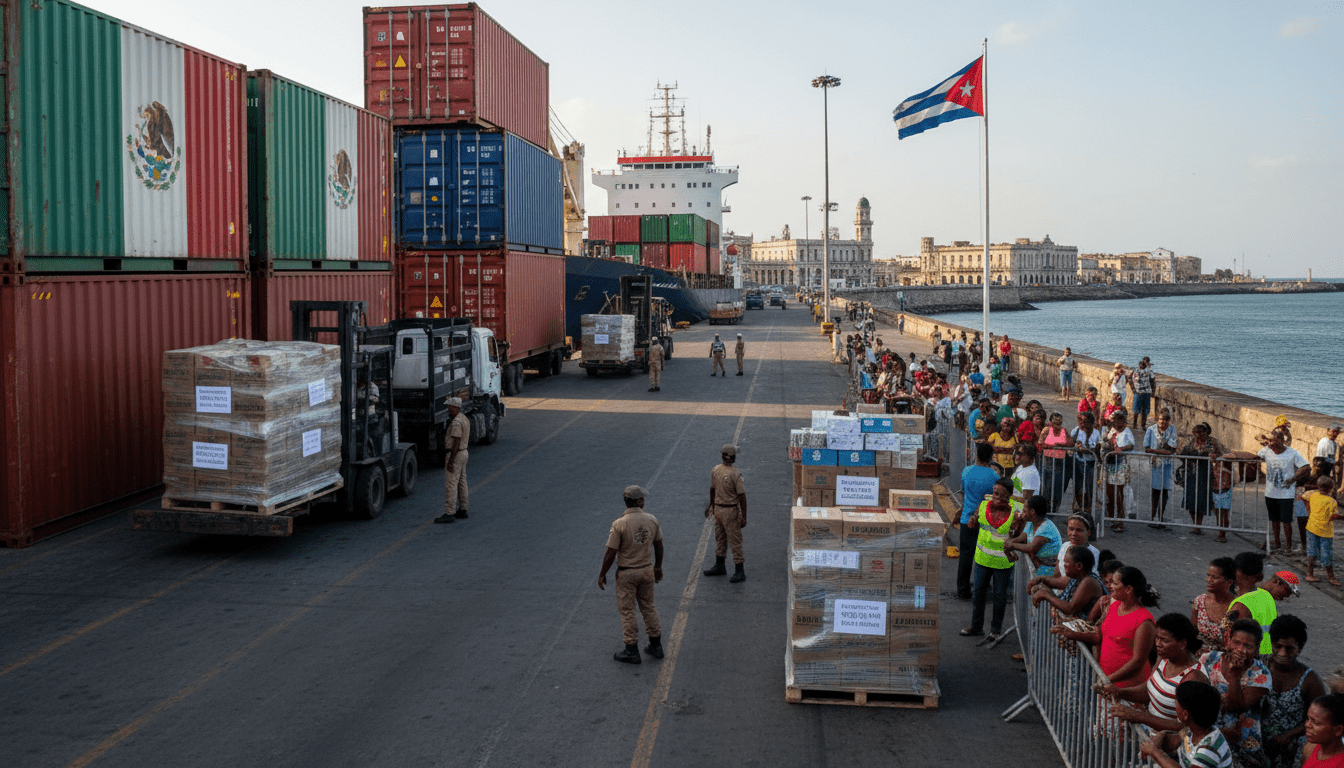
Aid shipment to Cuba: 1,600 tonnes of food and hygiene supplies arrive from Mexico and Uruguay
1,600 tonnes of food and hygiene aid from Mexico and Uruguay arrived in Cuba to help children, pensioners and vulnerable people amid a deep economic crisis.
Cuba received a large international aid shipment this week as the government moves to distribute basic supplies to the most vulnerable, state officials said. The aid shipment to Cuba, carried on the vessel Asian Katra, delivered 1,600 tonnes of food and hygiene products intended primarily for children, the elderly and those in need. Authorities said the consignment, provided by Mexico and Uruguay, will be channeled through state distribution networks to address acute shortages.
Ship Asian Katra docked in Havana
The freighter Asian Katra berthed in Havana carrying the bulk consignment, Cuban state media reported. Officials inspected the cargo and confirmed pallets of packaged foodstuffs and hygiene kits were unloaded for processing at port facilities.
Port authorities and ministry representatives coordinated customs clearance and inventory checks before the goods were transferred to storage centers. The arrival marked one of the largest recent single shipments aimed at immediate relief for households facing shortages.
Contents of the delivery and distribution plan
Cuban officials, citing reports from the Ministry of Food Industry, said the cargo includes staples and hygiene items calibrated for mass distribution. The ministry named children, pensioners and other vulnerable groups as priority recipients for the supplies.
Distribution will follow existing rationing and social assistance channels, with municipal authorities responsible for local allocation lists. Government statements indicated the plan emphasizes rapid disbursement to households affected by supply gaps and power-related disruptions.
Cuba’s deepening economic crisis
Economists and government commentary describe the current downturn as among the most severe in recent decades, driven by years of underinvestment and policy shortfalls. The situation has been compounded, officials say, by constraints on fuel imports and disruptions to key supply chains.
Short-term relief shipments are unlikely to resolve structural deficits, analysts warn, and authorities have acknowledged the need for broader economic measures. The government has appealed for international assistance while stressing its plans to manage allocations through centralized mechanisms.
Daily life affected by power cuts and shortages
Residents across the island have reported extended power outages and intermittent access to basic goods, straining household budgets and public services. Those conditions have placed added emphasis on targeted aid deliveries to neighborhoods with the greatest need.
Health centers and schools have faced logistical difficulties when electricity and supplies are inconsistent, officials and local sources say. Municipal distribution hubs are adapting delivery schedules to work around blackout periods and transport bottlenecks.
Tensions with the United States and political context
Relations between Havana and Washington have been tense in recent months, and Cuban officials have referenced hostile rhetoric from some U.S. political figures. State media framed the strains as an additional pressure on the island’s economy and a complicating factor for external relations.
Government spokespeople have publicly appealed to the international community for support while criticizing sanctions and restrictive measures that they say limit access to energy and imports. Observers note that geopolitical friction can hinder both diplomatic relief channels and private-sector engagement.
International response and calls for broader support
Mexico and Uruguay’s contribution underscores a regional willingness to provide humanitarian relief amid Cuba’s shortages, diplomats and analysts said. The shipment is framed by donors as a targeted humanitarian response rather than a long-term remedy.
Aid organizations and foreign governments have been urged to coordinate with Cuban authorities to ensure transparent distribution and to monitor needs on the ground. Several Latin American capitals have signaled readiness to provide additional assistance if logistical arrangements and bilateral agreements can be secured.
The arrival of the 1,600-tonne consignment provides immediate relief for many households but also highlights the scale of Cuba’s challenges and the limits of short-term aid. Recipients and officials alike say sustained solutions will require both domestic policy adjustments and expanded international cooperation.
