
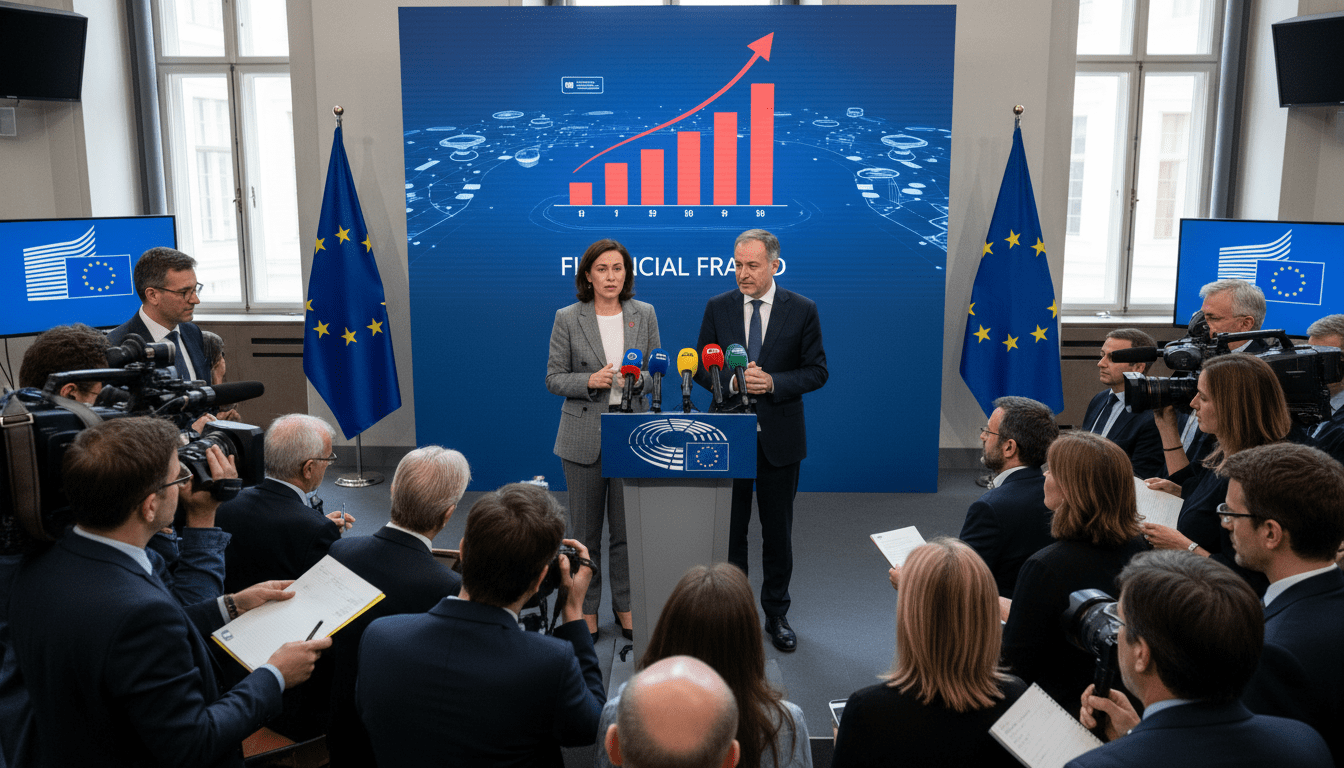
Consumer Groups Urge EU to Impose DSA Fines on Platforms Over Rising Financial Fraud
Consumer groups urge EU to demand tougher action and DSA fines for online platforms that fail to prevent financial fraud, citing risks to users and market integrity.
Strong opening: consumer advocates press for fines
Consumer groups across the EU have called for the bloc to levy DSA fines on online platforms that do not take sufficient steps to stop financial fraud. They argue that voluntary measures and soft sanctions have failed to protect users from scams on social media and marketplaces. The demands target platforms hosting ads, shops, and user-generated listings where fraudsters increasingly operate.
The campaign puts pressure on regulators to apply the Digital Services Act’s enforcement tools more aggressively. Advocates say financial fraud victims have few remedies and that robust penalties would push platforms to prioritize prevention. Brussels now faces a political and technical test in balancing platform responsibilities with enforcement capacity.
Evidence cited by campaigners and examples of risk
Groups highlighting the problem say scams range from fake shops to investment fraud and impersonation schemes promoted through short videos and sponsored listings. They point to recurring cases where suspicious sellers reappear after being removed or where automated moderation fails to detect evolving tactics. The result, they say, is persistent harm to consumers and erosion of trust in digital commerce.
Campaigners want platforms to implement stricter identity checks for sellers, faster takedown processes, and clearer reporting mechanisms for victims. They also ask for public reporting on suspected fraud incidents and for transparency about repeat offenders. These measures, advocates say, would make it harder for bad actors to exploit platform features and more straightforward for authorities to intervene.
DSA penalties and the legal framework
Under the Digital Services Act, online intermediaries are subject to obligations designed to tackle illegal content and risky activities on their services. The law includes a range of enforcement tools, among them administrative fines intended to deter non-compliance. Companies found to be in breach of key DSA duties may face penalties of up to 6% of their global annual turnover.
Those fines are calibrated to the scale and severity of violations and are meant to be sufficiently dissuasive for the largest platforms. Advocates say the threat of financial penalties must be paired with active monitoring and targeted audits to ensure platforms not only adopt policies on paper but execute them effectively. Regulators, meanwhile, retain discretion in deciding when fines are proportionate.
Regulatory challenges in catching financial fraud
Officials and compliance specialists caution that identifying and attributing financial fraud on large platforms poses significant challenges. Fraud patterns can be transnational, use obfuscated payment channels, and pivot rapidly in response to enforcement. These dynamics complicate automated detection and require cross-border cooperation among national authorities and platforms.
Resource constraints at enforcement agencies are another hurdle, according to legal analysts. Effective use of the DSA’s penalty regime requires investigative capacity, technical expertise, and timely information sharing. Consumer groups contend that the EU should bolster coordination and provide clearer guidance to national regulators so enforcement can be swift and consistent.
Platform responsibilities and industry response
Platform operators acknowledge the problem but stress the complexity of policing millions of listings and user interactions in real time. Many companies point to investments in content moderation, machine learning detection systems, and partnerships with payment providers to block fraudulent activity. They argue that collaboration with law enforcement and consumer organizations is essential to addressing sophisticated scams.
Industry representatives have warned that overly punitive enforcement could lead to unintended consequences, including disproportionate removals or burdens on small sellers. They call for balanced measures that combine enforcement with incentives for better verification and user education. Still, some platforms have signaled support for stronger transparency requirements and clearer definitions of illegal financial conduct under the DSA.
Brussels’ next moves and potential outcomes
EU institutions now face decisions about how aggressively to use the DSA’s sanctioning powers in the context of financial fraud. Options include issuing enforcement guidance, conducting thematic audits of platform practices, and coordinating sanctions across member states to avoid regulatory fragmentation. Lawmakers could also push for targeted amendments if gaps in the current rules become apparent.
The outcome will shape how quickly platforms adjust policies and technology to counter fraud. If regulators begin to impose DSA fines more frequently, platforms are likely to increase investments in verification, incident reporting, and user protections. Conversely, a cautious enforcement approach could prolong the status quo and keep financial fraud risks high for consumers.
Consumer advocates say enforcement must be paired with victim support and clearer redress paths to restore trust in online commerce. They maintain that only a credible threat of DSA fines, together with operational checks, will compel platforms to treat financial fraud as a systemic risk rather than an incidental problem.
The debate now centers on striking a workable balance between deterrence, technical feasibility, and proportionality as the EU moves to hold digital services accountable for user safety and marketplace integrity.
