
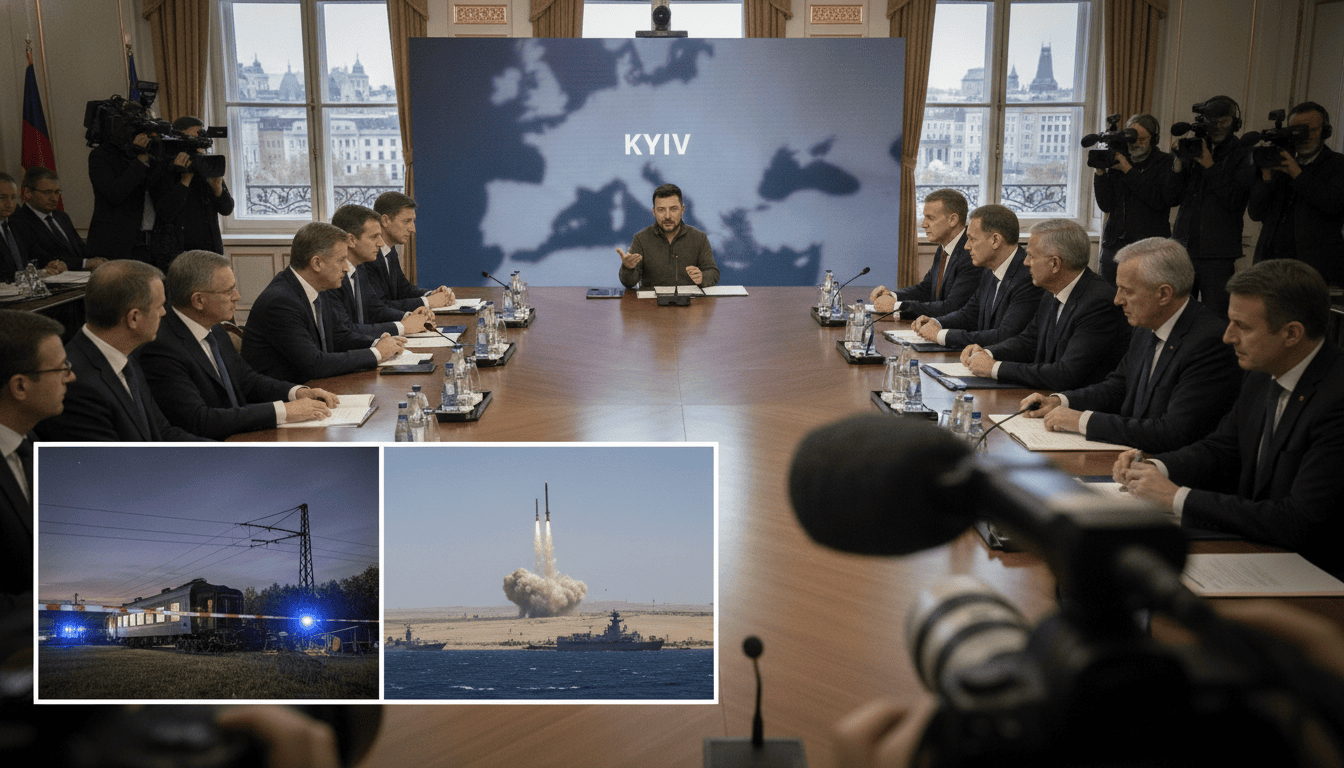
Coalition of the Willing for Kyiv meets as Gulf tensions rise and German rail sabotaged
Coalition of the Willing for Kyiv convenes on Monday, July 13, 2026, to coordinate military and humanitarian support as flashpoints in the Gulf and a suspected arson on German rail lines deepen regional security concerns.
Leaders and envoys at the Coalition of the Willing for Kyiv meeting emphasized urgent assistance for Ukraine while acknowledging the broader risks posed by simultaneous crises in the Gulf and on European infrastructure.
Coalition of the Willing for Kyiv Holds High-Level Talks
On Monday, July 13, 2026, representatives from Western and partner nations gathered under the banner of a Coalition of the Willing for Kyiv to discuss new support packages for Ukraine. Delegates focused on strengthening air defense, logistics, and battlefield sustainment while balancing the political and military risks of further escalation.
Participants reportedly reviewed coordinated timelines for deliveries, training programs and financial aid intended to shore up Kyiv’s defenses ahead of expected seasonal operations. Officials stressed that measures would be calibrated to avoid direct confrontation with other powers while maintaining effective support to Ukrainian forces.
United States and Iran Clash Again in Gulf Waters
At the same time, U.S.-Iran tensions flared anew in Gulf waters, where naval and maritime incidents have accelerated concerns about freedom of navigation and the safety of commercial shipping. U.S. and allied vessels increased patrols after a series of confrontations that officials described as “more aggressive” than recent exchanges.
Diplomatic channels were reported active overnight as Washington and regional partners sought to de-escalate, even as Tehran framed its actions as defensive amid what it called hostile maneuvers by foreign navies. Analysts warned that any miscalculation in the Gulf could ripple into the European security environment and complicate arms and logistics routes.
Suspected Arson Disrupts Rail Traffic in North Rhine-Westphalia
In Germany, authorities in North Rhine-Westphalia confirmed a suspected deliberate fire on railway tracks that caused significant disruption to both passenger and freight services. Investigators described the incident as a targeted attack on infrastructure, and federal police have joined local forces to examine evidence and secure the site.
Rail operators suspended services on affected lines while emergency crews cleared debris and inspected track integrity, resulting in delayed connections and rerouted freight. Officials emphasized they would pursue all leads and coordinate with transportation agencies to restore normal operations swiftly.
Security and Diplomatic Responses Intensify Across Capitals
Governments responding to these converging crises moved swiftly to reinforce security and diplomatic posture, dispatching military assets and summonsing envoys for consultations. NATO and European Union officials convened crisis planning sessions to align contingency measures and to reassure member states about collective readiness.
Berlin’s federal ministries signaled stepped-up coordination between interior, transport and defense agencies to protect critical infrastructure, while allied capitals discussed additional naval escorts through vulnerable shipping lanes. Diplomatic outreach aimed to reduce the risk of escalation in the Gulf even as military planners prepared for a range of scenarios.
Logistics, Supply Chains and Regional Stability Under Strain
The synchronised nature of the events — intensified support planning for Kyiv, renewed Gulf confrontations and an attack on German rail — is placing fresh strain on logistics and supply chains across Europe. Freight that normally moves by rail is being diverted to road or port routes, amplifying costs and congestion amid a busy summer transport season.
Security experts caution that prolonged instability could undermine aid corridors to Ukraine and complicate the movement of critical goods within the EU. Commercial operators are reassessing risk profiles for maritime and rail routes, while governments weigh emergency measures to ensure continuity of essential services.
The unfolding developments on July 13, 2026, highlight how rapidly separate crises can intersect, forcing governments to juggle immediate security needs with longer-term strategic choices that will shape regional stability.
