
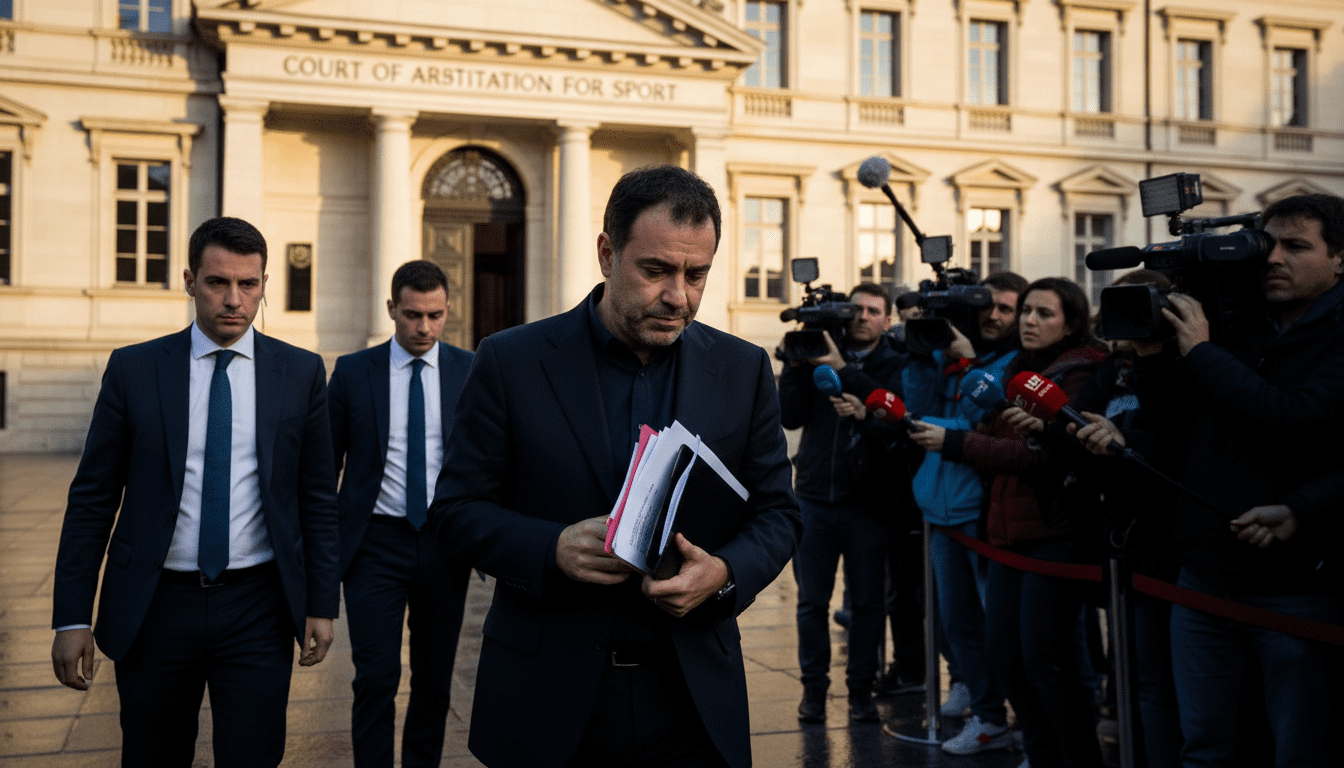
UEFA Rejects Barcelona Handball Appeal Over Marc Pubill Incident Ahead of Atletico Return Leg
UEFA has dismissed Barcelona’s handball appeal over Marc Pubill, ruling the protest inadmissible on 13 April 2026 and leaving the issue closed before the Champions League return leg.
Barcelona handball appeal was formally rejected by European football authorities on Monday, a decision confirmed on 13 April 2026 that leaves Atletico Madrid’s 2-0 first-leg victory at Camp Nou intact. The Catalan club had argued that a handball by Atletico defender Marc Pubill should have led to a penalty and that the VAR team erred by not ordering a review. UEFA’s Control, Ethics and Disciplinary Body declared the protest inadmissible, bringing a procedural end to the matter hours before the second leg.
UEFA’s official rationale and procedural outcome
UEFA issued a brief statement confirming the outcome and characterising the filing as inadmissible under its disciplinary rules. The governing body said the protest did not meet the criteria required to overturn or re-examine a referee’s on-field decision through the disciplinary channel. UEFA’s statement reiterated that match officials’ decisions are generally final unless a clear procedural breach or rule misapplication can be demonstrated.
The disciplinary body’s ruling closes the formal pathway Barcelona pursued within UEFA structures and means no retroactive sporting sanction or scoreline change will be applied. UEFA did not publish an extended legal analysis alongside the decision, leaving interpretation of the procedural grounds to clubs and observers.
What occurred at Camp Nou in the first leg
Atletico Madrid recorded a 2-0 win at Camp Nou in the quarterfinal first leg, a result that set the tone for the tie and stoked controversy over a key incident. Shortly before halftime, Atletico’s Marc Pubill appeared to handle the ball after it was played back toward him by a teammate’s goal kick, a sequence Barcelona argued should have resulted in a penalty. Referee Istvan Kovacs allowed play to continue, and the VAR team did not intervene to recommend an on-field review.
Barcelona contended that the decision materially affected the match, framing it as a “major error” that influenced the scoreboard and the tactical approach for the second leg. Atletico and match officials maintained that the incident fell within the remit of judgment calls that referees and VAR must assess in real time.
Barcelona’s arguments and reaction to the dismissal
In the days following the first leg, Barcelona submitted a formal complaint to UEFA alleging a misapplication of the laws of the game and a failure of the VAR process to trigger a review. Club representatives argued the handball was clear and that procedural remedies should be available where video review was omitted. Barcelona’s public communications framed the appeal as a defence of sporting fairness and the integrity of competition rules.
After UEFA’s decision, the club expressed disappointment but has so far not indicated whether it will pursue further legal options beyond UEFA’s internal channels. The rejection reduces the immediate scope for altering the sporting outcome and shifts the dispute back into the public and media arenas rather than a judicial one.
Refereeing protocols, VAR limits and disciplinary scope
The case highlights the narrow window in which disciplinary bodies can overturn referee decisions under UEFA regulations, which generally preserve on-field judgments unless a rule has been demonstrably misapplied. VAR is designed to correct clear and obvious errors, but the mechanism relies on match officials to initiate reviews or act on VAR recommendations, a process that has repeatedly been the subject of debate. UEFA’s disciplinary framework is distinct from the in-match VAR protocol, meaning procedural missteps during a game do not automatically translate into successful post-match protests.
Refereeing experts point out that appeals of this nature must show either a breach of procedural rules by match officials or evidence that the VAR system failed in a way explicitly covered by competition regulations. In many cases, those thresholds prove difficult to meet, which is why clubs rarely secure successful reversals after matches conclude.
Sporting impact ahead of the second leg in Madrid
With UEFA’s rejection, Atletico travels to the return leg with a preserved 2-0 advantage and no pending disciplinary cloud over the scoreline. That margin places Barcelona in the position of needing to overturn a two-goal deficit at the Estadio Metropolitano, shaping tactical choices and squad selection for Diego Simeone’s side and their opponents. The ruling removes one potential distraction for Atletico but intensifies pressure on Barca to produce a decisive performance on the pitch.
Coaches and players on both sides will now prepare knowing that the referee’s initial decisions will stand, making the second leg purely a contest of sporting response rather than administrative remedy. The outcome also reinforces the practical realities clubs face when dissatisfied with in-game officiating.
Broader reactions and the continuing VAR debate
Reactions from pundits and former officials have ranged from calls for clearer VAR protocols to suggestions that governing bodies should publish fuller explanations when rejecting high-profile protests. The episode feeds a broader conversation about transparency, consistency and technological oversight in European competition. Clubs, supporters and refereeing bodies continue to push for adjustments that reduce ambiguity and ensure high-stakes mistakes are minimised.
While UEFA’s decision ends this particular appeal, it is unlikely to quell wider debate about how VAR is used and governed. Calls for procedural reforms and enhanced disclosures after contentious matches may gain further momentum as stakeholders weigh solutions ahead of future tournaments.
UEFA’s ruling on Barcelona’s handball appeal leaves the sporting resolution to be decided across 90 minutes in Madrid, with Atletico holding the advantage and both clubs facing the immediate task of delivering on the pitch.
