
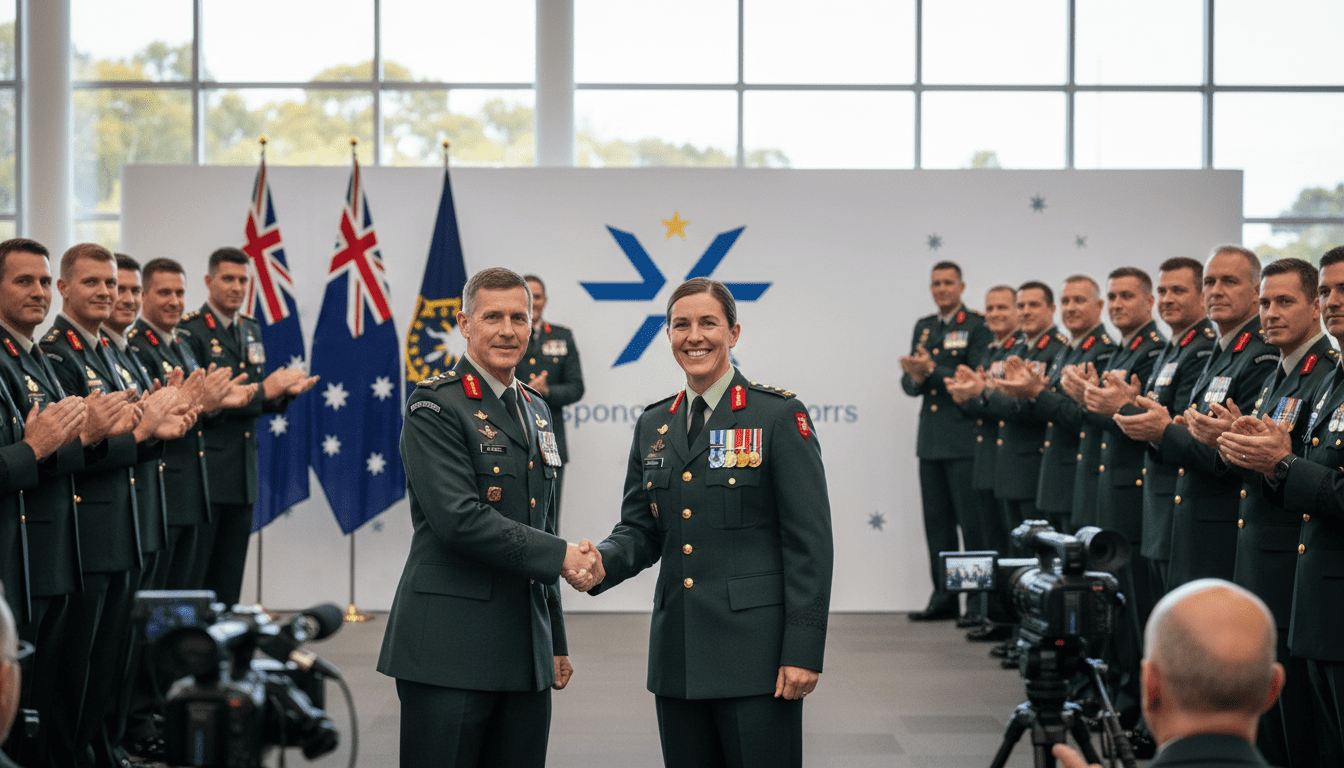
Susan Coyle to Become First Woman to Lead Part of the Australian Army from July
Lieutenant General Susan Coyle will become the first woman to lead a component of the Australian Army from July, a landmark promotion announced by Defence Minister Richard Marles that signals a major shift in the service’s leadership.
Government announcement and timetable
The promotion was disclosed by Defence Minister Richard Marles in Canberra, who described the decision as a deeply significant moment for the Australian Defence Force. Marles said the change will take effect in July, when Lieutenant General Susan Coyle will assume command of a major element of the Army’s leadership structure. The minister framed the move as part of a broader effort to modernize the services and reflect the changing composition of the defence workforce.
The government emphasized that the appointment follows standard promotion and succession processes and was endorsed after consideration of operational needs and merit. Officials noted the timing aligns with other scheduled changes in the senior leadership team to preserve continuity across commands. The announcement was presented as both a personnel decision and a symbolic milestone for women in uniform.
Career profile and operational experience
Susan Coyle, 55, joined the Army at 17 and has served for nearly four decades across a range of operational and staff roles. Her deployments include service in East Timor, the Solomon Islands, Afghanistan and operations in the Middle East, giving her a track record of expeditionary experience that senior leaders cited in briefing materials. In recent years she has led the Joint Capabilities Group, which coordinates cross‑domain capabilities such as space and cyber support for all branches of Australia’s defence forces.
Coyle’s career trajectory includes a mix of command, planning and capability development roles, and she has overseen initiatives that integrate new technologies into force structures. Defence sources say her background in joint operations and capability integration positioned her as a leading candidate to guide Army elements through a period of modernization. Colleagues described her as focused on operational readiness and on widening opportunities for personnel across the force.
Representation and recruitment implications
Defence Minister Marles and other officials underlined the appointment’s symbolic value for women serving and considering service in the Australian Army. When Coyle joined the Army as a teenager, women comprised only a small fraction of personnel; she has recalled that the proportion was in the low double digits at the time. Today, recruitment and retention initiatives have increased female representation across many roles, and leaders argue visible promotion pathways are critical to sustaining that trend.
Coyle herself has spoken about the importance of role models and mentorship to broaden the pool of candidates willing to pursue senior command. Defence officials say the promotion is likely to be used in recruitment outreach and workforce development messaging to highlight career pathways available to women in uniform. Advocates for greater diversity welcomed the move while noting that representation at the highest levels remains an ongoing challenge.
Limits of the milestone within the defence hierarchy
While the promotion marks the first time a woman will lead a substantial component of the Army, it does not change the gender composition of the highest uniformed office. Defence Minister Marles indicated that the overall head of the Australian Defence Force will be succeeded in July by the current Chief of Navy, Vice Admiral Mark Hammond. That appointment means the Chief of the Defence Force — the single most senior military post responsible for the three services — will again be held by a man.
Senior officials stressed that Coyle’s role will carry significant responsibility for the Army’s operational capabilities but clarified it sits within a broader command chain that remains led by established senior officers across services. The government framed the two appointments as complementary steps intended to ensure experienced leadership across joint and service commands during a period of strategic realignment.
Reactions from the defence community and analysts
The decision prompted a range of responses from within defence circles and external commentators, with many observers calling it an important recognition of merit and an example of institutional change. Serving personnel and veterans who spoke to media described the appointment as both overdue and consistent with evolving norms in allied militaries that have promoted women to senior posts. Some commentators urged the government to follow through with policies that address barriers to advancement, including career interruptions and role specialization.
Others pointed to the practical implications for force management, noting that Coyle’s expertise in joint capabilities may influence priorities for space, cyber and integrated logistics support. Defence analysts said the appointments are likely to be examined for their operational as well as cultural impacts, and that measurement of long‑term outcomes will depend on retention rates and the appointment of more women to command and staff roles at senior ranks.
The promotion of Lieutenant General Susan Coyle to lead a major Army component from July represents a concrete step toward broader inclusion at senior levels of the Australian Defence Force, even as the overall defence leadership lineup remains male at the top. Observers say the appointment will be judged not only by its symbolic value but by how it affects career pathways, recruitment and the service’s operational effectiveness in the years ahead.
