
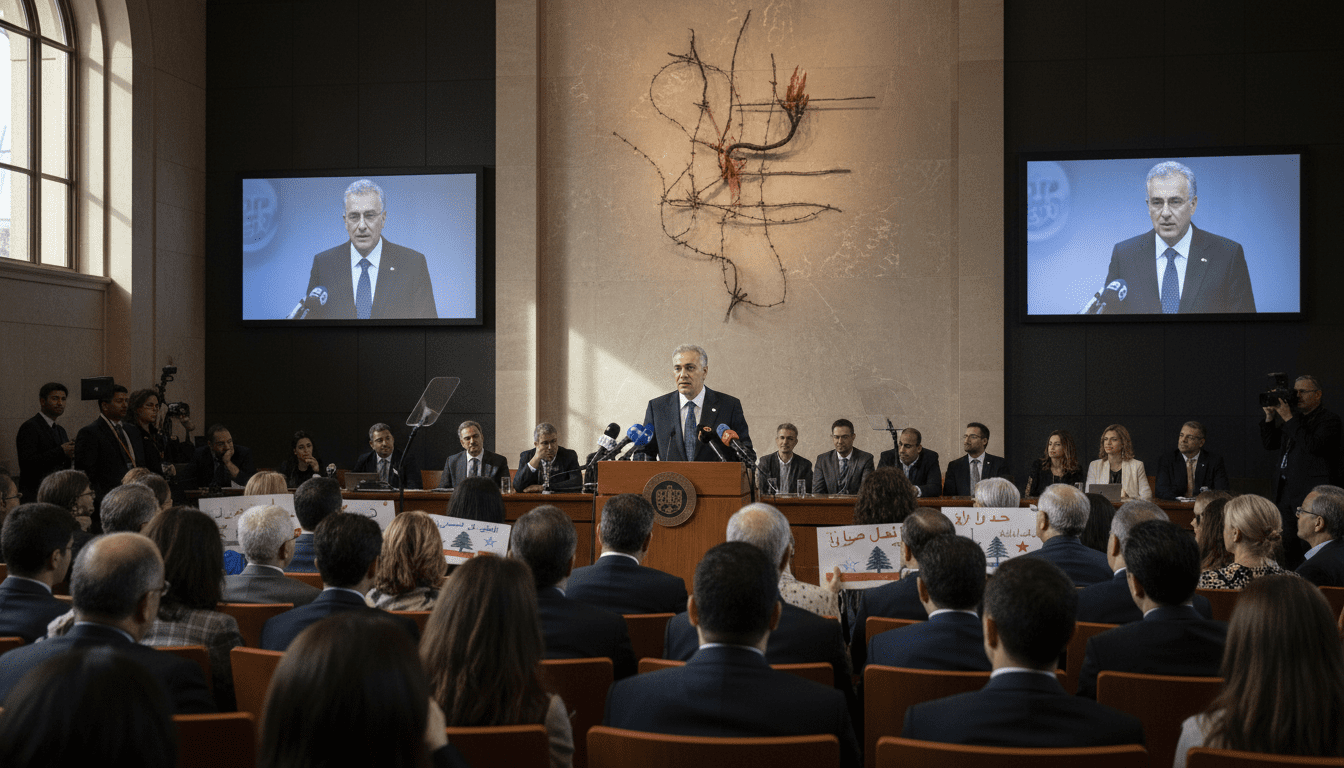
Antoun Sehnaoui’s pro-Israel praise at US Holocaust Museum sparks fury in Lebanon
Lebanese banker Antoun Sehnaoui’s public praise at a United States Holocaust Memorial Museum event, highlighted by praise from US envoy Morgan Ortagus, has ignited widespread anger in Lebanon amid ongoing violence and displacement. The appearance and linked remarks have renewed scrutiny of Sehnaoui’s political ties, legal troubles, and his family’s contested history with Israel.
Museum event and the remarks
The appearance took place at an event where Sehnaoui, chairman of Societe Generale de Banque au Liban (SGBL), was publicly acknowledged for supporting projects tied to Israel. Morgan Ortagus, a US Middle East envoy who has been identified in Lebanese media as a reported romantic partner of Sehnaoui, praised his family’s long-standing alignment with Israel and described some of his activities as carrying personal and legal risk in Lebanon.
Ortagus framed support for Israel as requiring “moral clarity” and noted that certain cultural funding tied to US-Israeli collaborations would run afoul of Lebanese law prohibiting dealings with Israeli individuals or institutions. Her remarks and the timing of the event drew immediate attention because they came as parts of Lebanon have been directly affected by Israeli military operations.
Public backlash in Lebanon
Footage and social media reactions triggered strong condemnation across Lebanon, with posts accusing Sehnaoui of betraying national interests and calling for legal accountability. Critics on social platforms denounced the banker’s conduct while others used the episode to question elite influence and the permissiveness afforded to wealthy figures.
Lebanese commentators said the reaction was amplified by the broader context of recent military action and civilian suffering. Observers noted that public outrage stems not only from individual remarks but from a perception that political and economic elites can act without regard for national consensus during a period of heightened vulnerability.
Political and legal entanglements
Sehnaoui’s prominence in Lebanon’s financial sector has long attracted scrutiny, and recent years have seen formal legal challenges. Lebanese prosecutors have filed charges related to alleged money laundering tied to currency trading during the country’s ongoing financial crisis, allegations SGBL denies. Separately, civil litigation in the United States has accused the bank of providing material support to armed groups, claims the bank also rejects.
Lawmakers and activists say Sehnaoui’s influence extends beyond finance, shaping political decisions and alliances across sectarian lines. Some critics assert that gestures like the museum appearance are intended to secure protection and political capital rather than to advance public reconciliation or state-led diplomacy.
Questions over US envoy’s role
Morgan Ortagus, who drew attention for her vocal backing of Israel during previous government service and for strong opposition to Hezbollah, publicly praised Sehnaoui at the event. Her presence and remarks prompted debate in Lebanon about the neutrality expected of a diplomatic interlocutor and whether her posture undermines her capacity to act as a balanced broker.
Analysts said Ortagus’s involvement was likely to intensify existing suspicions among Lebanese political factions that external actors are leaning toward specific domestic constituencies. Observers also pointed out that a personal relationship between a senior foreign envoy and a prominent Lebanese businessman — if confirmed — would further complicate diplomatic dynamics.
Historical context and allegations
Ortagus referenced Sehnaoui’s family history, including ties to figures who supported Christian militias allied with Israel during the 1982 conflict, a period marked by violence in Beirut’s Shatila and Sabra. Those historical associations have long been a polarizing element in Lebanese politics and are still invoked when assessing current acts of public alignment with Israel.
The latest episode has reopened discussions about wartime allegiances, memory, and accountability, with many Lebanese feeling that public gestures acknowledging past alliances reopen old wounds. For families directly affected by the 1982 massacres and for communities now experiencing fresh displacement, the museum appearance was interpreted by many as tone deaf at best.
Human toll and timing of outrage
The controversy unfolded while large segments of southern Lebanon cope with the aftermath of recent Israeli military operations that have been accused by some international observers of causing civilian harm and extensive displacement. The fighting, which intensified in early March, forced hundreds of thousands from their homes and heightened fears of sectarian strain across the country.
Many Lebanese critics said the timing of Sehnaoui’s public praise for pro-Israel sentiment was particularly inflammatory because families remain displaced and communities are still assessing casualties and property loss. The juxtaposition of cultural philanthropy tied to Israel with visible human suffering has driven a potent mix of moral and political condemnation.
For now, the debate shows no sign of abating. Calls for investigations, renewed scrutiny of SGBL’s legal matters, and demands for clearer lines between private philanthropy and state diplomacy are likely to persist as Lebanon grapples with both internal divisions and the broader regional fallout of the conflict.
