
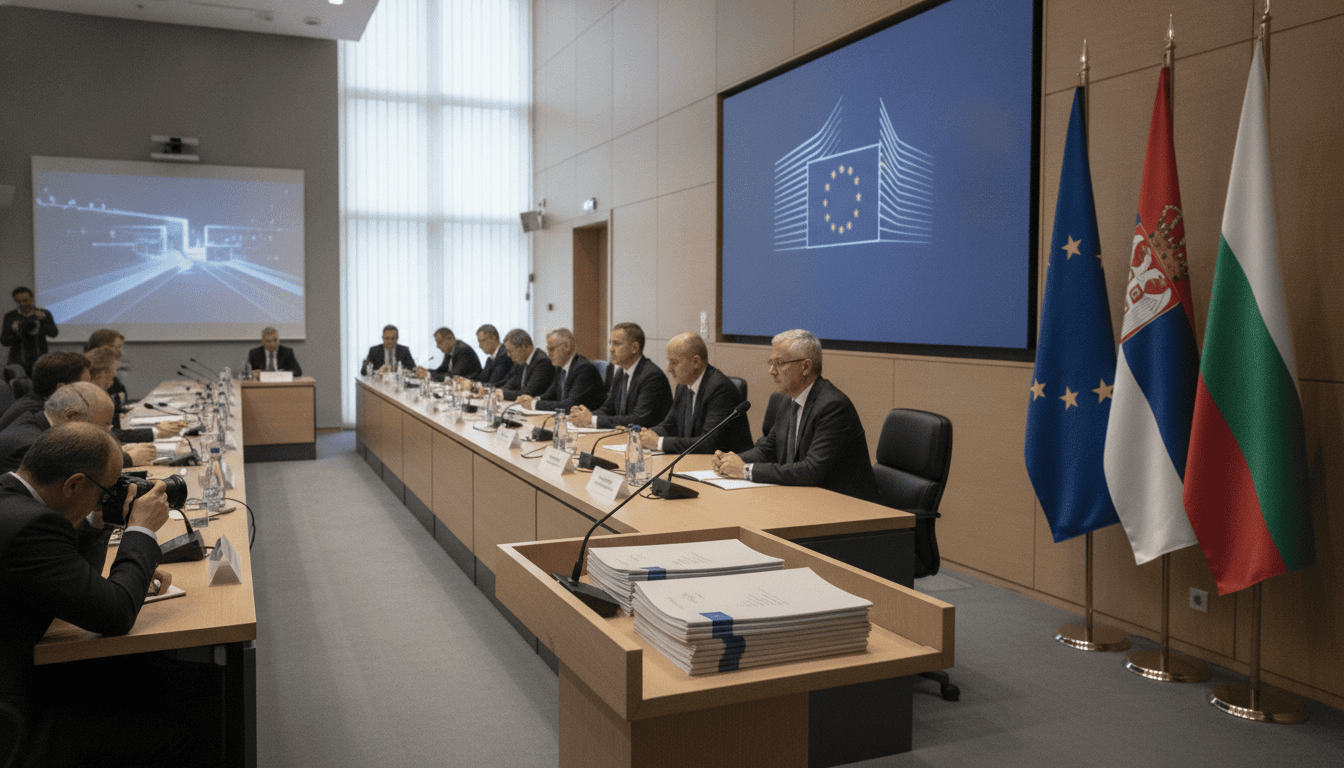
EU rule of law report flags Serbia’s backslide and raises concerns about Slovakia and Bulgaria
EU rule of law report finds Serbia backsliding, flags Slovakia, Bulgaria and notes Hungary’s improvement after a government change ahead of 2028 rules.
The European Commission’s latest EU rule of law report, published ahead of the summer recess, delivers mixed findings across the Union and candidate countries, with Serbia singled out for regression. The report, which assesses judicial independence, anti‑corruption efforts, media pluralism, separation of powers and single‑market impacts, also highlights shortcomings in Slovakia and Bulgaria while recognising early reforms in Hungary after a change of government. Commission officials say the findings will feed into new mechanisms tying future funding to rule‑of‑law benchmarks.
Serbia receives the harshest assessment among candidate countries
The report concludes that Serbia has not only stalled but in several areas has slipped backwards, particularly on judicial independence and prosecutorial autonomy. It documents increased political pressure on courts and prosecutors, limited responses from state bodies and instances interpreted as attempts to influence investigations into organised crime. The Commission also notes a deterioration in journalists’ safety, with more reports of threats, assaults and hostile rhetoric against the press.
These findings have immediate political consequences: several member states, citing the report, resisted opening further chapters in Serbia’s accession talks, notably the economic and competition cluster known as Cluster 3. That pushback comes despite earlier hopes among some capitals that progress had been sufficient to advance negotiations.
Hungary’s score improves after the April change of government
Hungary, long a focus of rule‑of‑law scrutiny, received a more favourable assessment following the April ousting of Prime Minister Viktor Orbán and the installation of a new administration. The Commission credits initial reforms undertaken by the government of Péter Magyar that begin to address previous deficits, though it cautions that the report covers only the earliest steps in a longer process. Observers note that sustained institutional change will be necessary to translate early measures into durable improvements.
Brussels underlines that monitoring will continue and that partial improvements do not remove the need for thorough structural reforms, especially in areas related to judicial autonomy and media oversight. The report frames Hungary’s progress as tentative, leaving room for both further praise and renewed criticism depending on future actions.
Judicial independence and corruption remain central concerns
Across the Union and candidate countries, the Commission places particular emphasis on the independence of the judiciary and the effectiveness of anti‑corruption measures. In several states, including Slovakia, the report points to a marked decline in prosecution and conviction rates for high‑level corruption, combined with signs that prosecutorial offices have been subject to political interference. Slovakia’s backsliding is linked in part to policy choices made by the government of Prime Minister Robert Fico that the Commission says have weakened checks on power.
The Commission warns that weak oversight and practices such as long‑term secondments of judges, used instead of filling vacancies, create uncertainty and open the door to abuse. It calls for strengthened prosecutorial safeguards, transparent appointment processes and robust mechanisms to ensure accountability for public officials.
Media freedom and civil society under pressure in multiple countries
The EU rule of law report singles out a deterioration in media freedom in several places, with Serbia and other Western Balkans aspirants showing worrying trends. The Commission documents increases in harassment, threats and verbal attacks against journalists, as well as pressure on civil society organisations through intimidation and legal or financial constraints. These developments, the report warns, undermine public debate and the capacity of independent actors to scrutinise government action.
Within the Union, the Commission also points to gaps in public access to information and insufficient legal protection for investigative reporting in some member states. It recommends concrete protections for journalists, improved complaint mechanisms and stronger safeguards to prevent undue influence over public broadcasters.
Bulgaria, Albania and Bosnia‑Herzegovina show mixed progress; Germany flagged for specific gaps
Bulgaria receives below‑average marks, with the Commission highlighting persistent problems such as the long‑term secondment of magistrates, the incomplete reform of the Supreme Judicial Council and limited progress in prosecuting high‑level corruption. Albania and Bosnia‑Herzegovina are identified as having serious deficiencies but also some positive developments that merit acknowledgment. The report stresses that accession prospects remain contingent on tangible, verifiable reforms.
Even established member states are not exempt: Germany is praised for measures such as a pact to bolster judicial resources, but the Commission notes shortcomings in lobbying transparency, an absence of a federal right‑to‑information law providing journalists automatic access to certain public records, and tax rules that limit relief for some NGOs. The Commission frames these as fixable weaknesses rather than systemic failures.
Report sets stage for tying funding to rule‑of‑law performance from 2028
Beyond diagnostics, the report carries clear policy weight: Brussels intends that rule‑of‑law performance will become a central condition for disbursing EU funds under the new multiannual financial framework. From 2028, national and regional partnership plans will combine existing funding streams and include horizontal conditions on governance reforms. The Commission warns that payments can be suspended if beneficiary states fail to meet agreed rule‑of‑law milestones during implementation.
This prospective enforcement mechanism is intended to increase leverage over both members and accession candidates, making the annual reports more consequential than in previous cycles. The Commission notes that, of the recommendations issued in 2025, states had fully or partially implemented only around half, underscoring the need for stronger follow‑up.
The Commission frames the report as both a mirror of current weaknesses and a tool to prompt correction, but it also acknowledges that producing lasting change will require political will, judicial safeguards and sustained civic protections. As the Union prepares new financial and conditionality instruments, the report signals that Brussels expects compliance with rule‑of‑law standards to be integral to future cooperation and funding decisions.
