
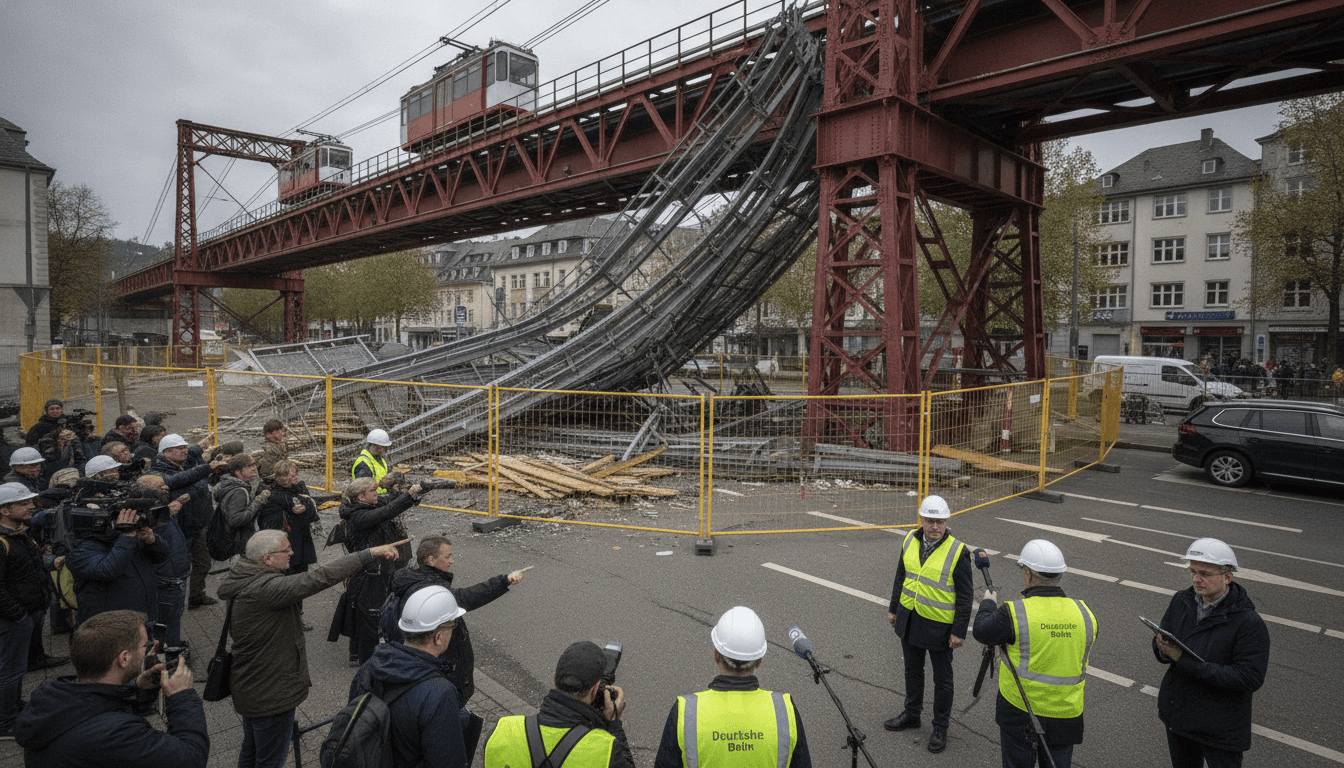
Deutsche Bahn’s credibility tested after newly renovated Köln–Hagen bridge found unsafe
Deutsche Bahn reshuffled its ad agencies, then faced a setback: a degraded Wupper bridge on the Köln–Hagen line caused wide-ranging delays and cancellations.
The state-owned operator Deutsche Bahn announced a consolidation of its creative teams to five agencies at the start of the week, only to confront a major operational problem days later when a recently renovated section of the Köln–Hagen route was found to include a structurally deficient bridge over the Wupper. The discovery forced immediate service restrictions on both regional and long-distance trains and undercut the company’s message that recent major works would deliver years of construction-free reliability. The episode has intensified passenger frustration and cast doubt on Deutsche Bahn’s ability to translate its public-relations reset into tangible improvements on the tracks.
Agency shake-up and the stated communication goal
Deutsche Bahn reduced its roster of advertising partners from seven to five as part of a strategic refresh aimed at telling the “story of change” and making improvements more visible and emotionally resonant. Company leadership framed the move as part of a wider restart intended to shift attention from long-running reliability issues to concrete customer benefits. The timing of the agency consolidation, however, has drawn scrutiny because the public relations initiative now coincides with an operational failure on a line that had just undergone comprehensive renovation.
Structural fault found on Wupper bridge in renovated section
Inspectors identified serious defects in a bridge spanning the Wupper on the Köln–Hagen corridor, despite the route’s recent restoration work. Railway engineers described the bridge as deteriorated enough to require immediate restrictions on train movements as a safety precaution. Officials have said the problem was not apparent during the renovation or at prior inspections, prompting questions about the scope and scrutiny of the recent works along the line.
Immediate disruption to regional and long-distance services
The defect forced Deutsche Bahn to suspend or reroute services on a key north-south axis, affecting commuters and long-distance travelers. Timetables were altered at short notice, with cancellations and extended journey times reported on affected services as operators implemented speed limits and detours. Transport authorities and local governments are now coordinating contingency timetables while technical teams evaluate repair options and a likely duration for restrictions.
Passenger reaction and growing credibility concerns
Customer outrage has been swift and vocal, with many passengers pointing out the gap between corporate messaging and daily experience. For travellers who endured months of closures for “generalsanierung” work, the promise of improved reliability and “at least five years of construction-free operation” now rings hollow. Consumer groups and local politicians said the incident deepens an existing trust deficit and called for clearer accountability and faster, transparent reporting on both the causes and the remedial timetable.
Repair options, costs and timeline remain provisional
Railway engineers are considering short-term stabilization measures alongside a more comprehensive reconstruction plan for the bridge, with assessments ongoing to determine whether local repairs will suffice or a full replacement is required. Deutsche Bahn has signalled that safety will drive the work plan, but officials have not released a definitive timeline or cost estimate. Analysts caution that any substantial bridge work on a busy corridor could take weeks to months and may force prolonged service changes, with direct budgetary implications for both the operator and public funding partners.
Public relations strategy collides with infrastructure reality
The incident highlights a broader tension between image-focused initiatives and the hard, costly task of maintaining ageing infrastructure across the network. Deutsche Bahn’s pivot toward fewer creative partners was pitched as a way to better communicate concrete improvements; critics now argue that spending on high-profile campaigns should be weighed against urgent investments in track, bridges and signalling. Some voices suggested pausing major advertising outlays while prioritizing repair and maintenance, a move that could free up significant funds if implemented.
The Wupper-bridge episode underscores the limits of narrative management when service reliability is the metric that matters to passengers. For Deutsche Bahn, the immediate priorities are to secure the bridge, restore dependable services on the Köln–Hagen line, and lay out a credible, evidence-based plan that reconciles its public promises with on-the-ground maintenance realities. Only a transparent repair schedule and demonstrable progress on the tracks will begin to rebuild the confidence that the company’s new communications strategy seeks to win.
