
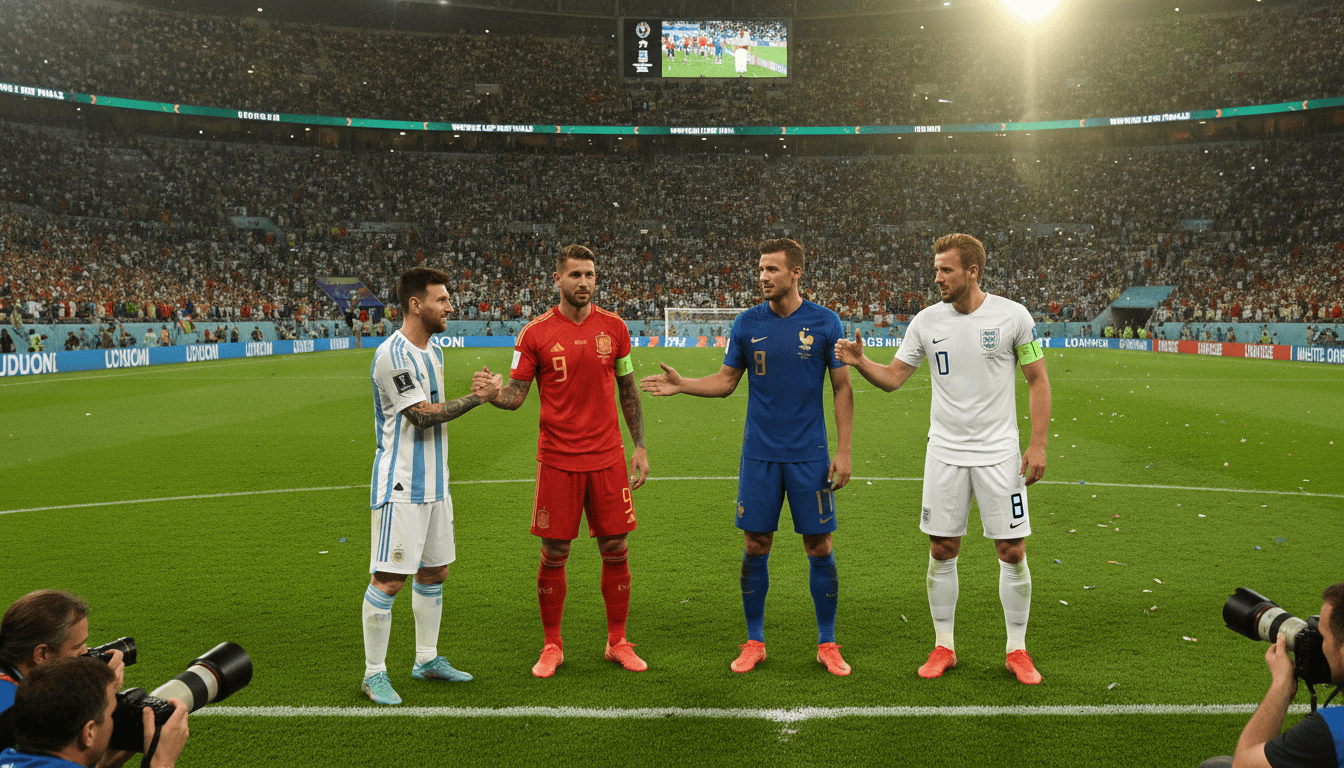
World Cup Semifinals: Argentina, Spain, France and England Set for Title Decider
With 100 matches played, the World Cup semifinals bring Argentina, Spain, France and England into the final four, each with a clear path to the trophy. The World Cup semifinals feature contrasting styles and storylines, from Lionel Messi’s leadership to England’s politically charged matchup with Argentina. Pundits highlight tactical battles, squad depth and recent form as decisive factors in who will reach the final.
Semi-final line-up confirmed
The tournament enters its decisive phase with two semi-final ties remaining and a third-place match to follow. Argentina, Spain, France and England have advanced on a mixture of individual brilliance and collective discipline. Each side arrives with distinct strengths that shape expectations for the final days of the competition.
Argentina’s reliance on Messi and collective balance
Argentina remain the benchmark for emotional unity and attacking clarity, with Lionel Messi at the center of their ambitions. Messi’s influence extends beyond goals; he shapes space, tempo and the confidence of younger teammates. Argentina couple his leadership with a defensive spine and midfield runners who have repeatedly turned possession into clear chances.
Spain’s possession fluency and tournament consistency
Spain have impressed through a controlled, possession-based approach that prizes ball progression and positional rotation. Their midfield combinations have repeatedly outnumbered opponents in key areas and created high-quality chances without relying on a single superstar. Spain’s discipline in transition and set-piece threat give them a steady platform in the World Cup semifinals.
France’s tactical evolution under Didier Deschamps
France arrive with a newer tactical texture under coach Didier Deschamps, blending raw individual talent with improved collective structure. Deschamps has adjusted formations to maximise forward dynamism while reinforcing midfield balance, producing a side that is flexible rather than predictable. That evolution has heightened France’s knockout resilience and given them multiple avenues to goal.
England’s form, Tuchel’s influence and Bellingham’s rise
England’s run has been marked by managerial change and rapid on-field adaptation since Thomas Tuchel’s appointment. Tuchel’s emphasis on organisation and pressing intensity has tightened England’s defensive shape and liberated Jude Bellingham to influence games higher up the pitch. Bellingham’s blend of goals, driving runs and set-piece delivery has given England an attacking focal point that can decide single-elimination matches.
Political overtones revive the England–Argentina rivalry
The England–Argentina meeting carries a political subtext that extends beyond footballing rivalry, rooted in recent diplomatic tensions and historical memory. Matches between the two nations often stir emotive responses among supporters and officials alike, amplifying media attention and national narratives. That wider context adds layers of expectation and pressure for players who must maintain focus amid heightened scrutiny.
Tactical match-ups likely to decide the finalists
Tactical nuance will shape both semi-finals, with coaches expected to tailor plans to opposition weaknesses rather than pursue bold gambits. Argentina may look to isolate Messi in half-spaces while denying Spain or England quick transitions, whereas Spain’s passing structure aims to draw opponents out of position. France’s adaptability means their opponents must prepare for multiple systems within one match, and set-piece precision could provide marginal gains.
Every detail will matter: squad depth for possible extra time, substitution strategies to manage fatigue, and the psychological readiness to handle crucial moments. Teams that convert possession into clear chances efficiently and protect narrow leads are likelier to navigate the knockout pressure successfully.
The quality of individual performances will remain decisive even as systems compete. A goalkeeper’s late save, a midfielder’s run behind a backline, or a forward’s composure from the penalty spot can rewrite expectations instantly. Managers who anticipate and react quickly during matches will have a decisive edge in steering their sides toward the final.
Coaches also face logistical challenges in a compressed calendar, where recovery windows are short and tactical preparation time is limited. Medical teams, rotation policies and risk management over injuries are practical factors that will shape selections and game plans. Those elements are often invisible until they alter a starting XI or force last-minute adjustments.
Ultimately, the World Cup semifinals set the stage for dramatic football and national storytelling. Four teams with championship credentials remain, each backed by credible strategies to win the trophy. As the tournament moves into its final matches, attention will narrow to matchday decisions, pivotal individual moments, and which side can convert pressure into a historic result.
The upcoming matches promise intense competition, and the winner of each semi-final will emerge from a mix of planning, execution and a measure of fortune.
