
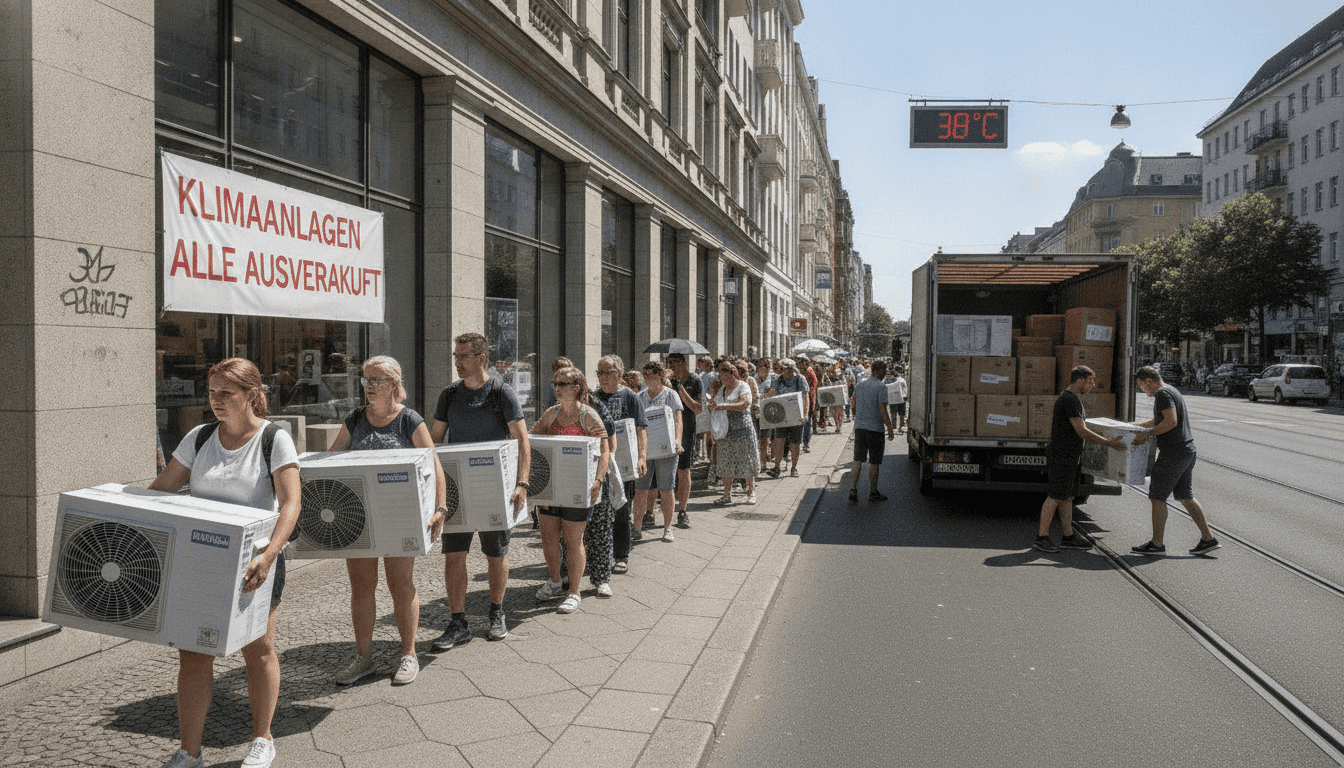
Germany’s Third Heatwave Sparks Rush for Air Conditioners as Retailers Report Shortages
Third heatwave in Germany drives demand for air conditioners; retailers report shortages while officials warn about costs, permits and higher energy use.
Germany’s mid-July heatwave has triggered a sharp surge in demand for air conditioners, leaving many stores with depleted stocks and consumers scrambling to cool their homes. The term air conditioner appears across social media and official statements as households seek quick relief from temperatures approaching 40°C. Public figures and retailers have both warned that supply will not meet current demand, prompting questions about installation, cost and energy use.
Heatwave sends shoppers hunting for air conditioners
Mid-July 2026 brought the country its third sustained heatwave of the summer, with city centers and apartment blocks suffering the most from trapped heat. Consumers responded quickly, buying portable units, fans and split systems in large numbers. The rush has pushed some product lines to sell out within days, leaving many shoppers unable to find an immediate solution.
Demand has been driven not only by comfort but by concern for vulnerable residents, including older people and those with health conditions exacerbated by heat. Commentators and health officials have repeatedly reminded households to take heat-related precautions while seeking permanent cooling options.
Retailers report depleted inventory and limited restocks
Major electronics retailers have reported dramatic increases in sales of cooling equipment and acknowledged inventory shortages. One large chain indicated that it does not expect significant restocking for the remainder of the season, a message that has further intensified consumer urgency. Brick-and-mortar stores and online sellers alike are grappling with order backlogs and delayed deliveries.
Supply-chain constraints, seasonal demand spikes and logistical bottlenecks have all been cited as contributing factors. Retailers are advising customers to check local availability and delivery timelines before purchasing and to consider installation lead times for fixed systems.
Officials and experts urge cautious buying
Public health figures and energy experts have encouraged consumers to weigh short-term needs against long-term costs when considering an air conditioner. Officials have noted that cooling devices can reduce heat-related health risks but may also increase electricity consumption substantially. The trade-offs between comfort, cost and environmental impact are becoming central to public advice.
Experts recommend prioritizing high-efficiency models and checking energy-label ratings to limit ongoing operating expenses. They also advise households to consider the size and insulation of their living space so that any air conditioner purchased is neither undersized nor wastefully oversized.
Apartment installations face permits and landlord rules
For many renters, the practical barriers to installing a fixed air conditioning system remain significant. External units commonly require landlord approval and may be subject to building or local regulations, particularly in multi-unit properties and historic districts. Tenants are advised to review lease terms and discuss installation plans with property managers before commissioning work.
Even when permission is granted, installation can take several days and may involve additional costs for mounting, drilling and electricity upgrades. Noise regulations and placement restrictions can further limit suitable options for apartments.
Choosing the right air conditioner for your home
Consumers now face a choice between portable units, window systems and split air conditioners, each with distinct advantages. Portable models can be set up quickly with minimal installation but typically consume more power and cool less efficiently than fixed split systems. Split systems are more effective and quieter but require professional installation and may trigger permit or landlord approval processes.
Selecting the right capacity is crucial: an underpowered unit will struggle to cool a room, while an oversized system cycles inefficiently and wastes energy. Shoppers should measure room volumes, check energy-efficiency ratings, and factor in installation and maintenance costs when evaluating options.
Short-term cooling strategies before installation
While awaiting delivery or permission for a permanent air conditioner, households can reduce indoor temperatures through simple behavioral and environmental measures. Closing blinds and curtains during peak sun, ventilating at night and using reflective window coverings can lower indoor heat gain. Cold showers, hydration and cooling packs help people manage personal comfort without electricity-intensive devices.
Other practical steps include moving sleeping arrangements to lower floors where heat accumulates less, creating cross-ventilation when outdoor air is cooler, and avoiding heat-generating appliances during the hottest hours. Communities and local authorities are also encouraging neighbors to check on vulnerable people and to use designated cooling centers where available.
With retailers signaling limited restocks and temperatures likely to remain high, many households will need to combine immediate coping strategies with longer-term planning for cooling. Consumers are advised to research options thoroughly, confirm installation requirements with landlords or building managers, and weigh efficiency and operating costs before purchasing an air conditioner.
