
Three killed in Moscow region drone attack on Pionerskij; flights disrupted
Three people were killed and several injured in a Moscow region drone attack in Pionerskij, officials say, after debris and strikes set multiple houses ablaze.
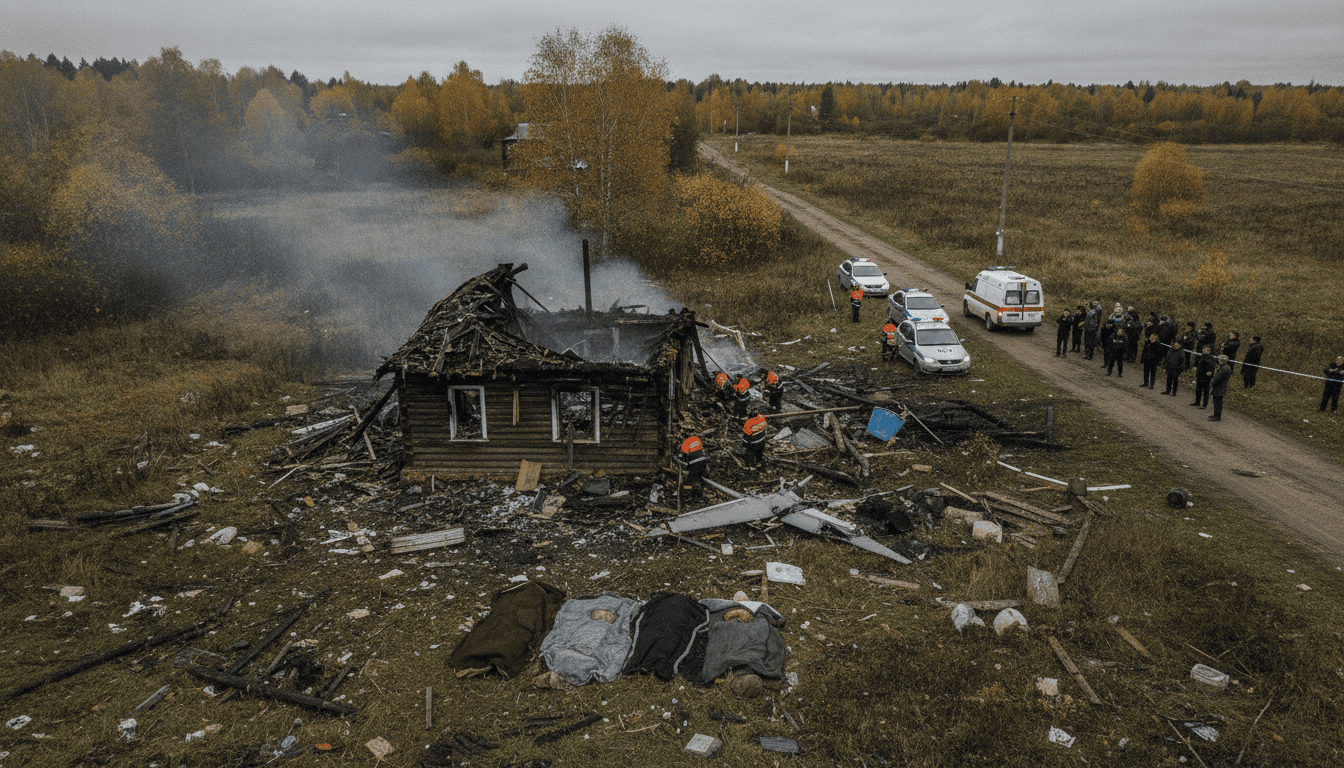
A drone strike in the village of Pionerskij, northwest of Moscow, killed three people and wounded at least three others, regional authorities said, in one of the deadliest incidents near the capital in recent months. Governor Andrei Vorobyov told reporters that drone debris caused fires in five homes and that rescue teams were searching for an elderly woman believed to be trapped under rubble. The local Investigative Committee opened criminal proceedings, treating the incident as a possible act of terrorism while emergency services continued rescue and containment work.
Casualties and rescue operations
Vorobyov reported that three residents died in Pionerskij and three more sustained injuries after a drone reportedly crashed into the village, igniting several fires. Emergency crews and volunteers were dispatched to the scene, and authorities later said they were still searching for an older woman who may be buried beneath debris. Local hospitals received the injured, with authorities providing only limited details about their conditions pending further investigation.
Regional officials describe scale of incursion
Moscow Mayor Sergey Sobyanin and regional officials said the capital region experienced a large drone incursion overnight, with Sobyanin asserting that more than 350 hostile drones had been detected heading toward the Moscow area. He said most were intercepted at long range while about 50 were destroyed in approaches to the city, and that airports had faced staggered disruptions in recent nights. Officials framed the interceptions as part of an intensified air-defense effort, even as they sought to keep civilian air traffic operating.
Conflicting accounts and video evidence
A Ukrainian-affiliated Telegram channel published video footage it said showed the downing of a drone in the vicinity, and suggested that anti-aircraft fire contributed to the civilian casualties. Russian state outlets and spokespeople, however, presented the strikes as deliberate criminal actions by Ukrainian forces, rejecting any link between the incidents and Moscow’s own military campaign in Ukraine. The differing narratives underscore the difficulty of establishing an independent account amid tightly controlled domestic media and online claims from both sides.
Legal and political response in Moscow
The Investigative Committee announced terrorism-related proceedings in response to the Pionerskij attack, a legal route commonly used in Russia to classify remote strikes against populated areas. Officials used such classifications to question the lawfulness of the raids and to justify retaliatory language, even as they continued to emphasize defensive measures for the capital region. Authorities also released images showing damaged buildings and burned houses to document the material impact of the strike.
Impact on civil aviation and infrastructure
Local officials said the repeated drone activity has forced periodic interruptions at Moscow airports, though flights were not fully suspended and authorities stressed a preference to maintain civil aviation operations. Residents in suburban weekend communities west of the city — long considered refuges for Moscow families — reported that the attacks had turned quiet recreational areas into zones of sudden danger. Beyond the Moscow region, officials noted parallel incidents elsewhere, including a fire at an oil depot in Stavropol that authorities linked to new strikes.
Wider diplomatic context and rhetoric from Moscow
Moscow’s political messaging in the aftermath extended beyond the immediate security response, with Kremlin spokesperson Dmitry Peskov warning that continued escalation could prompt Moscow to expand security zones near its borders. State commentators seized on international reactions to the conflict, and some Russian broadcasters highlighted the reported death of a visiting U.S. senator in coverage that tied foreign support for Kyiv to alleged consequences for the Kremlin. The incidents and the accompanying rhetoric reflect the way Moscow is seeking to frame external criticism and military responses amid a prolonged conflict.
Russian officials and state media described the attacks as criminal acts by Kyiv’s forces, while Ukrainian-linked channels offered counter-narratives about the role of air defenses. Investigators have begun collecting evidence in Pionerskij and surrounding communities, and authorities say they will continue to pursue legal avenues amid heightened security measures across the Moscow region.
The toll in Pionerskij underscored the growing peril for civilians living beyond front-line areas, and authorities signaled that both immediate rescue efforts and longer-term security responses would remain a priority as investigations proceed.
